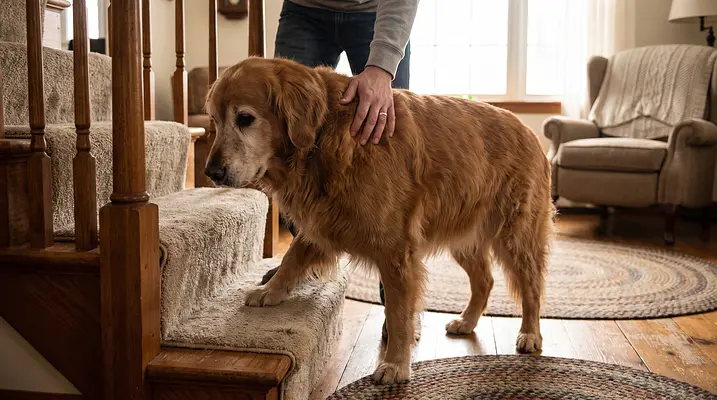
The pause at the bottom of the stairs is new. Last year your dog took them at a scramble; now there is a beat of consideration first, a small hesitation that signals your loyal companion is entering a new chapter. Watching our dogs grow old is a bittersweet privilege, a sign of the countless miles we’ve walked together. While they may slow down, their golden years can still be filled with joy, comfort, and plenty of tail wags with the right adjustments to their care routine.
🦴 Easing Arthritis and Mobility Issues
That hesitation on the stairs is often the first sign that joints are stiffening and arthritis is setting in. While we can't stop the aging process, we can make their environment much easier to navigate.
- Place non-slip rugs or yoga mats on slick hardwood or tile floors to provide traction.
- Install ramps or shallow steps near favorite furniture or car doors to reduce jumping impact.
- Provide an orthopedic memory foam bed to support joints while they sleep.
- Keep nails trimmed short to improve their grip and stability on hard surfaces.
- Encourage gentle, low-impact exercise like swimming or short, sniff-filled walks to maintain muscle mass.
🍲 Adapting Their Diet and Nutrition
As metabolism slows down, the caloric intake that sustained an active adult dog can quickly lead to weight gain in a senior. Extra weight puts unnecessary strain on aging joints, making dietary adjustments essential for longevity.
- Switch to a senior-specific formula that typically has fewer calories and more fiber.
- Measure meals carefully with a kitchen scale rather than eyeballing portions to prevent obesity.
- Add joint-supporting supplements like glucosamine, chondroitin, or omega-3 fatty acids after consulting your vet.
- Warm up wet food slightly to enhance its aroma if their appetite seems to be waning.
- Offer smaller, more frequent meals to aid digestion and maintain steady energy levels.
🧠 Supporting Cognitive Health
You might notice your dog staring at walls, getting stuck behind doors, or forgetting familiar commands. This "sundowning" effect is a sign of Cognitive Dysfunction Syndrome, similar to dementia in humans, but there are ways to keep their minds sharp.
- Maintain a strict daily routine for feeding, walks, and bedtime to reduce anxiety.
- Introduce new puzzle toys or snuff mats during mealtime to encourage problem-solving.
- Teach new, low-energy tricks like "touch" or "spin" to stimulate neural pathways.
- Avoid rearranging furniture to keep their environment predictable and safe.
- Ask your veterinarian about prescription diets specifically formulated for brain health.
🩺 Increasing Veterinary Check-Ins
In their younger years, an annual check-up was sufficient, but senior dogs can develop health issues rapidly. Moving to a six-month schedule allows for early detection of kidney, heart, or dental issues while they are still manageable.
- Schedule bi-annual wellness exams to catch age-related diseases early.
- Request a senior blood panel to check organ function and detect hidden imbalances.
- Discuss pain management options proactively rather than waiting for visible signs of discomfort.
- Check for lumps and bumps during grooming sessions and report changes to your vet.
- Keep a written log of unusual behaviors or symptoms to share during appointments.
🏠 Creating a Comfortable Environment
Comfort becomes a priority when your dog spends more time resting. Small modifications around the house can make a massive difference in their quality of life and sense of security.
- Raise food and water bowls to shoulder height to reduce neck and back strain.
- Keep the home temperature warm and consistent, as seniors struggle to regulate body heat.
- Groom them more frequently to help them keep clean if they can no longer reach certain spots.
- Use a baby gate to block off dangerous staircases or slippery areas when you aren't supervising.
- Spend quiet time sitting with them on the floor to offer reassurance and physical contact.
Watching our best friends age requires patience and a shift in perspective, but the bond only deepens as we become their advocates and caregivers. By making these adjustments, you aren't just extending their life; you are adding life to their years. Every soft bed, every adapted walk, and every gentle moment tells them they are still the most loved dog in the world.
Quick Action Plan
- Assess your home for slippery floors and place rugs for immediate traction.
- Book a senior wellness exam with your veterinarian for a baseline health check.
- Swap out their old bed for orthopedic support to soothe aching joints tonight.
- Measure their food portions accurately to manage weight and joint stress.
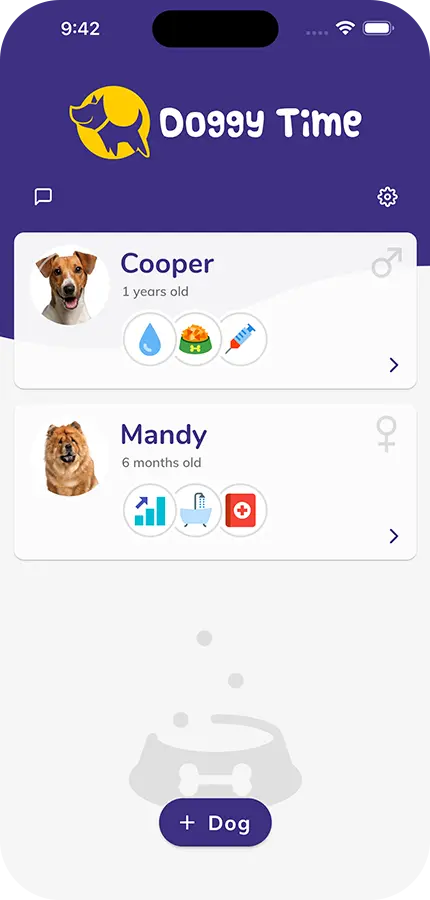
- Download the Doggy Time app to track medications, symptoms, and vet appointments.
Disclaimer: This blog post provides general information and is not a substitute for professional veterinary advice. Always consult your veterinarian regarding medical diagnoses, treatments, or changes to your pet’s health regimen.
If you are looking for a way to stay organized during this new phase, consider using the *Doggy Time** app. It helps users collaborate on logging pet activities, training, and health metrics, ensuring you never miss a medication dose or symptom log. With smart alarms and scheduling features, it’s the perfect tool for managing the complex needs of a senior pet.*