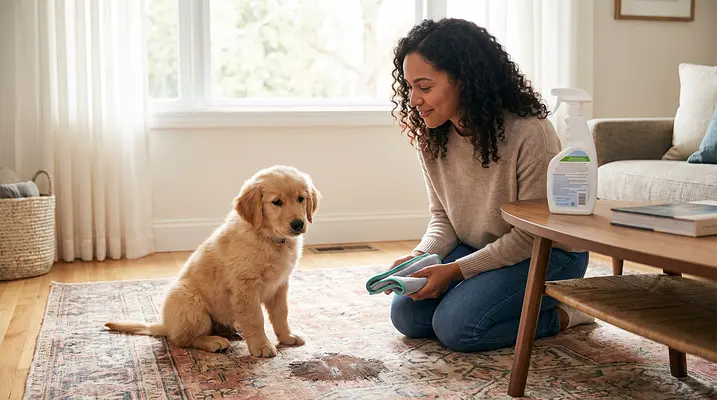
Just when you thought you were past the puddles and piles, you’ve stumbled upon a mess on the rug. It’s a frustrating and confusing moment for any pet parent. You might feel like you’ve failed or that your puppy is acting out of spite, but take a deep breath—this is a common hurdle known as potty training regression. The good news is that it is almost always temporary and solvable with a little detective work and a lot of patience.
🩺 Rule Out Medical Issues First
Before you assume this is a behavioral problem, it is essential to look at your puppy’s physical health. Sudden lapses in housetraining are often the first sign that something medical is going on, so schedule a vet visit immediately rather than waiting it out.
- Request a urinalysis and fecal test to check for urinary tract infections (UTIs) or parasites. 🧪
- Monitor for excessive water drinking or straining during bathroom breaks.
- Check for physical discomfort like stiffness or limping that might make going outside difficult.
- Rule out gastrointestinal issues like diarrhea or constipation that create urgent needs.
🏠 Identify Behavioral and Environmental Triggers
If your vet gives your puppy a clean bill of health, the next step is to look at their world. Puppies are sensitive creatures, and even small shifts in their routine or environment can cause them to revert to old habits. Stress, anxiety, or simple confusion are the most common culprits behind a sudden slide in training progress.
- Consider recent moves, new furniture, or loud renovations that might cause anxiety. 📦
- Reflect on changes in your work schedule or school routines that alter potty break times.
- Watch for signs of separation anxiety if accidents happen only when you leave the house.
- Evaluate if a new pet or family member has disrupted the household hierarchy.
- Look for "marking" behavior if your puppy is nearing sexual maturity, which differs from emptying a full bladder.
🔄 Go Back to Basics: The Retraining Plan
When regression hits, you have to hit the reset button. Treat your puppy as if they have never been housetrained before, stripping away assumptions and rebuilding the foundation from scratch. This isn't a punishment; it’s a way to provide the structure and guidance they need to succeed again.
- Restrict access to the house using baby gates or a playpen to prevent unsupervised wandering. 🚧
- Adhere to a strict schedule of taking your puppy out every hour or two during the day.
- Go outside with your puppy every single time to ensure they actually go potty.
- Reward immediately with a high-value treat and praise the second they finish their business.
- Feed meals at the exact same times every day to regulate their digestive system. 🕒
🧹 Clean Up Correctly
One of the biggest reasons puppies return to the scene of the crime is that the scent of previous accidents lingers. Your standard household cleaner might smell fine to you, but to a dog’s nose, it still smells like a bathroom spot. Proper cleaning is a critical preventative step that is often overlooked.
- Use an enzymatic cleaner specifically designed for pet messes to break down proteins. 🧼
- Avoid ammonia-based cleaners, as they smell like urine to dogs and encourage remarking.
- Soak up as much liquid as possible before applying the cleaner for maximum effectiveness.
- Allow the cleaner to sit for the recommended time on the bottle before blotting it up.
📊 Track and Monitor Progress
You can’t manage what you don’t measure, and keeping a log is the best way to spot patterns in your puppy’s regression. Writing down the times and locations of accidents helps you predict when the next bathroom break is due. It also helps you stay calm by showing you the small improvements you might otherwise miss.
- Write down the exact time of every accident and successful outdoor potty break. 📝
- Note what your puppy was doing right before the accident (playing, sleeping, eating).
- Track water intake to better anticipate when a bathroom break will be needed.
- Look for trends in the data, such as accidents happening 20 minutes after dinner.
It can feel discouraging to find accidents on the floor when you thought this chapter was closed, but regression is just a temporary detour. By ruling out medical issues, addressing environmental stressors, and returning to a structured routine, you can help your puppy get back on the path to success. Remember to stay patient and keep your reactions calm; your puppy looks to you for stability, and with consistency, those dry floors will return.
⚡ Quick Action Plan
- Schedule a vet appointment today to rule out infections or illness.
- Purchase an enzymatic cleaner to thoroughly scrub all previous accident spots. 🧽
- Set a timer for frequent, scheduled potty breaks (every 1-2 hours).
- Supervise your puppy at all times or confine them to a safe, easy-to-clean area.
- Reward every successful outdoor bathroom trip with a treat and praise. 🎉
Disclaimer: This blog post provides educational information and is not a substitute for professional veterinary advice. If your puppy is experiencing health issues, please consult your veterinarian immediately.
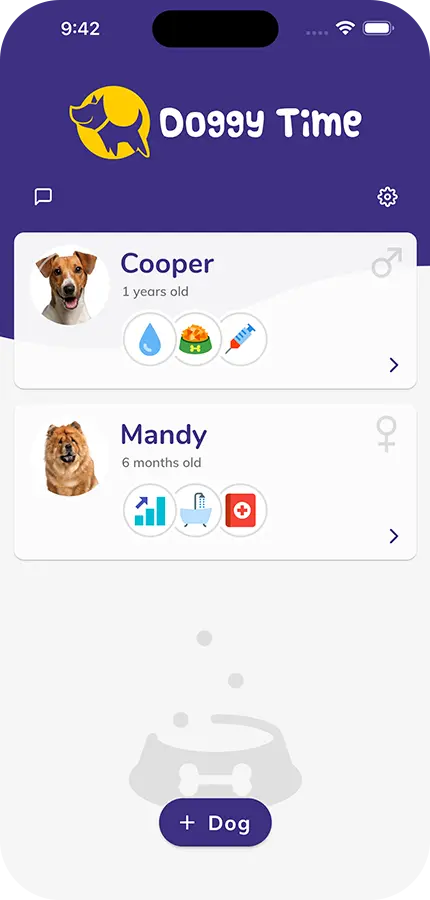
For an easier way to stay on top of your training schedule, check out the Doggy Time app. It helps you collaborate with family members on logging pet activities, training progress, and health items, while smart alarms ensure you never miss a potty break.