You find yourself standing on the far side of the front door, keys in hand, holding your breath as the first plaintive whines drift through the wood. It is a heart-wrenching soundtrack that turns a simple errand into a guilt-ridden departure, but teaching your puppy to feel secure in solitude is one of the most compassionate lessons you can offer. With a gentle approach and the right training, you can transform those anxious cries into peaceful quiet, helping your new companion build the confidence to stay home alone.
🐾 Normal Protest vs. True Anxiety
Distinguishing between a puppy throwing a tantrum and a puppy experiencing genuine distress is the first step in addressing the behavior. Understanding the difference will help you react appropriately and avoid reinforcing bad habits.
- Listen for a intermittent whining or barking that stops after a few minutes, which usually indicates a protest for attention.
- Watch for pacing, drooling, or attempts to escape that cause injury, which are signs of true anxiety.
- Check for destructive behavior directed at exit points like doors or windows rather than just chewing toys.
- Notice if your puppy eliminates in the crate or house immediately after you leave, despite being house-trained.
- Observe whether the puppy settles down when you return, or if they remain frantic and unable to calm down for a long period.
⏱️ Building Alone-Time Tolerance
Just like learning to sit or stay, being alone is a skill that must be taught gradually to build confidence. Rushing this process is the most common cause of separation issues, so take it slow.
- Start by leaving your puppy alone in a puppy-proofed room or crate for just 30 seconds while you step into another room.
- Return calmly before your puppy starts to whine to reward the quiet behavior.
- Gradually increase the duration by a few minutes each day as your puppy becomes comfortable with the previous step.
- Vary the time intervals so your puppy doesn't learn a specific countdown and start to anticipate your return.
- Practice "mock departures" by picking up your keys or putting on shoes without actually leaving the house to desensitize triggers.
🚪 Departure and Return Routines
The way you say goodbye and hello sets the emotional tone for your puppy’s time alone. Keeping these moments low-key prevents the buildup of anticipation and anxiety.
- Exercise your puppy 20 to 30 minutes before you leave to ensure they are tired and ready for a nap.
- Ignore your puppy for 10 to 15 minutes before you walk out the door to lower the emotional intensity.
- Give a special treat or a puzzle toy right before you leave to create a positive association with your departure.
- Walk out the door calmly without saying "goodbye" or making a fuss over your puppy.
- Greet your puppy quietly when you return, waiting until they are calm and have all four paws on the floor before giving attention.
🏠 Crate and Confinement Setup
A safe, comfortable confinement area acts as a den where your puppy can relax rather than a prison they want to escape. The setup of this space is crucial for their sense of security.
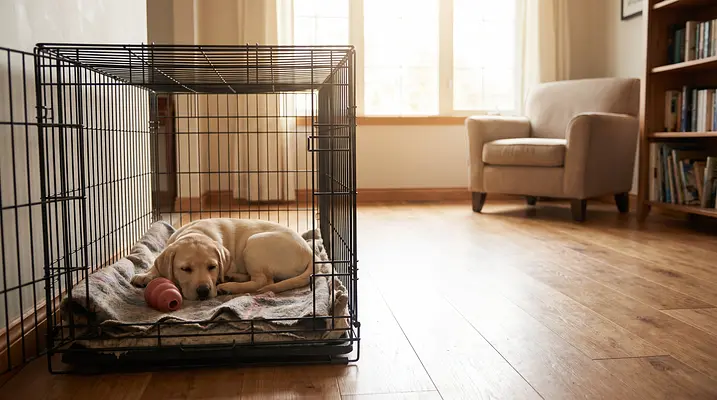
- Choose a crate that is just large enough for your puppy to stand up, turn around, and lie down comfortably.
- Place a comfortable bed or blanket inside along with a safe chew toy to keep them occupied.
- Position the crate in a quiet, low-traffic area of the house where the puppy can retreat without being disturbed.
- Leave the crate door open during the day when you are home so your puppy can explore and nap in it voluntarily.
- Cover the crate with a light blanket if it helps your puppy settle, provided the room is not too warm.
⏰ How Long is Too Long?
Puppies have small bladders and short attention spans, so leaving them alone for too long can lead to accidents and anxiety. Age is the primary factor in determining their limits.
- Follow the general rule of thumb: one hour for every month of age, up to a maximum of four hours.
- Expect a two-month-old puppy to hold their bladder for about two hours at most during the day.
- Hire a pet sitter or ask a neighbor to let your three-month-old puppy out if you must be gone for longer than three hours.
- Avoid leaving any dog alone for more than six to eight hours, as this can lead to boredom and behavioral issues.
- Remember that nighttime sleeping hours are different; most puppies can sleep through the night in a crate.
🩺 Health and Training Disclaimer
While training and behavior modification are effective for most puppies, persistent anxiety can sometimes be a medical issue. Consult your veterinarian if your puppy’s anxiety does not improve with training, as they may need professional intervention or medical support.
With consistency and love, your puppy will learn that being alone isn't scary—it’s just a quiet part of the day. Celebrate the small wins, stay patient, and remember that you are building a foundation for a confident, happy adult dog.
📝 Quick Action Plan
- Set up a comfortable crate or confinement area in a quiet part of your home today.
- Practice leaving your puppy alone for 30 seconds while you stay in the house.
- Desensitize your puppy to departure cues like keys and shoes without leaving.
- Establish a calm exit routine by ignoring your puppy for 10 minutes before leaving.
- Schedule potty breaks based on your puppy's age to avoid accidents and distress.
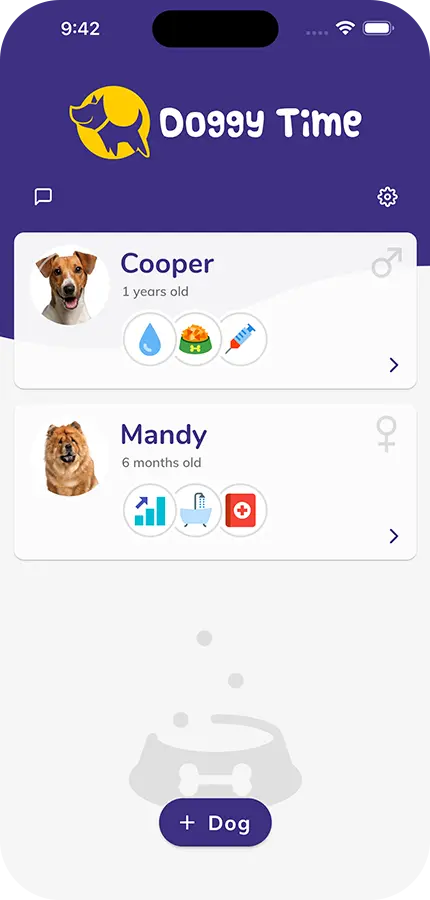
To help you stay on track, consider using the Doggy Time app. It helps users collaborate on logging pet activities, training milestones, and health records, along with smart alarms and scheduling to ensure your puppy's alone-time training stays consistent.