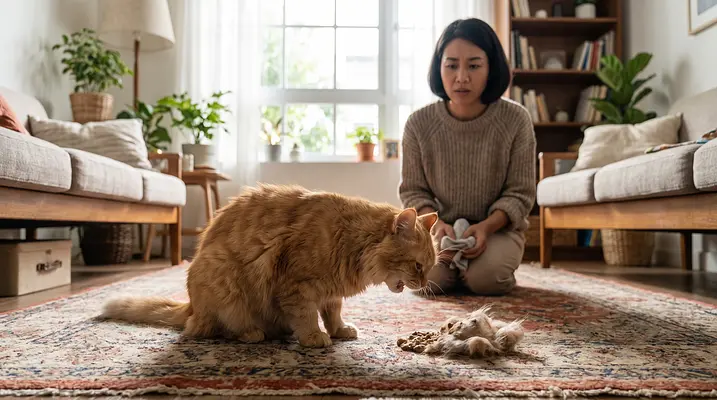
It happens so often that it’s become a dark punchline in the cat community: you hear a distinct, gagging sound in the middle of the night, and you instinctively hope you find the mess on the hard floor rather than the expensive rug. Many cat owners have been conditioned to believe that vomiting is just "something cats do," treating it with the same casual acceptance as shedding or kneading. This normalization is dangerous because it masks the reality that frequent vomiting is often a symptom of underlying health issues ranging from food intolerances to kidney disease. While an occasional hairball is indeed normal, learning to distinguish between a routine occurrence and a cry for help can literally save your cat’s life.
🧶 Identifying Normal Hairballs
It is crucial to recognize what a healthy, albeit gross, hairball actually looks like to establish a baseline for your cat's health. True hairballs are not usually liquid; they are tubular, dense masses of fur that have traveled up from the stomach.
- Look for a cylindrical, sausage-like shape rather than a puddle of liquid.
- Check that the mass consists almost entirely of compacted fur, sometimes mixed with a small amount of bile.
- Notice if your cat seems perfectly normal and energetic before and after the event.
- Observe that these occurrences happen infrequently, typically no more than once a month for a fastidious groomer.
🚨 Signs of Illness or Disease
Vomiting that stems from illness often looks and sounds different from a standard hairball, signaling that the digestive system is irritated or something more serious is amiss. You need to shift from a casual observer to a detective when these specific signs appear.
- Examine the vomit for food that appears wholly undigested, which can indicate regurgitation or a blockage.
- Watch for the presence of bright red blood or dark, coffee-ground-like material that signals internal bleeding.
- Note if the vomiting is accompanied by other symptoms like lethargy, hiding, or a sudden loss of appetite.
- Pay attention to projectile vomiting that occurs shortly after eating or drinking water.
🚑 When Vomiting is an Emergency
Certain situations require an immediate trip to the emergency veterinarian, as waiting even a few hours can result in fatal complications. Do not attempt home remedies if you observe these critical warning signs.
- Rush to the vet if your cat is vomiting repeatedly and cannot keep even water down.
- Seek immediate care if there is a possibility your cat swallowed a foreign object like a string, toy, or hair tie.
- Go to the emergency room immediately if your cat is retching or attempting to vomit but nothing is coming out, as this is a sign of gastric dilatation-volvulus (bloat).
- Act fast if the vomiting is paired with extreme lethargy, pale gums, or a distended abdomen.
🥣 Managing Diet and Prevention
For cats prone to mild stomach upset or frequent hairballs, simple adjustments to their routine can make a significant difference in their comfort and health. You can often reduce the frequency of these episodes through proactive care.
- Switch to a high-quality, easily digestible diet that minimizes fillers and artificial additives.
- Brush your cat frequently to remove loose undercoat before they can ingest it during grooming.
- Offer smaller, more frequent meals to prevent the stomach from becoming overly full.
- Introduce a specialized hairball control gel or fiber supplement after consulting with your veterinarian.
📝 Tracking Patterns and Triggers
Because cats are masters at hiding illness, keeping a detailed log of their vomiting episodes is the best way to help your veterinarian diagnose the root cause. You should treat every episode as a data point rather than an isolated mess.
- Record the exact date and time of every incident to spot frequency trends.
- Take a photo of the mess to show your vet the texture, color, and volume.
- Note what your cat ate earlier that day and how much time passed before they got sick.
- Track your cat’s behavior 24 hours before and after the episode to catch subtle changes in energy or appetite.
Conclusion
Living with a cat does not have to mean living with a constant mess on your floors, and you should never accept chronic vomiting as a simple quirk of feline existence. By paying close attention to the texture, frequency, and accompanying symptoms, you can catch serious health issues early and ensure your feline friend lives a comfortable, happy life. Trust your gut—if something feels wrong, it is always better to make that phone call to your vet than to wait and wonder.
Quick Action Plan
- Inspect the mess to determine if it is a solid hairball or liquid vomit.
- Snap a quick photo of the mess to show your veterinarian later if needed.
- Check your cat’s gums for color and hydration immediately after the episode.
- Log the incident in a pet care app to track frequency over time.
- Call your vet if the vomiting happens more than twice in 24 hours.
Disclaimer: This article is for informational purposes only and does not constitute professional veterinary advice. If your pet shows signs of distress or illness, please consult a licensed veterinarian immediately.
To make tracking these incidents easier, consider using the Doggy Time app. While the name says "dog," it is designed for all pets, helping you collaborate with family members to log activities, set smart alarms for medication, and create consistent care schedules for everyone in your household.