It starts as a quiet thought on a Tuesday morning, somewhere between the third stop sign and the highway on-ramp. You glance at the steering wheel, gripping it a little tighter, and realize with a sinking feeling that you have driven every single morning for the past two weeks. Again. It isn’t just the extra gas money or the miles accumulating on the odometer; it is the creeping sense of imbalance, the feeling that the mental load of getting the kids to school has silently shifted entirely onto your shoulders. That quiet resentment is the death knell of a carpool, but it doesn’t have to be.
The most successful carpools aren’t accidents of geography or luck; they are the result of intentional design and open communication. Creating a schedule that feels fair requires acknowledging that "fair" does not always mean "equal," especially when families live different distances from the destination or have wildly varying work schedules. By building a system that accounts for these variables from day one, you can turn a source of stress into a genuine support network.
📏 Accounting for Distance and Schedules
Geography and employment are the two biggest wrenches in the "one week on, one week off" ideal. If one family lives five minutes out of the way and another lives thirty, a straight rotation quickly feels like a penalty for the driver with the longer commute. Similarly, a parent who works from home might have more flexibility than one who has to clock in by 8:00 AM sharp.
- Calculate "windshield time" rather than just days driven to see the true effort involved.
- Assign a point value to morning versus afternoon drives if one traffic window is significantly worse.
- Offer "schedule banking" where a parent with a rigid schedule contributes extra driving during school holidays or summer breaks.
- Adjust the rotation ratio, such as a 2:1 split, where the closer family drives twice as often to equalize total travel time.
- Respect hard time constraints by allowing families to "opt out" of specific time slots permanently without penalty.
🗓️ Fixed Days vs. Rotating Weeks
Choosing between a fixed schedule (where you always drive Mondays) and a rotating one (where you drive a full week at a time) is a trade-off between predictability and flexibility. Fixed days are easier for memory but harder when a regular appointment conflicts, while rotating weeks spread the burden of the "dreaded" days but require more administrative oversight.
- Choose fixed days if group members have predictable, recurring conflicts like weekly meetings or sports practice.
- Select a rotating weekly schedule if you want to ensure the burden of heavy traffic days is shared equally over time.
- Create a "swing driver" role for a fifth family or a flexible parent to fill gaps in a fixed schedule.
- Draft a calendar two months in advance to give everyone ample time to plan around their assigned weeks.
- Build in automatic swap days for national holidays to avoid confusion when school is closed.
📝 Tracking the Balance
Even the best intentions drift, and without a tracking mechanism, small imbalances can balloon into major grievances. You need a system that is transparent enough to build trust but simple enough that it doesn't become a part-time job for one parent.
- Designate a shared digital calendar or a specific group chat thread solely for schedule confirmations.
- Keep a running "karma ledger" in a shared note or app to track when swaps occur.
- Send a weekly reminder notification on Sunday nights to confirm the upcoming driver for the week.
- Review the mileage or point tally once a month to catch and correct imbalances before they grow.
- Celebrate milestones, like a month of perfect attendance, to keep the group morale high. 🎉
🔄 Handling the "Swapper" Family
Every carpool has one: the family that is lovely and well-meaning but seems to have a conflict every other Thursday. While flexibility is the glue that holds a carpool together, being the perpetual backup plan is exhausting and unfair.
- Establish a "swap limit" rule where a family can only swap out a set number of times per season.
- Require the swapping family to find their own substitute driver or arrange a trade with another member directly.
- Define a "last resort" window, stating that swaps must be requested at least 24 hours in advance. ⏰
- Implement a "three strikes" policy where chronic swappers are moved to a backup-only status.
- Address patterns of chronic swapping privately and directly rather than letting frustration fester in the group chat.
🍂 Renegotiating Without Hard Feelings
Seasons change, and so do work schedules, sports seasons, and family dynamics. What worked perfectly in the fall might be a disaster by winter. A seasonal check-in prevents the schedule from becoming stale and allows everyone to air grievances in a structured, safe environment.
- Schedule a "State of the Carpool" coffee date or video call at the start of each school term.
- Review what worked and what didn’t in the previous season before proposing new rules.
- Ask open-ended questions to ensure quieter group members have a chance to voice concerns.
- Formally reset the "karma ledger" to zero at the start of a new season to wipe the slate clean.
- Celebrate the partnership with a small gesture, like a group coffee card, to reinforce that this is a team effort.
🚀 Quick Action Plan
- Send a group text today proposing a quick "reset" meeting for the carpool.
- Calculate the average drive time for each family to see if a 1:1 rotation is actually fair.
- Set up a shared calendar or document where everyone can view the upcoming schedule.
- Agree on a notification deadline for swaps (e.g., 24 hours notice) and write it down.
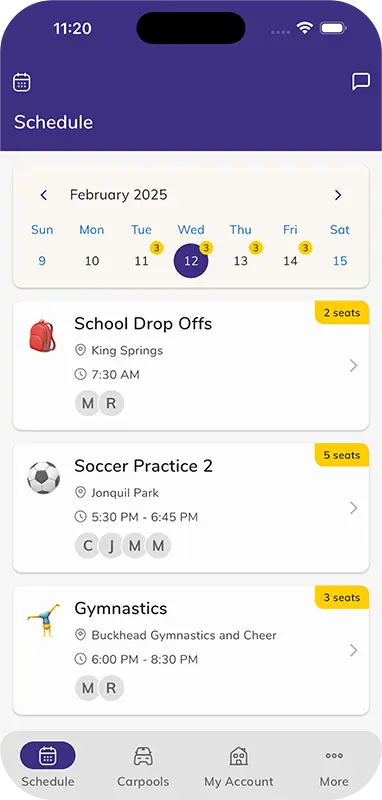
- Download the Kid Hop app to streamline coordination for your family or group.
Conclusion
A fair carpool is rarely a perfect 50/50 split; it is a living agreement that bends without breaking. When you take the time to measure the invisible labor of driving, track the inevitable swaps, and check in with one another regularly, you stop resenting the Tuesday morning drive. You might even start to enjoy the quiet time, knowing that next week, someone else will be behind the wheel, and the balance has been restored.
If you are looking for a tool to take the headache out of scheduling, consider using *Kid Hop*. It is designed to help families, sports teams, school groups, and community friends coordinate their carpools seamlessly, ensuring everyone stays on the same page.