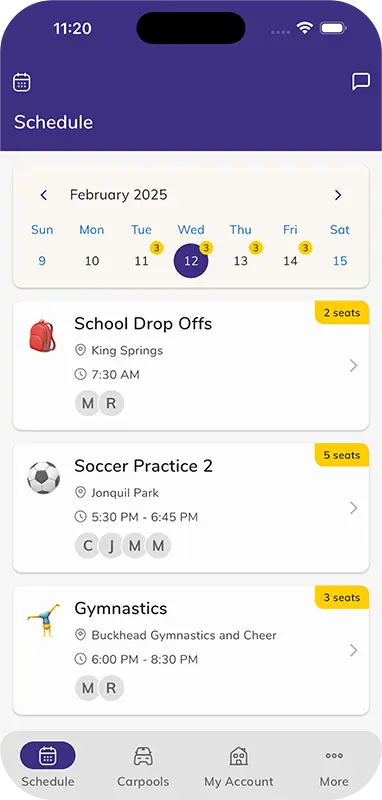
It is 2:40 PM on a Tuesday. Your phone buzzes with a text that reads, “So sorry, work crisis, I can’t make pickup today!” For a split second, the world stops. You are in the middle of a meeting, your partner is across town, and school lets out in twenty minutes. We have all been there, that sudden drop in the stomach when the carefully constructed logistics of the week crumble in an instant. While we can’t prevent life from happening, we can stop panic in its tracks by building a robust contingency plan before the next crisis hits.
📞 The Notification Deadline
Clear communication boundaries prevent the 2:40 PM panic text from becoming a regular occurrence. By agreeing on a "drop-dead" time for notifications, everyone in the carpool knows exactly when a Plan B needs to be activated.
- Agree on a specific cutoff time for cancellations, such as two hours before pickup, to allow time for adjustments.
- Set a group alarm or calendar reminder for thirty minutes before this deadline to prompt early decision-making.
- Define a "grace period" frequency to allow for genuine emergencies without penalizing the occasional mishap.
🪜 The Escalation Path
When a driver falls through, confusion often leads to multiple people trying to solve the same problem simultaneously or, worse, everyone assuming someone else has it covered. An escalation path is a pre-agreed order of operations that takes the guesswork out of the crisis.
- Create a written hierarchy of who is contacted first, such as the backup driver, then the other parents, then the school.
- Assign a "point person" for the day who is responsible for confirming the new arrangement with the group.
- Use a group thread specifically for urgent alerts to ensure the message isn't lost in daily chatter.
🚗 The Bench of Backup Drivers
Relying on a single backup is risky because that person might be busy exactly when you need them. Building a "bench" of reliable reserves ensures that there is always a safety net ready to catch the kids.
- Recruit at least two "on-call" parents who are willing to be last-minute substitutes in exchange for future favors.
- Keep a shared contact list of local grandparents, neighbors, or nannies who have been vetted and approved for pickup.
- Offer "backup credits" to these reserves, where driving in an emergency earns them a week off their regular driving duties.
🤒 Sick Kids and Sick Drivers
Illness is the most common disruptor of carpools, yet it often causes the most confusion regarding protocol. Establishing clear rules about symptoms and timing keeps everyone healthy and prevents last-minute scrambling.
- Define specific symptoms, such as a fever or vomiting within 24 hours, that automatically disqualify a child or driver from the carpool.
- Require notification the evening before or by 7:00 AM the morning of, giving the other parents time to adjust their schedules.
- Clarify that the sick child’s parent is responsible for finding a replacement or keeping the child home, rather than asking the group to transport a sick child.
🔧 Car Trouble and Work Meetings
Mechanical failures and sudden professional obligations are unavoidable parts of adult life. The key to handling these non-illness emergencies is having a "life happens" protocol that separates one-off events from chronic reliability issues.
- Establish a rule that the affected driver must immediately text the group with a clear "I'm out" status.
- Encourage the use of ride-share services like Uber or Lyft for the driver’s children if a personal backup isn't available, with costs covered by the driver.
- Keep a magnetic "car seat" sign or a portable booster seat in the carpool vehicle to accommodate different vehicle setups quickly.
🏫 The School Office and After-Care Fallback
Sometimes, despite the best planning, no driver is available. In these rare instances, the children need a safe place to go while the adults sort out the logistics.
- Register all carpool children for the school’s after-care program, even if they rarely use it, as a mandatory safety net.
- Provide the school office with a list of all carpool parents authorized to pick up the children in an emergency.
- Instruct the children on what to do if no one arrives, such as going directly to the office or the designated safe zone on campus.
⏳ Agreeing on Reasonable Notice
Frustration often stems from mismatched expectations; one parent thinks a ten-minute text is fine, while another needs a day's warning. Aligning on what constitutes "reasonable notice" protects the group's time and sanity.
- Discuss work schedules and flexibility levels openly during the initial carpool setup to set realistic expectations.
- Categorize notice periods into "standard" (24 hours), "short" (2-4 hours), and "emergency" (under 1 hour) with different response expectations for each.
- Agree that "short notice" triggers an automatic offer to drive the next scheduled day to compensate for the inconvenience.
🤝 Repairing Trust After a No-Show
A no-show or a last-minute bail can breed resentment that lingers long after the kids are picked up. Repairing the trust in the group requires accountability and a genuine effort to make amends.
- Require the offending driver to send a sincere apology to the group, acknowledging the specific stress caused.
- Have the driver "pay it forward" by taking the next two or three driving shifts to demonstrate renewed commitment.
- Schedule a quick coffee or check-in call to reset expectations if a driver has had a string of cancellations due to personal issues.
Carpooling is ultimately about community, and communities thrive on trust and clear communication. We accept the help of others because we know that one day, we will be the ones needing the favor. By putting these structures in place, you aren't just creating a safety net for pickup; you are building a resilient network of friends who can rely on each other without the lingering anxiety of "what if." Life will always throw curveballs, but with a solid plan, they don't have to knock you out.
Quick Action Plan
- Draft a "Carpool Constitution" today outlining the notification deadline and sick policy.
- Text your group to ask who is willing to be on the "backup bench" for emergencies.
- Verify that all children are registered for the school’s after-care program as a failsafe.
- Create a printed emergency contact sheet to keep in the glove compartment of the car.
- Schedule a five-minute voice check-in with the other parents to finalize the escalation path.
For families, sports teams, and school groups looking to streamline these logistics, consider using the “Kid Hop” app to coordinate schedules and manage backups with ease.