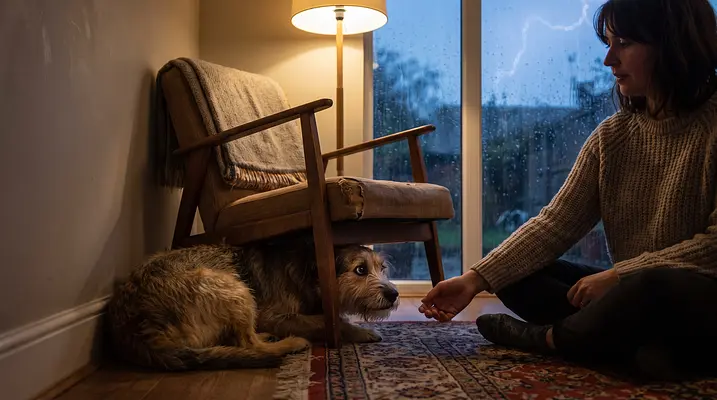
The first crack of thunder hadn’t even finished echoing through the house before the panic set in. There, wedged tightly into the narrow gap behind the bathroom toilet with trembling haunches pressed against the cold porcelain, sat Buster. His eyes were wide, rolling with white-rimmed fear, and his breathing came in shallow, frantic hitches that fogged up the tiled wall. It’s a heartbreaking scene that plays out in countless homes whenever the barometric pressure drops or the sky lights up with fireworks, leaving loving pet parents feeling helpless and desperate to ease their best friend’s suffering.
🏠 Creating a Safe Haven
Dogs often seek out small, enclosed spaces when they feel threatened because these areas provide physical security and dampen the frightening sounds. Establishing a designated "safe space" gives your dog a reliable place to retreat to before the anxiety reaches its peak.
- Identify a quiet, interior room in your home where outside noise is naturally muffled.
- Set up a comfortable crate or bed in a corner away from windows to reduce visual triggers.
- Leave the door to this room open at all times so your dog never feels trapped or isolated.
- Place your dog's favorite blanket or a recently worn shirt of yours in the area to provide comforting, familiar scents.
- Practice sending your dog to this spot for high-value treats during calm weather to build a positive association.
🔊 Mastering Desensitization
Desensitization involves gradually exposing your dog to the sounds that scare them at a volume low enough that they don't trigger a fear response. This is a long-term training strategy that requires patience and consistency to effectively reprogram your dog's emotional reaction.
- Purchase a high-quality recording of thunderstorm or firework sounds designed specifically for canine training.
- Play these sounds at the lowest possible volume while engaging your dog in fun activities or feeding them dinner.
- Increase the volume by tiny increments only when your dog remains completely relaxed at the current level.
- Stop the session immediately if you notice any signs of stress, such as lip licking, yawning, or ears pinned back.
- Conduct these training drills during happy times, never right before an actual storm is scheduled to arrive.
🧸 Utilizing Calming Tools
While training takes time, certain tools can offer immediate, non-invasive support to help lower your dog's overall arousal level. These items work best when introduced before the anxiety kicks in, rather than in the middle of a panic attack.
- Fit your dog with a pressure wrap or anxiety vest to provide a gentle, swaddling sensation that calms the nervous system.
- Plug in dog-appeasing pheromone diffusers near their safe space to mimic the calming natural chemicals of a mother dog.
- Play specifically curated "Through a Dog's Ear" music or white noise to mask the sudden changes in atmospheric pressure.
- Offer a frozen Kong or long-lasting chew to encourage licking, a repetitive motion that releases soothing endorphorphins.
- Try calming supplements containing L-theanine or melatonin, but always verify the ingredients and dosage with your veterinarian first.
💊 Consulting Your Veterinarian
Sometimes, despite our best efforts at home, a dog’s fear is so profound that it poses a danger to their physical well-being. If your dog is injuring themselves trying to escape or remains panicked for hours after the noise stops, professional medical intervention is the kindest and safest path forward.
- Schedule a consultation specifically to discuss your dog's noise aversion rather than adding it on to a regular check-up.
- Describe the specific symptoms you observe, such as destructive chewing, excessive panting, or attempts to escape.
- Ask about short-acting anti-anxiety medications that can be given before a known storm or holiday event.
- Discuss whether a referral to a veterinary behaviorist is appropriate for severe, generalized anxiety cases.
- Follow the prescription instructions precisely and do a "test run" of the medication on a calm day to observe how your dog reacts.
📝 A Quick Action Plan
You don't have to wait for the next big storm to start helping your dog. Here is a simple checklist to get you moving in the right direction today.
- Choose a quiet, interior room and set up a cozy crate or bed there today.
- Download a thunderstorm sound track and play it at a barely audible volume during dinner time.
- Measure your dog for an anxiety vest or order a pressure wrap online.
- Check the forecast for the week and set a reminder to practice desensitization sessions on sunny days.
- Call your vet to schedule an appointment if your dog has a history of self-injury or extreme panic.
Seeing our furry companions terrified is an exhausting and emotional experience for everyone in the household. It takes time, patience, and a lot of love to help them navigate their fears. Remember that progress isn't always a straight line; some days will be better than others. By preparing a safe environment and utilizing the right tools, you can help your dog feel secure enough to weather the storm right by your side.
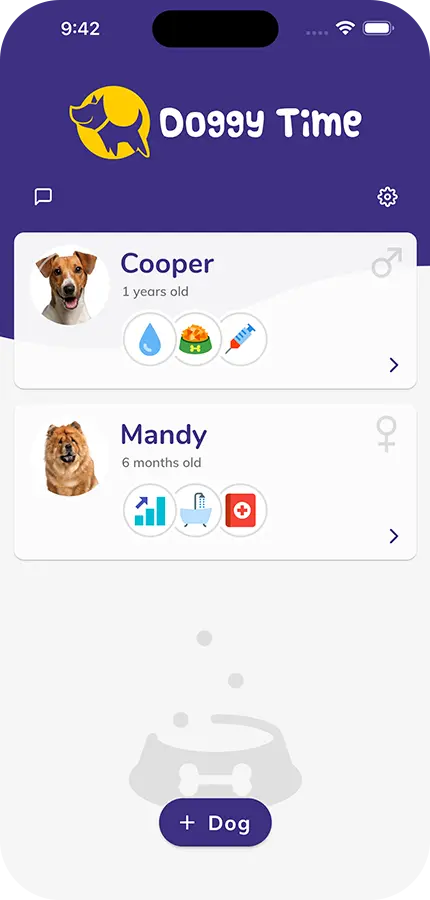
To help you stay consistent with desensitization training and track your progress, consider using the "Doggy Time" app. It helps users collaborate on logging pet activities, training milestones, and health items, along with smart alarms and scheduling to ensure you never miss a session.
Disclaimer: This blog post is for informational purposes only and does not constitute veterinary advice. Always consult with a qualified veterinarian regarding your dog's health and before starting any new medication or supplement regimen.