Your new parakeet is sitting in the cage, feathers puffed, watching you with a mix of curiosity and terror. It is incredibly tempting to slide your hand inside right now to let them know you’re friendly, but that single impulse can set your relationship back by weeks. To a prey animal like a budgie, a giant hand descending from the sky looks exactly like a predator, and if you force contact now, you aren't building a bond—you are confirming their worst fears.
True friendship with a parakeet is earned through patience, not force. This week-by-week guide is designed to help you navigate the critical early days, turning that fearful flutter into a trusting companion who wants to be with you.
🏠 Setting the Stage for Success
Before you begin training, ensure your bird feels secure in their new environment. A nervous bird cannot learn, so give them a few days to simply observe their surroundings without pressure.
- Place the cage in a corner or against a wall so they have a safe "back" to protect them.
- Cover part of the cage with a light cloth to create a hiding spot if they feel overwhelmed.
- Speak to your bird softly whenever you enter the room so they learn your voice is safe.
- Avoid direct eye contact initially, as staring can be perceived as a threat by prey animals.
🗓️ Week 1: The Observation Phase
The first few days are strictly about passive interaction. Your goal is to show your parakeet that your presence near the cage equals safety, not danger.
- Sit near the cage for 10 to 15 minutes at a time, reading or talking quietly.
- Move slowly and deliberately whenever you are in the same room as the bird.
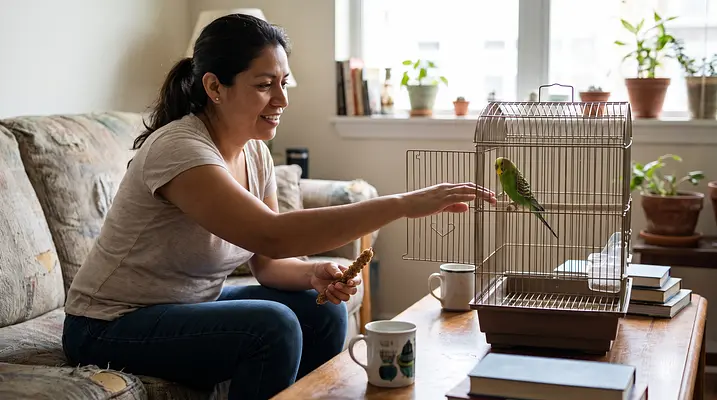
- Offer a high-value treat, like a piece of millet spray, through the cage bars without opening the door.
- Wait for the bird to accept the treat from your fingers through the bars before moving to the next step.
🚪 Week 2: The Open Door Policy
Once your budgie is comfortable with you sitting near the closed cage, it is time to increase the intimacy slightly. You are still not touching the bird; you are simply inviting them to explore the space near you.
- Open the cage door while you sit nearby, but do not attempt to touch or remove the bird.
- Rest your hand on the outside of the open door or place it just inside the threshold without moving.
- Allow the bird to come and go from the cage entrance at their own pace.
- Read a book or scroll through your phone calmly to show you are not focused solely on "hunting" them.
🖐️ Week 3: The Step-Up Introduction
Now that your bird associates your hand with treats and safety, you can begin the formal "step-up" training. This is the foundation of all future handling.
- Hold a small spray of millet in one hand while placing the other hand, palm up, near the bird.
- Position your thumb or index finger against the bird's lower belly, just above their legs.
- Apply gentle pressure to encourage them to step onto your finger to reach the millet.
- Say "step up" clearly as they mount your finger to associate the verbal cue with the action.
- Reward them immediately with the treat once they are perched on your hand.
⏱️ Keeping Sessions Short
Parakeets have short attention spans, and pushing a tired or frustrated bird will undo your progress. Keep training positive by respecting their limits.
- Limit training sessions to 10 to 15 minutes at a time to prevent burnout.
- Watch for signs of stress, such as rapid breathing, flapping away, or biting.
- End every session on a positive note, ideally right after a successful step-up or treat acceptance.
- Return the bird to their cage immediately if they show signs of agitation or fear.
🩷 Building a Lifelong Bond
Taming a parakeet is not a one-time event but an ongoing process of communication. Even after your bird steps up reliably, you must continue to reinforce that trust every single day. Consistency is the secret ingredient; a bird that is handled regularly and spoken to with kindness will remain tame and affectionate for years to come. Cherish these small victories, because a bird that chooses to sit on your shoulder is a bird that has chosen to trust you completely.
📋 Quick Action Plan
- Sit near the cage for 15 minutes today without attempting to touch the bird.
- Offer a treat through the bars to test their comfort level with your hand.
- Speak softly and avoid sudden movements whenever you enter the room.
- Schedule a specific time tomorrow for your first "observation" session.
- Download a tracking app to log your progress and set training reminders.
Disclaimer: This guide provides general training advice, but every bird is unique. If your parakeet shows signs of extreme stress, illness, or aggression, consult an avian veterinarian or professional behaviorist immediately.
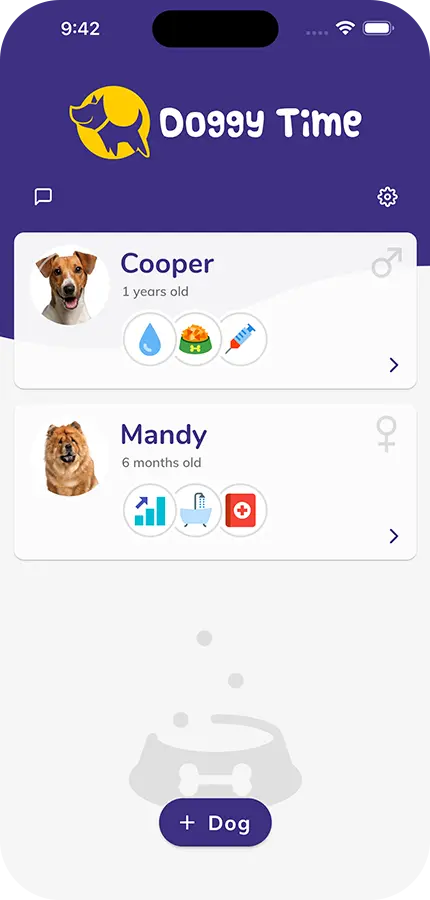
Suggested Tool: To stay consistent with your training schedule, consider using the Doggy Time app. While it’s great for dogs, it is designed to track habits and training for over 30 species, including birds. You can log your daily training sessions, set smart alarms for feeding times, and collaborate with family members to ensure your new parakeet gets the consistent attention they need to thrive.