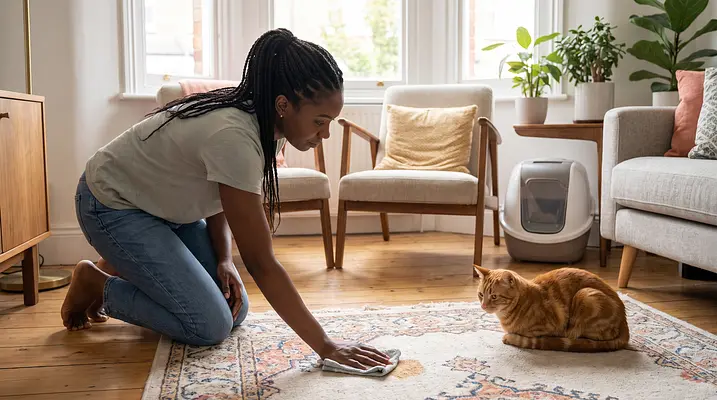
You walk through the door after a long day, ready to relax, when you spot it: a suspicious wet spot on the living room rug. Your heart sinks, not just because of the mess, but because your usually fastidious feline companion has left you a confusing message. You crouch down to inspect the area, wondering if this is an act of rebellion or a silent cry for help. Before you feel a spark of frustration, take a deep breath—when a cat suddenly stops using the litter box, it is almost never a personal slight against their human; it is a signal that something in their world has gone sideways.
🩺 Ruling Out Medical Issues First
Medical problems are the most common culprit for sudden changes in bathroom habits, so a trip to the veterinarian should always be your first step. Cats are masters at hiding pain, and urinating outside the box is often the only visible symptom of an underlying health crisis like a urinary tract infection, crystals, or kidney disease.
- Schedule a veterinary appointment immediately to rule out bladder stones, urinary crystals, or infections.
- Mention any observed straining, vocalizing while in the box, or blood in the urine to your vet.
- Ask the vet to check for arthritis or joint pain if your cat is older, as climbing into a high-sided box can be agonizing for a senior kitty. 🐈
- Collect a fresh urine sample if requested, using non-absorbent litter provided by your clinic.
🧼 Evaluating Box Hygiene and Maintenance
Cats possess a sense of smell that is far superior to ours, and a dirty box is the equivalent of an unflushed public toilet. If the box isn't up to their fastidious standards, they will simply find a cleaner place to do their business, like your laundry pile or the bath mat.
- Scoop the litter box at least once or twice a day to remove waste clumps immediately. 🧹
- Wash the entire box with mild, unscented soap and warm water every two to four weeks.
- Replace the litter entirely rather than just topping it off to prevent lingering odors from permeating the plastic.
- Avoid harsh chemicals like ammonia or bleach, which can leave strong scents that repel cats from entering the box.
📏 Assessing Location and Accessibility
The location of the litter box is just as important as its cleanliness; if the box is in a noisy, high-traffic, or difficult-to-reach area, your cat may feel too vulnerable to use it. A sudden refusal to use the box might mean they are being ambushed by another pet or they simply can't make it down the stairs in time.
- Place the litter box in a quiet, low-traffic area where your cat can see potential threats approaching. 🚪
- Ensure there is at least one litter box on every level of a multi-story home to prevent accidents during emergencies.
- Move the box away from loud appliances like washing machines or furnaces that might startle your cat mid-business.
- Provide easy access for senior cats or kittens by choosing a box with low sides or a ramp entry. 🐾
🧪 Testing Litter and Box Preferences
Cats can be incredibly particular about the texture and scent of their litter, and a sudden change in brand can trigger a rejection. What feels soft to you might feel sharp to their sensitive paws, or a new scent might be overpowering to their sensitive nose.
- Switch back to your previous brand of litter immediately if you recently changed it. 🔄
- Offer a "litter buffet" by placing several boxes side-by-side with different types of litter to see which one your cat prefers.
- Choose unscented, clumping clay litter, which is the most universally accepted texture for most cats.
- Remove plastic litter box liners, which some cats dislike because they catch on their claws or make crinkling noises. 🛑
- Ensure the box is large enough for your cat to turn around comfortably, ideally one and a half times the length of their body.
🏠 Managing Stress and Environmental Changes
Cats are creatures of habit, and even small changes in their environment can cause anxiety that manifests as inappropriate elimination. Moving furniture, a new baby, a change in your work schedule, or even a stray cat visible through the window can trigger territorial marking or a refusal to use the box.
- Identify recent changes in the household, such as new pets, guests, or construction noise. 🏗️
- Plug in synthetic feline pheromone diffusers to help calm anxiety and create a sense of familiarity in the environment.
- Provide multiple resources like food bowls, water fountains, and scratching posts in multi-cat homes to reduce competition.
- Increase interactive play sessions to burn off nervous energy and redirect your cat’s focus away from stressors. 🪶
- block the view of outdoor cats or animals that might be causing territorial stress near windows.
🧼 Cleaning Up Properly
If your cat has urinated on a rug, carpet, or piece of furniture, the smell will draw them back to that spot again and again. Standard household cleaners often fail to break down the uric acid in cat urine, meaning the scent lingers long after the visible stain is gone.
- Clean accident spots with an enzymatic cleaner specifically designed for pet stains to break down the proteins in the urine. 🧴
- Avoid ammonia-based cleaners, as ammonia mimics the smell of urine and can actually encourage the cat to re-mark the area.
- Soak up as much liquid as possible with paper towels before applying any cleaning solution to the area.
- Let the enzymatic cleaner air dry naturally to allow the enzymes time to neutralize the odor completely. 🌬️
- Restrict access to the soiled area until the cleaning process is fully complete and the spot is dry.
It can be incredibly stressful to deal with a cat who has stopped using the litter box, but patience and observation are your best tools. By ruling out medical issues first and then methodically addressing environmental and behavioral factors, you can usually get to the bottom of the mystery. Remember that punishment never works and will only damage the bond of trust between you; instead, focus on making the box the most appealing option available. With a little detective work and some adjustments, your feline friend will be back to using their proper facilities in no time.
📝 Quick Action Plan
- Call your veterinarian to schedule a check-up and rule out urinary tract infections or other medical conditions. 📞
- Scoop the litter box thoroughly and wash it with unscented soap to ensure the environment is pristine. 🧼
- Move the box to a quiet, accessible location away from loud noises and high-traffic areas. 📍
- Clean any accident spots with an enzymatic cleaner to permanently remove the odor. 🚫
- Set up a tracking log to monitor your cat’s bathroom habits and identify potential triggers. 📋
Disclaimer: This article is for informational purposes only and does not constitute veterinary advice. If your cat is straining to urinate, crying out in pain, or passing blood, seek immediate veterinary attention, as this could be a life-threatening emergency.
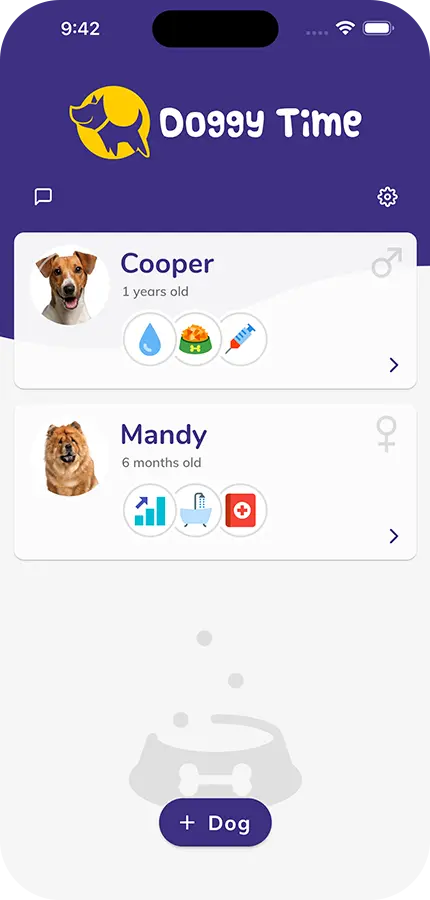
To help you stay on top of your cat’s health and habits, consider using the Doggy Time app. While the name says "Doggy," this versatile app works for cats, rabbits, birds, and over 30 other species! You can collaborate with family members to log pet activities, track symptoms, set smart alarms for medication or feeding times, and create consistent care schedules. It’s the perfect assistant for monitoring your pet’s daily routine and ensuring everyone in the household is on the same page.