We’ve all been there. You start driving a teammate to soccer practice because it’s on your way, and it feels like the friendly, neighborly thing to do. But then a month passes, and you realize you’ve logged 200 extra miles while the other parent hasn’t once reached for their wallet. It’s rarely malicious; usually, they just assume you’re happy to help, or they genuinely forgot. But that silence creates a slow, sinking feeling of imbalance that can quietly erode even the best carpooling relationships. Let's break that silence and figure out how to handle the finances fairly, so everyone feels valued and no one feels taken advantage of.
🤝 To Split or To Swap?
Before you crunch the numbers, decide on the philosophy behind the payment. Some families prefer a strict accounting of every mile, while others prefer a looser arrangement based on reciprocity.
- Choose the "Miles Swap" method if you live very close to the other family and have similar schedules.
- Track your driving days on a shared calendar to see if the balance evens out naturally over a month.
- Opt for cash splitting if one family has a larger vehicle, does all the long-distance driving, or has a schedule that prevents them from driving often.
- Address the imbalance immediately if one family drives 80% of the time, even if they insist it is "no big deal."
📏 Simple Formulas for Fairness
If you decide to exchange money rather than trade driving days, you need a formula that is easy to explain and easy to calculate. You don't need an accounting degree, just a straightforward approach that everyone agrees on upfront.
- Use the standard IRS mileage rate (currently around 67 cents per mile) if you want to cover gas, wear-and-tear, and insurance.
- Divide the total cost of gas for the trip by the number of families involved for a simpler, fuel-only calculation.
- Calculate a "per trip" flat fee, such as $5 or $10, to eliminate the need for exact mileage tracking every week.
- Multiply the one-way distance by two to ensure the return trip is included in your total calculation.
- Round the final figure up to the nearest dollar to create a small buffer for unexpected idling or detours.
🅿️ Tolls, Parking, and Tournament Weekends
Daily school runs are one thing, but travel sports and weekend tournaments introduce a whole new tier of expenses. These costs can add up quickly and should never be absorbed silently by the driver.
- Save every receipt for parking garages and toll booths during the event to ensure accurate reimbursement.
- Agree beforehand on whether the driver pays for their own parking or if that cost is split among the passengers.
- Send a photo of the toll charges via text immediately after passing through the booth to avoid forgetting the expense later.
- Calculate the total cost of the weekend (gas + tolls + parking) and split it evenly among all participating families before leaving the venue.
💵 Paying Teens or Hired Drivers
Sometimes the carpool involves a responsible older sibling or a hired helper who deserves compensation for their time and effort. Treating them professionally ensures the arrangement remains reliable.
- Pay a teen driver slightly less than a professional rate but enough to make it worth their time, such as $10-$15 per trip.
- Clarify that the payment covers their driving time, fuel, and the responsibility of watching the younger kids.
- Set a specific payday, such as every Friday or the last day of the month, to treat the arrangement like a real job.
- Offer a "bonus" or tip if the teen has to wait unexpectedly long for practice to end or handles a difficult situation.
🗓️ Settling Up on a Cadence
One of the biggest sources of awkwardness is letting the debt linger until it feels like a mountain. Regular settlement times keep the numbers small and the mood light.
- Pick a specific day of the month, like the first Monday, to settle all outstanding carpool debts.
- Use a digital payment app like Venmo or Zelle to make the transfer instant and remove the need to find cash.
- Send a gentle reminder text with a screenshot of the trip log if the other family hasn't paid by the agreed-upon time.
- Reset the "mental odometer" to zero once payment is made so you don't accidentally double-charge for a previous week.
🗣️ Breaking the Ice with Non-Payers
The hardest part is often bringing it up with a family that has never offered to contribute. The key is to frame it as a logistical shift rather than a confrontation.
- Approach the topic casually by saying, "I’ve been tracking my mileage for tax purposes and realized we should split costs."
- Send a text message if you feel too nervous to ask in person, as it gives the other parent time to process and respond gracefully.
- Propose a specific plan, such as "Let's just settle up at the end of the month," so they know exactly what is expected.
- Assume positive intent by remembering that most people are simply busy and forgetful, not intentionally taking advantage.
Building a fair financial system for your carpool clears the air and lets you focus on the real goal: getting the kids where they need to go safely. It might feel uncomfortable to bring up money with friends, but a five-minute conversation is much better than months of silent resentment. By setting clear expectations and sticking to a simple schedule, you turn a potential source of friction into just another easy part of the routine.
Quick Action Plan
- Decide today whether you will swap driving days or split costs based on mileage.
- Download a mileage tracker app or create a simple note in your phone to log trips.
- Send a text to your carpool partners proposing a specific settlement date (e.g., the 1st of the month).
- Save all receipts from your next tournament or weekend trip in a dedicated envelope.
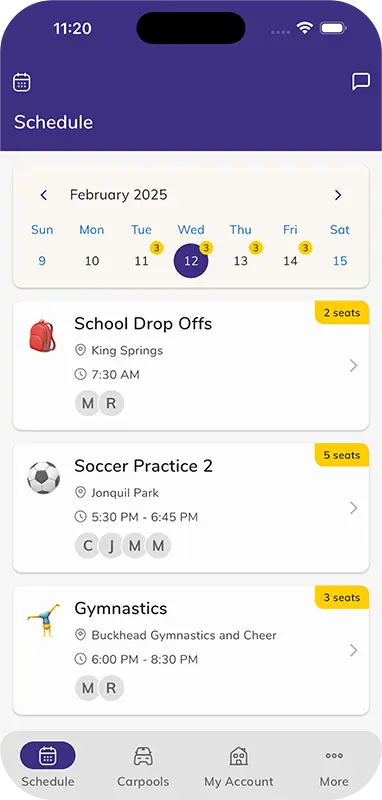
- Download the “Kid Hop” app to easily coordinate schedules, track trips, and manage payments with your community group.