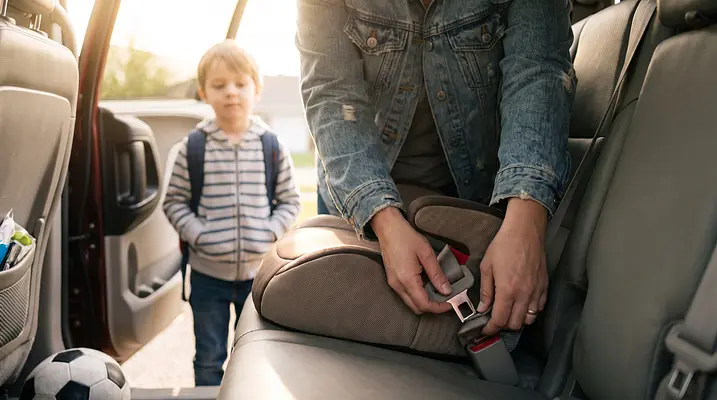
You’ve just agreed to take your neighbor’s daughter to soccer practice along with your own kids. You’re feeling good—neighborhood solidarity, saving the planet one less drive, the whole nine yards. But then you open the back door to load everyone up, and that good feeling screeches to a halt. You realize your passenger is barely tall enough to see over the dashboard, let alone safely use the standard seatbelt. Your own kids’ boosters are snapped into their spots, but there is no spare seat in sight. You stand there in the driveway, keys in hand, wondering if you can just "chance it" for the short drive to the field.
We’ve all been there, and that moment of hesitation is actually a good thing—it means safety is on your mind. But to keep the carpool running smoothly, we need to move from that panic to preparation. Here is how to handle the logistics of car seats and boosters when you are driving other people’s children.
📏 Knowing the Legal Limits
Most parents assume their child is "big enough" for a seatbelt long before they actually are, relying on age rather than height. Laws vary by state and province, but the physical reality of how a seatbelt fits a child’s body is the universal standard.
- Check your local laws regarding height and weight requirements for booster seats, as they often differ from what parents remember.
- Measure the child’s height against the vehicle’s seat back to see if their ears reach the top of the seat.
- Look for the "five-step test" to determine if a child can safely use a standard seatbelt without a booster.
🔧 Mastering the Seat Swap
Moving a car seat from one car to another is often the biggest barrier to offering a ride. It can be sweaty, frustrating, and physically taxing, but getting it right is non-negotiable.
- Ask the parent to install the seat before the trip if you are picking up from their home.
- Practice installing your own spare seat in different positions in your driveway so you aren't fumbling in a parking lot.
- Check for a tight installation by gripping the seat at the belt path and ensuring it does not move more than one inch side-to-side.
🎒 Keeping a Trunk Stash
The easiest way to avoid the driveway panic is to be prepared for the unexpected. A spare booster is the carpool parent’s best friend, and it doesn’t have to be an expensive, bulky item.
- Purchase a lightweight, backless booster that is easy to move between vehicles and store in the trunk.
- Keep the spare booster in a bag to prevent it from getting dirty or damaged while rolling around in the cargo area.
- Check the backless booster’s weight limits to ensure it is safe for the age group you usually drive.
🪑 Checking Seating Positions
Not every spot in the back seat is created equal, especially when mixing car seats, boosters, and airbags. The center seat is often the safest spot, but it isn't always compatible with every car seat design.
- Verify that the center seat has a shoulder belt, as many older cars only have a lap belt which is unsafe for boosters.
- Check your vehicle manual for "forbidden seating positions" where airbags or seat geometry make car seats unsafe.
- Ensure that car seats do not touch each other or impede the driver’s seat adjustment, as this can affect safety performance.
🎓 Teaching the Buckle Routine
You might be a pro at clicking a seat into place, but the kids themselves need to know how to secure their own belts. This saves you time and ensures they are holding themselves accountable for their safety.
- Demonstrate how to pull the seatbelt all the way out to engage the automatic locking retractor (ALR) for a tighter fit.
- Teach children to check that the lap belt sits low on their hips, not on their stomach, to prevent internal injuries.
- Instruct them to keep the chest clip at armpit level if they are in a harness seat, rather than down by their belly button.
🗣️ Navigating the Safety Conversation
This is the hardest part of carpool logistics: telling another parent their child needs a seat, or that their current seat isn't safe. It feels judgmental, but it is actually an act of deep care.
- Frame the conversation around your own comfort level rather than criticizing their parenting choices.
- Explain that you have a strict "everyone in a seat" policy in your car to avoid liability and ensure safety.
- Offer to help them find the right seat or install it if they seem unsure or overwhelmed by the logistics.
Safety doesn't have to be stressful, and it certainly shouldn't stop you from helping out your community. By preparing your vehicle and setting clear expectations, you turn that awkward driveway moment into a simple check of the list. It allows you to focus on the drive, the conversation with the kids, and the joy of sharing the load with your neighbors.
Quick Action Plan
- Check your local state or province laws on booster seat age and height requirements today.
- Buy a low-cost, backless booster to keep permanently in your trunk for emergencies.
- Practice installing your main car seats in the center and outboard positions of your vehicle.
- Teach the kids in your life the "five-step test" for seatbelt fit during your next drive.
- Draft a polite text message to save for future use when explaining your car seat policy to other parents.
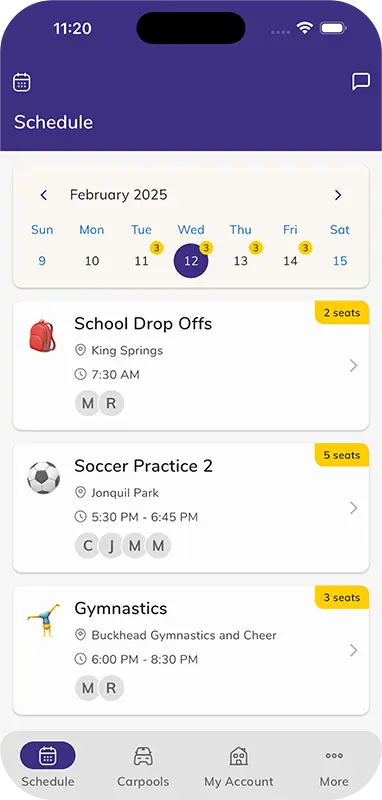
If you are looking for a better way to organize these rides and ensure every driver knows exactly who needs a seat, consider using the “Kid Hop” app. It helps families, sports teams, and community groups coordinate carpools seamlessly, so safety logistics are always communicated clearly.