Er hangt een bepaalde soort mentale mist in de lucht wanneer je kind zich niet goed voelt. Je bent al sinds twee uur 's nachts wakker, hebt op een gegeven moment een dosis van iets gegeven, en nu is het ochtend en je kunt het echt niet meer herinneren — was het vier uur geleden? Vijf? Gaf je partner een dosis voordat jij wakker werd, of droomde je dat?
Je bent niet alleen. Dit gebeurt met elke verzorger, en het betekent niet dat je iets verkeerd doet. Het betekent dat je menselijk bent, moe bent, en je best doet onder druk.
Het goede nieuws? Er is een eenvoudige gewoonte die je veel mentale belasting kan besparen: het opschrijven.
In dit artikel bespreken we waarom bijhouden en georganiseerd blijven belangrijk is, wat echt de moeite waard is om op te schrijven, hoe je je voorbereidt op een bezoek aan de kinderarts, hoe je zorg coördineert met anderen, en hoe je ook op jezelf let onderweg. Dit is geen medisch advies — het is gewoon praktische, reële ondersteuning tijdens je zorgreis.
Het probleem met "ik onthoud het wel"
Onze hersenen zijn opmerkelijk, maar ze zijn niet ontworpen om als nauwkeurig medisch logboek te fungeren — zeker niet onder stress en slaaptekort.
Wanneer een kind ziek is, moeten verzorgers vaak tegelijkertijd omgaan met:
- Verstoorde slaap (soms meerdere nachten achtereen)
- Emotionele zorgen en angst
- Meerdere verzorgers die afwisselen
- Telefoontjes, berichten van school en werkverplichtingen
- De eigen behoeften van het kind aan troost en geruststelling
Onder deze omstandigheden wordt het geheugen echt onbetrouwbaar. En dat is geen tekortkoming — het is gewoon neurowetenschap. Stresshormonen beïnvloeden het geheugen. Slaaptekort vermindert het oordeel. Zorgen verkleinen onze focus.
Het gevolg? Verzorgers twijfelen voortdurend aan zichzelf. Heb ik dat al gegeven? Wanneer was de laatste temperatuurmeting? Wat heb ik vanochtend aan de spreekkamer verteld?
Wanneer je dingen opschrijft — zelfs op een eenvoudige, informele manier — verplaats je die mentale belasting naar papier (of een scherm). Je maakt mentale ruimte vrij voor wat het belangrijkste is: er zijn voor je kind.
Wat is de moeite waard om bij te houden? Meer dan je misschien denkt
Je hoeft geen verpleegkundige te zijn of een klinisch schema bij te houden. Je hoeft alleen de basis op een consistente manier vast te leggen. Hier is een zachte gids voor wat de moeite waard is om op te schrijven:
🌡️ Temperatuurmetingen
Als je de temperatuur van je kind meet, noteer dan:
- De tijd van elke meting
- De temperatuurwaarde
- Welke methode je gebruikte (oor, voorhoofd, oksel, rectaal — deze kunnen licht verschillende waarden geven)
Na verloop van tijd vertellen zelfs een paar metingen een verhaal. Stijgt de temperatuur? Blijft die stabiel? Daalt die? Dat patroon kan echt nuttig zijn wanneer je met de kinderarts van je kind praat.
Raadpleeg altijd uw kinderarts of een gekwalificeerde zorgverlener over wat temperatuurmetingen betekenen voor uw kind, en voor advies over wanneer zorg gezocht moet worden.
💊 Toegediende medicijnen
Dit is een van de belangrijkste zaken om bij te houden — en een van de makkelijkst te verliezen wanneer je moe bent of wanneer meerdere verzorgers betrokken zijn.
Noteer voor elke toediening:
- Wat is gegeven (de naam van het medicijn)
- Wanneer is gegeven (datum en tijd)
- Wie het heeft gegeven (vooral handig bij gedeelde zorg)
Deze registratie beschermt tegen onopzettelijke dubbele dosering en zorgt dat iedereen in je zorgteam op één lijn zit.
Voor alle vragen over welke medicijnen gegeven moeten worden, welke dosering geschikt is, en hoe vaak ze toegediend moeten worden, raadpleeg dan uw kinderarts of een gekwalificeerde zorgverlener. Vertrouw nooit op een tracking-app of blogbericht voor beslissingen over dosering.
📝 Symptomen en hoe je kind zich voelt
Bovenop cijfers en medicijnen is het de moeite waard om continu bij te houden hoe je kind zich daadwerkelijk voelt. Overweeg om observaties op te schrijven zoals:
- Eet of drinkt je kind? Meer of minder dan normaal?
- Hoe zijn hun energieniveaus? Spelen ze nog een beetje, of zijn ze ongebruikelijk lusteloos?
- Slapen ze meer dan normaal, of hebben ze moeite met slapen?
- Zijn er nieuwe symptomen opgetreden — huiduitslag, hoest, braken, klachten van pijn?
- Hoe voelt je kind zich emotioneel — aanhankelijk, prikkelbaar, ongebruikelijk stil?
Deze observaties lijken misschien klein op het moment, maar geven een completer beeld van het welzijn van je kind. Kinderartsen stellen vaak precies dit soort vragen, en notities hebben betekent dat je niet alles uit je geheugen hoeft te reconstrueren.
⏰ Tijden en patronen
Noteer de tijden waarop symptomen erger of beter lijken. Schiet de koorts op in de late namiddag? Wordt je kind 's ochtends iets vrolijker? Voelen ze zich comfortabeler na rust?
Dergelijke patronen kunnen nuttige context zijn voor je zorgverlener — en ze kunnen ook jou helpen om je minder verloren te voelen.
Voorbereiden op een bezoek aan de kinderarts (of telefoongesprek)
Een van de meest waardevolle dingen die een eenvoudige trackinggewoonte doet, is je voorbereiden op duidelijke communicatie met de arts van je kind.
Denk er eens vanuit van de kinderarts: ze zien veel patiënten, hebben beperkte tijd, en hebben accurate informatie nodig om je kind effectief te helpen. Wanneer je binnenkomt (of belt) met een duidelijke, georganiseerde samenvatting, word je een echte partner in de zorg voor je kind.
Zo bereid je je voor:
Voordat je een afspraak maakt
- Bekijk je notities van de afgelopen dag of twee. Zoek naar patronen of veranderingen.
- Schrijf je belangrijkste vragen op — de dingen die je het meest wilt vragen. Het is makkelijk om ze te vergeten op het moment.
- Noteer eventuele veranderingen sinds je laatste gesprek met de spreekkamer.
- Neem je medicijnlogboek mee zodat de arts precies weet wat er is gegeven en wanneer.
Tijdens het bezoek
- Deel je observaties rustig en feitelijk. "Haar temperatuur was 38,4°C om 8 uur en 39,1°C om 14 uur" is nuttiger dan "ze voelde zich de hele dag erg warm."
- Vermeld gedragsveranderingen — minder eten, meer slapen, ongebruikelijk prikkelbaar zijn.
- Stel je vragen — ga niet weg zonder te begrijpen waarop je moet letten en wanneer je terug moet bellen.
Na het bezoek
- Schrijf op wat de arts zei, inclusief instructies of dingen om in de gaten te houden.
- Noteer de datum en tijd van het bezoek voor je eigen administratie.
- Werk je zorgteam bij als anderen helpen met de zorg voor je kind.
Je kinderarts is je belangrijkste bron voor medische vragen, symptomen of behandelbeslissingen. Aarzel niet om hun spreekkamer te bellen wanneer je onzeker bent — daar zijn ze precies voor.
Zorg coördineren wanneer meerdere mensen betrokken zijn
Moderne zorg is vaak een teaminspanning. Een kind kan worden verzorgd door twee ouders, een grootouder, een nanny, een kinderopvangmedewerker of oudere broers en zussen — soms allemaal op dezelfde dag. Dit is mooi, maar biedt ook echte kans op miscommunicatie.
Stel je dit scenario voor: mama geeft om 7 uur 's ochtends een dosis medicijn voordat ze naar haar werk gaat. Oma komt om 8 uur 's ochtends aan en, niet wetend dat er al een dosis is gegeven, geeft er nog een. Dit soort situatie is echt gevaarlijk — en het gebeurt vaker dan mensen denken, gewoon door slechte communicatie.
Een gedeeld, real-time logboek lost dit probleem elegant op.
Wanneer iedereen die voor een kind zorgt toegang heeft tot dezelfde lopende registratie, is er geen giswerk, geen hij-zei-zij-zei, en geen gevaarlijke gaten of overlappen. Het logboek wordt de enige bron van waarheid voor het hele zorgteam.
Tips voor het coördineren van zorg:
- Wijs een "hoofdlogger" aan als dat mogelijk is — één persoon die de leiding neemt in het bijhouden van gegevens tijdens een ziekteperiode.
- Creëer een eenvoudige overdrachtroutine — wanneer één verzorger overneemt van een andere, neem twee minuten om samen het logboek te bekijken.
- Houd het logboek toegankelijk — op je telefoon, een gedeelde app, of zelfs een papieren schema op de koelkast.
- Communiceer proactief — ga er niet van uit dat de volgende verzorger het logboek zal checken. Een korte sms of mondelinge update helpt al heel veel.
Dit soort coördinatie gaat niet alleen over veiligheid — het vermindert ook de angst voor iedereen betrokken. Wanneer verzorgers zich geïnformeerd en op één lijn voelen, kunnen ze zich richten op het troosten van het kind in plaats van zich zorgen te maken over wat ze gemist zouden kunnen hebben.
Je kind troosten thuis
Bijhouden en georganiseerd zijn is belangrijk, maar vergeten we niet het hart van zorg: er zijn voor je kind.
Wanneer kinderen ziek zijn, hebben ze net zoveel geruststelling nodig als rust. Ze kunnen bang zijn, verward over waarom ze zich slecht voelen, of gewoon nabijheid verlangen. Hier zijn enkele zachte manieren om troost te bieden:
- Blijf zelf kalm. Kinderen zijn opmerkelijk gevoelig voor de angst van verzorgers. Wanneer jij georganiseerd en voorbereid aanvoelt, overtuigt die rust zich vanzelf aan hen.
- Bied extra knuffels en nabijheid aan. Fysieke troost is krachtige medicatie voor de geest.
- Houd het rustig en met weinig prikkels. Gedimd licht, zachte stemmen en kalme activiteiten kunnen een ziek kind helpen te rusten.
- Bied regelmatig en zachtjes vocht aan. Kleine slokjes vaker zijn vaak makkelijker dan grote hoeveelheden.
- Lees samen, vertel verhalen, of zit gewoon in de buurt. Je aanwezigheid is het troostendste wat je kunt bieden.
- Bevestig hun gevoelens. "Ik weet dat je je niet goed voelt. Ik ben hier bij je" werkt wonderen.
Voor zorgen over de symptomen van je kind, troostmaatregelen of wanneer zorg gezocht moet worden, raadpleeg je kinderarts of een gekwalificeerde zorgverlener. Als je kind tekenen van een medisch noodgeval toont, zoek dan onmiddellijk spoedzorg op.
Ook op jezelf letten
Deze sectie is voor jou — de verzorger — want jij bent ook belangrijk in deze vergelijking.
Zorg dragen tijdens een ziekte van je kind is vermoeiend, emotioneel en fysiek. Je kunt op weinig slaap draaien, maaltijden overslaan en een zware lading zorgen met je meedragen. Op de lange termijn heeft dit een echte impact.
Hier zijn een paar zachte herinneringen:
- Vraag om hulp. Je hoeft dit niet alleen te doen. Spreek een partner, familielid of vriend aan.
- Slapen wanneer je kunt. Zelfs korte rustperiodes helpen.
- Eet iets. Het is makkelijk te vergeten, maar je lichaam heeft brandstof nodig.
- Geef jezelf ruimte. Je zult niet alles perfect onthouden. Je zult kleine fouten maken. Dit is normaal en menselijk.
- Erken je gevoelens. Zorgen, frustratie en vermoeidheid zijn allemaal geldig. Je hoeft niet te doen alsof alles goed is.
En hier helpt georganiseerd zijn eigenlijk jou persoonlijk: wanneer je een betrouwbaar logboek hebt en een duidelijk systeem, gebruik je minder mentale energie om alles in je hoofd te houden. Dat maakt net iets meer ruimte vrij voor ademhalen, rusten, en er zijn.
Georganiseerd zijn gaat niet alleen over veiligheid. Het is ook een daad van zelfzorg.
De gewoonte opbouwen: houd het eenvoudig
Het beste systeem voor bijhouden is degene die je daadwerkelijk zult gebruiken. Het hoeft niet ingewikkeld of perfect te zijn.
Enkele principes om in gedachten te houden:
- Begin klein. Alleen temperaturen en medicijntijden bijhouden is al enorm waardevol.
- Wees consistent, niet perfect. Een logboek met een paar gaten is nog steeds veel beter dan geen logboek.
- Maak het makkelijk. Houd je trackingmethode binnen handbereik — op je telefoon, op het aanrecht, waar je het daadwerkelijk zult gebruiken.
- Bekijk regelmatig. Neem elke ochtend dertig seconden om de notities van de vorige dag door te lezen.
- Deel de gewoonte. Moedig iedereen in je zorgteam aan om bij te dragen.
Na verloop van tijd wordt deze gewoonte vanzelfsprekend. En de volgende keer dat je kind zich niet goed voelt, voel je merkbaar kalmere — omdat je een systeem hebt.
📋 Een snelreferentielijst voor zieke dagen
Hier is een eenvoudige checklist die je handig kunt houden:
- [ ] Temperatuurmetingen bijhouden met tijd en methode
- [ ] Elke toegediende medicatie vastleggen (naam, tijd, wie gaf het)
- [ ] Belangrijke symptomen en gedragsobservaties noteren
- [ ] Vragen voor de kinderarts opschrijven
- [ ] Alle verzorgers op de hoogte brengen van de huidige status
- [ ] Een samenvatting voorbereiden voor elk bezoek of telefoongesprek met de arts
- [ ] Rusten, eten en hulp vragen wanneer je dat nodig hebt
⚠️ Disclaimer
Dit blogbericht is uitsluitend bedoeld voor algemene educatieve en informatieve doeleinden. Het is geen medisch advies en mag niet worden gebruikt als vervanging voor professionele medische begeleiding, diagnose of behandeling. Elk kind is anders, en alleen een gekwalificeerde kinderarts of zorgverlener kan advies geven dat specifiek is voor de gezondheid en situatie van uw kind.
Als u zorgen heeft over de gezondheid, symptomen of zorg voor uw kind, neem dan contact op met uw kinderarts of een gekwalificeerde zorgverlener. Bij elk noodgeval of ernstige waarschuwingssignalen, zoek onmiddellijk spoedzorg op.
Het vermelden van een app of hulpmiddel in dit bericht is geen medische aanbeveling.
📱 Een hulpmiddel dat de moeite waard is: Fever Whiz
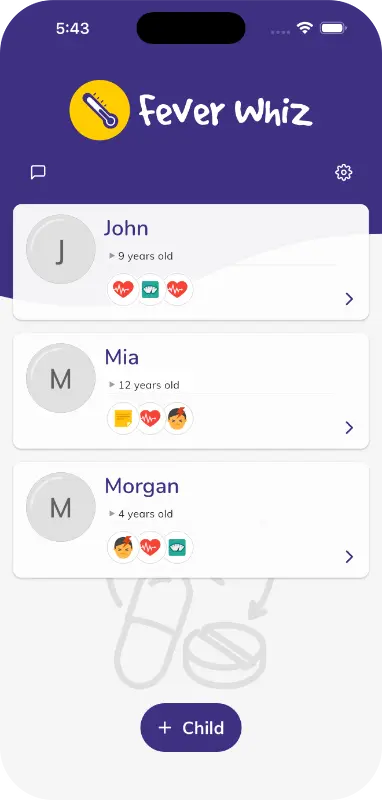
Als je op zoek bent naar een eenvoudige, georganiseerde manier om alles wat we besproken hebben in de praktijk te brengen, overweeg dan Fever Whiz — een gratis tracker voor kindermedicatie, koorts en symptomen, speciaal ontworpen voor ouders en verzorgers zoals jij.
Met Fever Whiz kun je:
- Elke temperatuurmeting, medicatiedosis en symptoom op één plek vastleggen
- Aangepaste en slimme herinneringen instellen zodat er niets tussen de mazen door glipt
- Trends visualiseren met makkelijk leesbare grafieken — handige context voor gesprekken met je kinderarts
- Belangrijke medische documenten opslaan zodat ze altijd binnen handbereik zijn
- Zorgnotities bijhouden en je zorgteam beheren op één georganiseerde plek
- Real-time synchroniseren met iedereen die voor je kind zorgt, zodat het hele team op de hoogte blijft
Fever Whiz is een privé administratie- en organisatiehulpmiddel — geen medisch apparaat. Het geeft geen medisch advies of diagnose. Beschouw het als je kalme, georganiseerde copiloot tijdens je zorgreis — die je helpt om voorbereid, geïnformeerd en iets minder alleen te voelen.
Je doet het geweldig. Blijf georganiseerd, blijf verbonden met je zorgteam, en vergeet niet: je hoeft niet alles in je hoofd te houden. Schrijf het op.