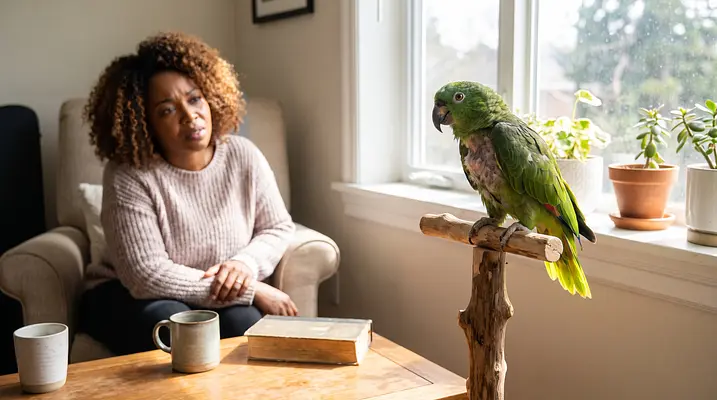
You are scratching your parrot under the beak when your fingers hesitate, catching on a patch of skin that feels strangely smooth. You part the surrounding downy feathers and freeze—there is a bald spot the size of a quarter right in the center of his chest, skin that looks irritated and surprisingly bare. It is a startling discovery, especially since he looked perfectly normal the last time you played with him, but the reality is that feather plucking often starts subtly before becoming a visible crisis. Seeing our beloved companions damage their own bodies is distressing, but understanding the root cause is the first step toward helping them heal.
🩺 Medical Causes to Rule Out
Before assuming that your bird’s plucking is behavioral, you must ensure there isn't an underlying physical ailment causing the discomfort. Birds are masters at hiding illness, and feather destruction is often the only visible symptom of a medical problem that has been brewing for weeks or months.
- Schedule a comprehensive "well-bird" exam with an avian veterinarian as soon as you notice the plucking.
- Request specific tests, including a complete blood count (CBC) and a feather analysis, to check for infections or parasites.
- Ask your vet to evaluate your bird’s nutritional status, as deficiencies in Vitamin A or calcium can cause dry, itchy skin.
- Discuss potential allergies to environmental factors like cleaning products, cigarette smoke, or certain food ingredients.
- Treat any diagnosed medical conditions immediately to alleviate the physical urge to pluck.
🧠 Behavioral Triggers to Consider
Once your avian vet gives your bird a clean bill of health, the focus shifts to the bird's environment and emotional well-being. In the wild, birds spend hours foraging and flying, but in our living rooms, boredom and anxiety can manifest as self-mutilation.
- Evaluate the cage size and placement to ensure your bird feels secure and has enough room to move freely.
- Assess the daily routine for recent changes, such as a new work schedule or a new pet, that might be causing stress.
- Observe for signs of separation anxiety, such as screaming or pacing when you leave the room.
- Check the sleep schedule, as most birds require 10 to 12 hours of uninterrupted darkness to prevent hormonal surges that lead to plucking.
- Watch for "over-bonding," where a bird views you as a mate and becomes frustrated when the relationship cannot be physically consummated.
🌿 Environmental Improvements
Modifying the environment is often the most effective way to reduce the urge to pluck. A stimulating and comfortable habitat can distract your bird from destructive behaviors and encourage natural instincts.
- Increase the humidity in your home, as dry air can make feathers brittle and skin itchy.
- Provide frequent bathing opportunities with a misting bottle or shallow dish to encourage preening rather than plucking.
- Install full-spectrum lighting on a timer to regulate your bird’s circadian rhythm and improve feather quality.
- Rotate toys weekly to keep the environment novel and interesting, preventing boredom.
- Move the cage to a busier part of the home where your bird can observe family activities without feeling isolated.
🥜 Foraging and Mental Enrichment
A busy beak is a healthy beak, and providing outlets for foraging is essential for a bird’s mental health. In the wild, a bird’s day is consumed by the search for food; in captivity, that food is often served in a bowl, leaving hours of idle time.
- Hide food inside foraging toys that require your bird to solve puzzles to access treats.
- Wrap favorite snacks in paper or dried leaves to simulate the natural process of searching for food.
- Vary the presentation of meals by skewering fruits or vegetables onto kabobs rather than placing them in a dish.
- Teach new tricks or commands to provide mental stimulation and strengthen your bond.
- Use positive reinforcement training sessions to redirect your bird’s energy toward learning rather than destroying feathers.
🩹 A Step-by-Step Plan to Address Plucking
Addressing feather plucking is a marathon, not a sprint, and requires a consistent, multi-faceted approach. Follow this structured plan to tackle the issue from all angles and give your bird the best chance at recovery.
- Consult an Avian Vet: Start with a full medical workup to rule out disease, infection, or nutritional deficits.
- Optimize the Diet: Transition your bird to a balanced diet, often including high-quality pellets and fresh vegetables, to support healthy feather growth.
- Adjust the Sleep Cycle: Ensure your bird gets 12-14 hours of quiet, uninterrupted sleep in a dark room to balance hormones.
- Increase Bathing: Offer daily baths or misting sessions to soothe the skin and encourage proper preening.
- Introduce Foraging: Gradually replace easy-access food bowls with foraging opportunities that require work to eat.
- Monitor and Log: Keep a detailed daily journal of the plucking episodes, noting the time of day and recent activities to identify triggers.
🚀 Quick Action Plan
- Schedule a vet appointment for a full physical exam and bloodwork today.
- Cover the cage for 12 hours tonight to ensure proper rest.
- Mist your bird with lukewarm water to soothe irritated skin immediately.
- Buy or make a new foraging toy to introduce tomorrow morning.
- Move the cage away from drafts and direct sunlight to regulate temperature.
Finding a bald patch on your feathered friend is a frightening moment, but it is also a call to action. With patience, a thorough medical check, and a commitment to environmental enrichment, many birds can reduce or stop their plucking behaviors. The journey requires observation and adaptability, but seeing your bird happy and healthy is worth every effort.
Disclaimer: This article is for informational purposes only and does not constitute professional veterinary advice. Always consult with a qualified avian veterinarian regarding the health and medical needs of your bird.
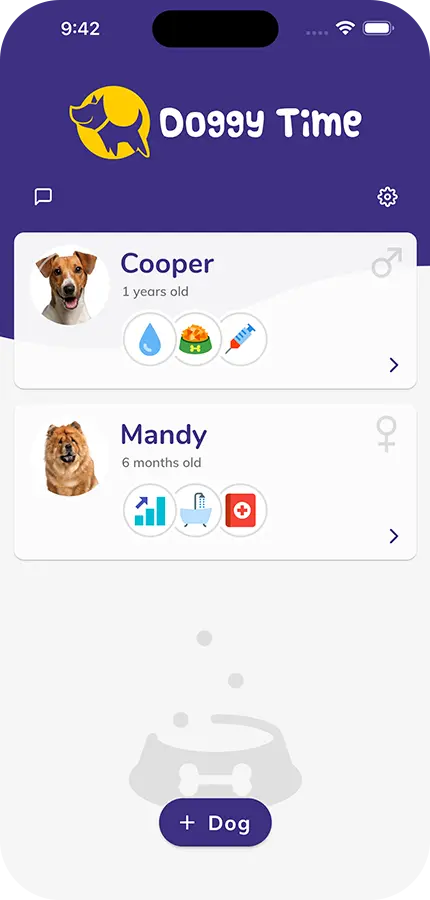
To help you stay on track with your bird’s recovery, consider using the Doggy Time app. While the name says "dog," it is designed for all pets, including birds, allowing you to collaborate with family members on logging activities, tracking behavioral triggers, and setting smart alarms for medication or feeding schedules. It’s the perfect tool to ensure everyone in the household is working together to help your feathered friend thrive.