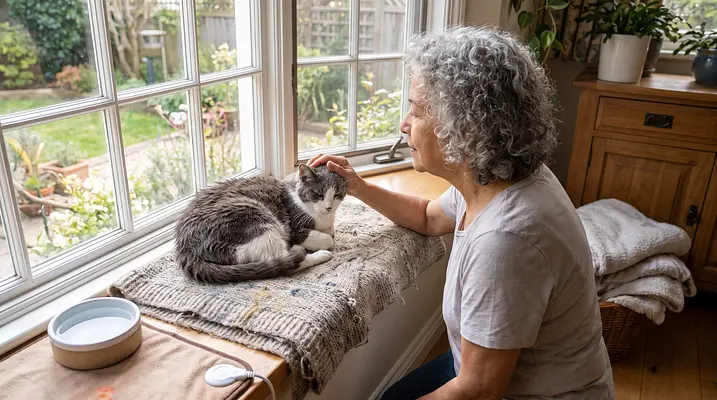
Meist beginnt es mit einer subtilen Veränderung im Alter von etwa elf oder zwölf Jahren. Vielleicht fällt Ihnen auf, dass Ihre Katze zögert, bevor sie ihren vertrauten Sprung auf das Fensterbrett macht, oder der Wassernapf muss viel häufiger als früher nachgefüllt werden. Allzu oft verwechseln wir diese frühen Anzeichen mit dem einfachen Wunsch, sich „langsamer“ zu bewegen, und führen sie auf die natürliche Trägheit einer Hauskatze zurück, anstatt auf die Schmerzen durch Arthrose oder den Beginn von Organveränderungen. Die Erkenntnis, dass diese Verhaltensänderungen oft stille Hilferufe sind, ist der erste Schritt, um sicherzustellen, dass die goldenen Jahre Ihres Tieres komfortabel, würdevoll und voller Liebe verlaufen.
🩺 Verständnis für gesundheitliche Veränderungen
Im Alter durchlaufen Katzen spezifische physiologische Veränderungen, die proaktives Handeln erfordern – nicht nur reaktive Behandlung. Wenn Sie die Ursache von Verhaltensänderungen erkennen, können Sie gemeinsam mit Ihrem Tierarzt einen maßgeschneiderten Pflegeplan erstellen, der Schmerzen und Organfunktionen frühzeitig berücksichtigt.
- Planen Sie halbjährliche Tierarztuntersuchungen ein, um altersbedingte Veränderungen zu erkennen, bevor sie zu kritischen Notfällen werden. 🗓️
- Beobachten Sie den Wasserverbrauch genau, da übermäßiges Trinken oft auf Nierenerkrankungen oder Diabetes hindeutet.
- Sprechen Sie mit Ihrem Tierarzt über Blutuntersuchungen, um Referenzwerte für Nieren- und Leberfunktionen festzulegen.
- Achten Sie auf „Versteckverhalten“, da Katzen Schmerzen oft dadurch verbergen, dass sie sich in dunklen, ruhigen Orten zurückziehen.
💧 Bewältigung von Nierenerkrankungen
Chronische Nierenerkrankung (CKD) ist eine der häufigsten Diagnosen bei älteren Katzen, doch mit der richtigen Ernährung und Flüssigkeitszufuhr ist sie gut beherrschbar. Das Hauptziel besteht darin, Giftstoffe aus dem Körper auszuspülen und den Flüssigkeitshaushalt aufrechtzuerhalten, damit sich Ihre Katze wohlfühlt und weiterhin gut isst.
- Wechseln Sie Ihre Katze auf eine verschreibungspflichtige Nierendiät, die speziell entwickelt wurde, um Phosphor- und Proteinzufuhr zu reduzieren. 🥫
- Stellen Sie mehrere frische Wasserquellen an verschiedenen Stellen im Haus bereit, um häufiges Trinken zu fördern.
- Fügen Sie Nassfutter in die Ernährung ein, um die tägliche Flüssigkeitsaufnahme deutlich zu erhöhen.
- Geben Sie eine kleine Menge natriumarmen Brühe in die Wasserschalen, um die Flüssigkeitsaufnahme für wählerische Esser attraktiver zu machen.
- Fragen Sie Ihren Tierarzt nach subkutaner Flüssigkeitstherapie bei fortgeschrittenen Fällen, um die Flüssigkeitszufuhr zu Hause zu unterstützen.
🦴 Linderung von Arthrose und Gelenkschmerzen
Arthrose ist bei älteren Katzen ein stiller Dieb, der oft zu Steifheit führt, die Besitzer fälschlicherweise als einfache Trägheit missdeuten. Durch einfache Umgebungsanpassungen können Sie die Belastung für ihre Gelenke deutlich verringern und ihr Selbstvertrauen beim Bewegen im Haus wiederherstellen.
- Stellen Sie Rampen oder kleine Haustier-Treppen bereit, damit Ihre Katze ihre bevorzugten hohen Plätze wie Betten oder Sofas erreichen kann, ohne springen zu müssen. 🛋️
- Legen Sie orthopädische Memory-Foam-Matratzen an ihren Lieblingsplätzen zum Schlafen aus, um schmerzende Gelenke zu entlasten.
- Schneiden Sie die Krallen Ihrer Katze regelmäßig, da ältere Katzen weniger in der Lage sind, durch Kratzen die äußeren Nagelscheiden effektiv abzulösen.
- Investieren Sie in eine Katzentoilette mit niedrigeren Seiten, um das Betreten und Verlassen bei steifen Hüften und Beinen zu erleichtern. 🚽
- Sprechen Sie mit Ihrem Tierarzt über sichere Schmerzmittel, wie Solensia-Injektionen oder Gelenkpräparate mit Glucosamin.
⚖️ Gewichtsverlust und Appetitlosigkeit entgegenwirken
Unerklärlicher Gewichtsverlust bei einer älteren Katze ist selten ein gutes Zeichen und weist oft auf zugrundeliegende Probleme wie Hyperthyreose, Zahnschmerzen oder Muskelschwund hin. Die Aufrechterhaltung eines gesunden Gewichts ist entscheidend für Energie und Regeneration, daher gehört es oft zur Pflege dazu, das Futter unwiderstehlich zu machen.
- Erwärmen Sie Nassfutter leicht in der Mikrowelle, um den Geruch zu verstärken und einen nachlassenden Appetit anzukurbeln. 🍽️
- Bieten Sie kleinere, häufigere Mahlzeiten über den Tag verteilt an, um das Verdauungssystem nicht zu überfordern.
- Nutzen Sie Futter-Rätselspielzeuge oder Futtersuchmatten, um ihre Jagdinstinkte zu aktivieren, falls kognitiver Abbau zu Desinteresse führt.
- Überprüfen Sie den Körperkonditions-Index Ihrer Katze, indem Sie die Rippen ertasten, da Gewichtsverlust schnell eintreten kann.
- Untersuchen Sie den Mund Ihrer Katze auf Zahnprobleme, da Zahnfleischschmerzen eine häufige Ursache dafür sind, dass sie das Fressen verweigert. 🦷
🏠 Schaffung einer komfortablen Umgebung
Die Welt einer älteren Katze schrumpft mit dem Alter, daher ist es wichtig, ihre unmittelbare Umgebung auf Sicherheit und Zugänglichkeit zu optimieren. Einige kleine Anpassungen im Haushalt können Unfälle verhindern und sicherstellen, dass sich Ihre Katze in ihrem Territorium sicher fühlt.
- Halten Sie Futter, Wasser und Katzentoiletten auf derselben Etage, um Treppensteigen zu vermeiden. 🏠
- Verwenden Sie Nachtlichter in Fluren, damit Katzen mit nachlassendem Sehvermögen sich nachts sicher im Haus bewegen können.
- Erhöhen Sie Futter- und Wasserschalen auf eine Stehhöhe, um die Belastung von Hals und Wirbelsäule während der Mahlzeiten zu verringern.
- Stellen Sie ein beheiztes Haustierbett oder eine Decke bereit, um steife Gelenke in kalten Monaten zu lindern. 🔥
- Stellen Sie sicher, dass die Katzentoiletten an ruhigen, leicht zugänglichen Stellen stehen, um Unfälle aufgrund von Bewegungseinschränkungen zu vermeiden.
Die Pflege einer älteren Katze ist eine Liebesarbeit, die Geduld, Beobachtungsgabe und die Bereitschaft erfordert, sich anzupassen. Auch wenn die Diagnose einer Nierenerkrankung oder Arthrose überwältigend wirken kann, sind diese Zustände beherrschbar, und viele Katzen leben Jahre nach der Diagnose noch komfortabel. Ihre Rolle verändert sich von Spielkamerad zu sanftem Wächter – dafür sorgend, dass die goldenen Jahre durch Wärme und Sicherheit geprägt sind, nicht durch Schmerzen oder Verwirrung. Die Bindung zwischen Ihnen vertieft sich durch diese Pflege, und die stillen Momente des Pflegens und Kuschelns werden zu den bedeutungsvollsten Erinnerungen Ihres gemeinsamen Lebens.
Schneller Aktionsplan
- Vereinbaren Sie eine Altersvorsorgeuntersuchung beim Tierarzt mit vollständigem Blutbild und Schmerzbeurteilung.
- Senken Sie die Seiten Ihrer Katzentoilette oder kaufen Sie noch heute ein Modell mit niedrigem Einstieg.
- Stellen Sie eine zweite Wasserschale in einem anderen Raum auf, um die Flüssigkeitsaufnahme zu fördern.
- Beobachten Sie, wie Ihre Katze springt oder klettert, um festzustellen, ob sie eine Rampe oder Treppe benötigt.
- Erwärmen Sie die nächste Mahlzeit leicht, um zu testen, ob sich der Appetit verbessert.
Haftungsausschluss: Dieser Blogbeitrag dient ausschließlich Informationszwecken und stellt keine tierärztliche Beratung dar. Konsultieren Sie bei medizinischen Diagnosen, Behandlungen oder Änderungen der Ernährung und Medikation Ihres Tieres immer einen zugelassenen Tierarzt.
Empfohlenes Tool: Um diese neuen Pflegeroutinen im Blick zu behalten, erwägen Sie die Nutzung der Doggy Time App. Obwohl der Name „Doggy“ sagt, funktioniert sie miau-nderbar für Katzen und ermöglicht es Ihnen, gemeinsam mit Familienmitgliedern Medikamente zu dokumentieren, Toiletten-Gewohnheiten zu verfolgen und intelligente Alarme für Fütterungszeiten einzustellen. So können Sie Gesundheitstrends im Alltag beobachten und nichts mehr verpassen, während Sie sich um Ihren älteren Begleiter kümmern.