The front gate swings open, caught by a gust of wind, and for a heart-stopping moment, the world holds its breath. Instead of bolting toward the freedom of the sidewalk, your dog pauses, looks at the open gate, and then turns to look at you. With a happy wag and a bound in their step, they race back to your side, ignoring the distraction entirely. This isn't a fantasy or a trick reserved for professional trainers; it is the result of a reliable recall, built on trust, consistency, and proofing against the real world.
🥅 Laying the Groundwork
Before you expect your dog to come running back from squirrels or other dogs, you must teach them that returning to you is the best thing they can do. Start in a low-distraction environment, like your living room or a quiet hallway, where making the right choice is easy for them.
- Choose a specific word or whistle sound as your cue and use it consistently every time.
- Start by calling your dog from just a few feet away and reward them heavily when they arrive.
- Use high-value treats like small pieces of chicken or cheese to make the reward unforgettable.
- Practice in short sessions of five minutes or less to keep your dog engaged and happy.
- Avoid using your recall word for unpleasant activities like nail trims or ending a fun play session.
🎁 Making it a Party
The biggest mistake owners make is making the recall feel like a chore or a punishment for the dog. If coming to you means the fun ends, your dog will eventually weigh their options and choose the squirrel over you.
- Celebrate your dog’s return with enthusiastic praise, petting, or a quick game of tug.
- Deliver a "jackpot" of several treats in rapid succession to build excitement.
- Release your dog back to what they were doing if possible, so the recall doesn't always end the fun.
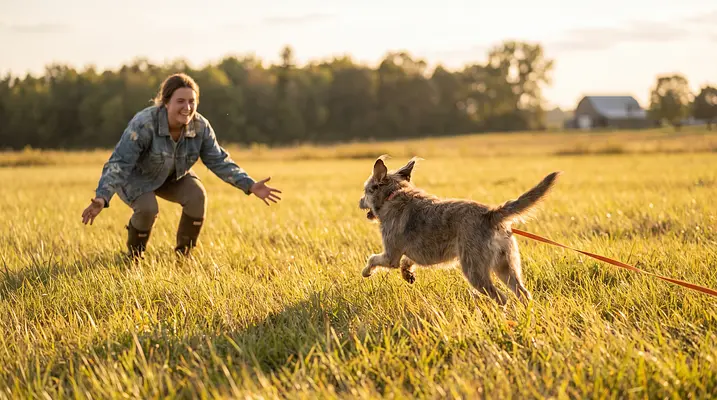
- Keep your body language inviting by crouching down and opening your arms wide.
- Smile and use a happy tone of voice to signal that you are a safe and fun destination.
📏 Adding Distance and Duration
Once your dog is flying to you in the living room, it is time to slowly increase the difficulty by adding space. Distance acts as a distraction, so increase it gradually to ensure your dog succeeds at every step.
- Use a long line leash to give your dog freedom while maintaining safety during practice.
- Call your dog when they are slightly distracted, but before they are fully engaged in something else.
- Run away from your dog as you call them to trigger their chase instinct and make coming to you a game.
- Practice "ping-pong" recalls between two family members to build speed and enthusiasm.
- Gradually increase the distance until your dog comes reliably from across a park or field.
🐿️ Proofing Against Real Distractions
This is the phase where many recalls fall apart, because the classroom is very different from the real world. Proofing means teaching your dog that the cue to come applies even when there are squirrels, bicycles, or other dogs nearby.
- Create a list of distractions ranked from easy to hard, such as a toy on the ground versus a running squirrel.
- Start proofing with low-level distractions and only increase the difficulty when your dog succeeds 90% of the time.
- Use a helper to hold a distraction, like a toy, while you call your dog away from it.
- Increase the value of your rewards to compete with the environment, using real meat or special chews.
- Avoid calling your dog if you know they will not come; instead, go to them to prevent reinforcing the wrong behavior.
🚫 Troubleshooting Common Mistakes
Even with the best intentions, we often accidentally teach our dogs to ignore us. Recognizing these common pitfalls can save you months of frustration and keep your recall reliable.
- Stop repeating your recall cue; say it once clearly and wait or help your dog succeed if they don't respond.
- Never chase your dog if they don't come, as this turns the recall into a game of "keep away."
- Avoid calling your dog for bath time or leaving the dog park until you have caught them with a treat or a leash.
- Do not correct or scold your dog when they finally arrive, even if it took them five minutes to come.
- Ensure every family member follows the same rules to avoid confusing your dog with mixed signals.
📱 Tracking Your Progress
Training a reliable recall is a journey, not a destination, and keeping track of your sessions helps you spot patterns. Logging your successes helps you understand exactly where your dog is in their training journey.
- Note the environment and distraction level every time you practice to track improvement.
- Record which rewards work best in different situations to refine your training toolkit.
- Log any "misses" to identify patterns in when your dog struggles to respond.
- Set a schedule for training sessions to ensure you are practicing consistently every week.
Building a recall that works every time takes patience, but the freedom it grants you and your dog is worth every minute of effort. There is nothing quite like the peace of mind that comes from knowing your friend is safe, responsive, and happy to be by your side.
🏃 Quick Action Plan
- Pick a distinct recall word or whistle sound today.
- Buy high-value treats that your dog goes crazy for.
- Practice five recalls in your living room tonight.
- Move to the backyard on a long line tomorrow.
- Celebrate every single success like it’s a major victory.
Disclaimer: This blog post provides training advice and is not a substitute for professional veterinary guidance. If your dog displays aggression or extreme anxiety, please consult a veterinarian or a certified behaviorist.
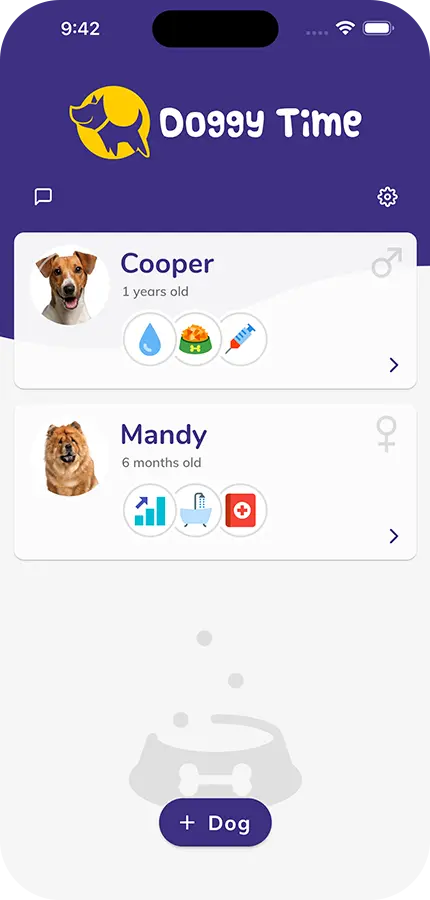
If you need help staying organized, consider using the Doggy Time app. It allows you to collaborate with family members on logging training sessions, set smart alarms for practice times, and track your pet's daily activities to ensure your training plan stays on track.