In the haze of early ownership, meals, naps, and accidents blur into a shapeless cycle where one hour spills indistinguishably into the next. Yet, just when the disorientation peaks, you begin to sense a comforting rhythm beneath the chaos, a predictable pattern that transforms the overwhelming unknown into a manageable routine. Tapping into this natural cadence is the key to navigating the critical milestones of eight, twelve, and sixteen weeks.
Whether you are starting with a tiny 8-week-old fluffball or navigating the teenage phase at 16 weeks, having a plan helps you stay sane. Let’s look at exactly what a day in the life of your puppy should look like, broken down by age.
🕒 The 8-Week-Old Puppy Routine
At eight weeks old, your puppy is essentially a toddler with zero bladder control and a high need for sleep. Their day revolves around a strict cycle of eating, pottying, playing, and sleeping. Because they can only "hold it" for about an hour at this age, you must be vigilant.
- Wake up at 6:30 AM and immediately carry your puppy outside to their designated potty spot.
- Feed breakfast at 7:00 AM, followed by another potty break 15 minutes later.
- Engage in short, gentle play or training for 15 minutes before a morning nap.
- Wake up at 9:30 AM for a potty break and a quick drink of water.
- Put your puppy back down for a mid-morning nap from 9:45 AM to 11:00 AM.
- Take a noon potty break, followed by lunch and another potty opportunity.
- Schedule a longer afternoon nap from 12:30 PM to 2:30 PM.
- Wake up at 2:30 PM for a potty break and a short play session.
- Feed dinner at 5:00 PM, ensuring a potty break follows immediately.
- Limit water intake after 6:30 PM to prevent nighttime accidents.
- Take a final potty break at 10:30 PM before settling in for the night.
🐕 The 12-Week-Old Puppy Routine
By twelve weeks, your puppy is gaining a bit more bladder control and can stay awake for slightly longer periods. This is the golden age for socialization and learning basic commands, but they still need plenty of downtime to process all the new information.
- Start the day at 7:00 AM with a potty break and breakfast.
- Practice a 10-minute training session focusing on "sit" and "stay" commands.
- Allow for active play or a short walk until 8:30 AM, followed by a nap.
- Wake up at 10:30 AM for a potty break and a mid-morning snack or kong toy.
- Nap again from 11:00 AM to 1:00 PM to recharge their batteries.
- Take a lunch break potty trip and a short play session around 1:00 PM.
- Feed dinner at 5:30 PM, followed by a potty break and socialization time.
- Encourage a late afternoon nap from 2:30 PM to 4:00 PM.
- Settle down for the evening with calm chewing activities after 7:00 PM.
- Go out for a final potty break at 11:00 PM before bedtime.
🐾 The 16-Week-Old Puppy Routine
At sixteen weeks, your puppy is entering the "teenager" phase. They have better bladder control and can hold it for longer stretches, usually up to four to five hours during the day. Their energy levels are higher, requiring more structured exercise and mental stimulation.
- Wake up at 7:00 AM for a potty break and breakfast.
- Go for a longer morning walk or active play session lasting 20-30 minutes.
- Settle down for a morning nap from 9:00 AM to 11:30 AM.
- Take a midday potty break and engage in a training session around noon.
- Feed lunch if appropriate, followed by a potty break and mental enrichment.
- Nap through the early afternoon from 1:30 PM to 3:30 PM.
- Enjoy a longer afternoon walk or outdoor exploration at 4:00 PM.
- Feed dinner at 6:00 PM, followed by a potty break and family time.
- Practice training cues like "come" and "leave it" around 7:30 PM.
- Take a final potty break at 11:00 PM before sleeping through the night.
💤 How Much Sleep Puppies Actually Need
It might feel like your puppy is bouncing off the walls one minute and fast asleep the next, but that rhythm is perfectly normal. Puppies actually need between 18 and 20 hours of sleep per day to support their rapid brain development and physical growth. Without adequate rest, they can become cranky, nippy, and prone to behavioral issues, much like an overtired toddler.
- Enforce naps every few hours, even if your puppy seems like they want to keep playing.
- Create a quiet, comfortable den space like a crate or pen to encourage deep sleep.
- Watch for "zoomies" or increased biting, which are often signs that a puppy is overtired.
- Stick to a strict sleep schedule to help your puppy’s internal clock adjust quickly.
💼 Adapting the Routine for a Work Day
Leaving the house doesn’t mean your puppy’s schedule has to fall apart. With a little preparation, you can maintain their routine while you earn a living. The key is to tire them out before you leave and provide a safe, comfortable environment while you are gone.
- Wake up 30 minutes earlier than usual to ensure a good walk and play session.
- Feed breakfast and provide a potty break right before you walk out the door.
- Set up a long-term confinement area with pee pads, water, and a bed if you are gone more than 4 hours.
- Hire a dog walker or ask a neighbor to stop in for a midday potty break and lunch.
- Leave puzzle toys or frozen kongs to keep your puppy mentally stimulated while alone.
- Keep your departure and return calm to avoid reinforcing separation anxiety.
📋 Quick Action Plan
- Write down your puppy’s specific meal times and potty break intervals based on their age.
- Set a timer on your phone for every potty break to prevent accidents before they happen.
- Create a designated "nap zone" like a crate or pen and start crate training immediately.
- Purchase puzzle toys or chew items to keep your puppy busy during downtime.
- Schedule a visit with your vet to confirm your routine aligns with your puppy’s health needs.
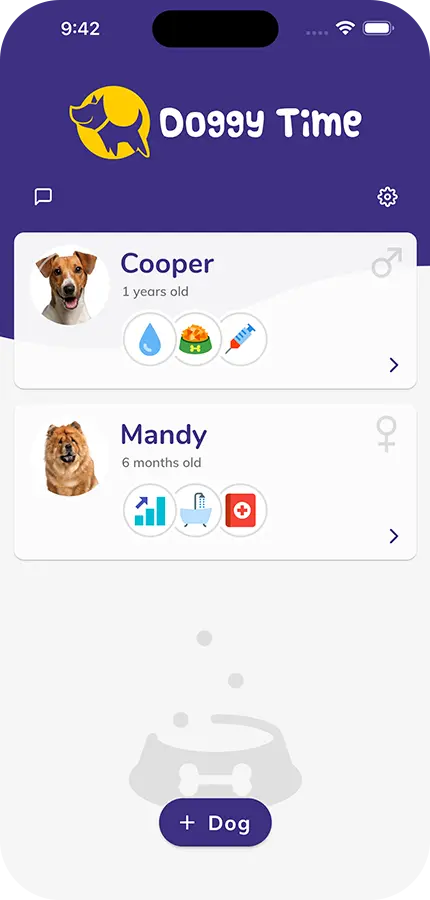
While a routine provides the framework for a happy life with your dog, tracking it shouldn't be a chore. Consider using the Doggy Time app to log your pet's activities, set smart alarms for potty breaks, and collaborate with family members on care duties. It is the perfect way to ensure your new puppy stays on track, no matter how busy life gets.
Disclaimer: This blog post provides general information and should not replace professional veterinary advice. Always consult with your veterinarian regarding your puppy's specific health, dietary needs, and vaccination schedule.