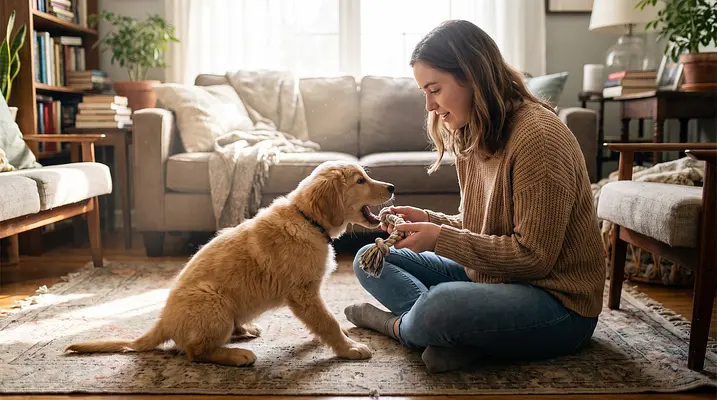
You are halfway across the kitchen when you feel the sudden, startling pinch of needle-sharp teeth sinking into your ankle, and for a fleeting moment, the joy of new parenthood is replaced by a cold spike of worry that your cuddly companion might actually be aggressive. It is a startling sensation that leaves you limping and questioning what you’ve gotten yourself into, but those sharp nips are rarely a sign of a bad attitude. This behavior is simply a misunderstood part of puppy development, and with the right guidance, you can curb the biting and restore peace to your home.
🐾 Why Puppies Mouth and Nip
Puppies explore the world primarily through their mouths, much like human babies do with their hands. Nipping and mouthing are natural ways for them to investigate their environment, play with littermates, and figure out how their jaws work.
- Recognize that biting is a developmental milestone rather than a sign of aggression.
- Understand that puppies often nip when they are overstimulated, tired, or simply bored.
- Remember that teething discomfort usually peaks around 12 to 16 weeks of age, driving the urge to chew.
- Acknowledge that herding breeds, like Border Collies or Corgis, may instinctively nip at ankles to "move" their family members.
🛑 Teaching Bite Inhibition
Bite inhibition is the most critical safety lesson your puppy will ever learn. This concept teaches a dog to control the force of their bite so that, if they ever feel the need to bite in fear or pain as an adult, they will cause minimal damage.
- Allow gentle mouthing during play sessions but set a strict limit on pressure.
- Freeze your hands and stop all movement immediately if the puppy bites down too hard.
- Wait for the puppy to loosen their grip or lick your hand before resuming play.
- Gradually tighten the rules over time until even the slightest pressure results in a pause in play.
- Aim to teach the puppy that human skin is fragile and requires a very soft mouth.
🚫 The Yelp-and-Withdraw Technique
The "yelp method" mimics how a puppy’s littermates would react to a painful bite. This technique signals to the puppy that their play was too rough and causes the fun to stop immediately.
- Let out a high-pitched "Ouch!" or "Yipe!" the moment teeth make contact with your skin.
- Turn your back to the puppy and cross your arms to remove your attention entirely.
- Maintain this "time-out" posture for 10 to 15 seconds to let the lesson sink in.
- Resume interaction only when the puppy has calmed down and offers a polite behavior like sitting.
- Repeat this process consistently so the puppy learns that biting equals the end of attention.
⚠️ When the Yelp Technique Backfires
While the yelp method works for many puppies, some interpret the high-pitched noise as an invitation to play even harder or become more agitated. If your puppy escalates their biting after you yelp, you need a different approach.
- Stop making the yelping noise if the puppy seems aroused or excited by the sound.
- Switch to a calm, deep "Too bad" or "Time out" to mark the unwanted behavior.
- Leave the room entirely or place the puppy in a designated pen for a brief settling period if the biting escalates.
- Ensure the separation is boring and not viewed as a game of chase.
- Check if the puppy is overtired, as nipping often increases when a puppy needs a nap rather than training.
🧸 Redirecting to Appropriate Toys
Puppies have an innate need to chew, and it is unfair to expect them to stop entirely. The goal is to redirect that natural drive away from your body and onto acceptable inanimate objects.
- Keep a variety of chew toys in every room so you are never without a tool to redirect.
- Offer a toy immediately after withdrawing your hand to show the puppy what is acceptable to bite.
- Use frozen Kong toys or wet washcloths to soothe sore gums during the teething phase.
- Engage the puppy in a game of tug or fetch to burn off energy that might otherwise be directed at your ankles.
- Rotate toys weekly to keep the puppy interested in their own items rather than your shoes.
🦈 Handling the Ankle-Chasing Land Shark Phase
For some puppies, moving feet are simply irresistible moving targets. This "land shark" behavior is particularly common in herding breeds and can make walking across the room a painful challenge.
- Stop walking immediately the moment your puppy latches onto your pant leg or ankle.
- Stand still like a statue with your arms crossed to make yourself as boring as possible.
- Wait for the puppy to let go, even for a split second, before offering a toy.
- Toss a toy in the opposite direction to redirect their chase drive away from your body.
- Use a leash indoors to prevent the puppy from practicing this behavior if they are particularly persistent.
Navigating the biting phase can be exhausting, but it is a fleeting moment in your dog's life. Consistency is your best friend here; ensure that everyone in the household follows the same rules so the puppy learns quickly. By teaching bite inhibition and redirecting that energy, you are building the foundation for a safe, gentle companion for years to come.
📝 Quick Action Plan
- Stock every room with chew toys so you can redirect biting instantly.
- Yelp or say "Ouch" to mark the bite, then withdraw attention for 15 seconds.
- Leave the room if the puppy gets more excited or aggressive after you yelp.
- Enforce nap times when the puppy becomes a "land shark" to ensure they aren't overtired.
- Praise your puppy enthusiastically when they choose to chew a toy instead of your hand.
Disclaimer: This blog post provides general training advice and is not a substitute for professional veterinary or behavioral consultation. If your puppy exhibits signs of aggression, such as stiff body posture, growling, or snapping without provocation, please consult a veterinarian or a certified professional dog trainer immediately.
Simplify Your Training Routine
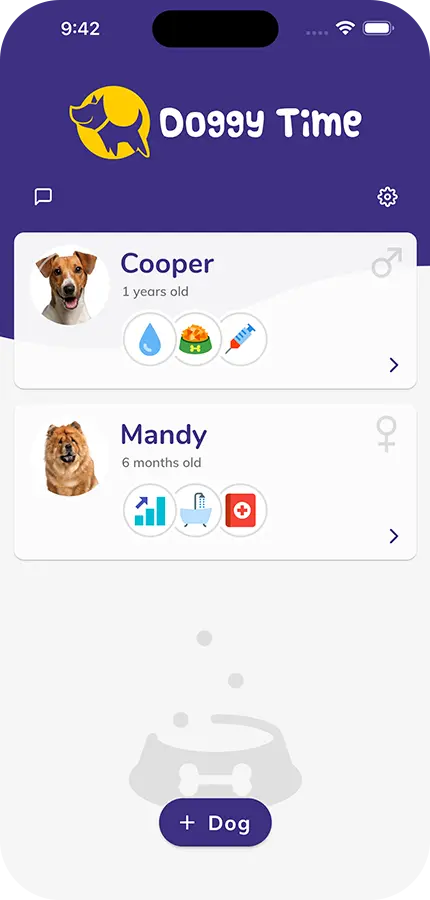
Tracking your progress is essential when breaking bad habits. The Doggy Time app helps you collaborate with family members on logging training activities, setting smart alarms for potty breaks, and scheduling nap times. Keep everyone on the same page and track your puppy's daily habits with ease!