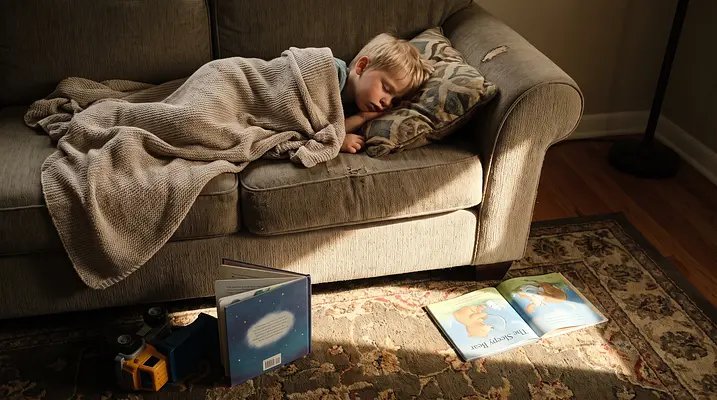
It is a strange and startling thing to see a child who usually treats naps as a personal insult sleep straight through an entire afternoon. You check on them, adjust a blanket, and listen to the rhythm of their breathing, waiting for them to pop up and ask for a snack, but the hours tick by and they remain deeply, peacefully asleep. This profound lethargy can feel alarming, especially when it stands in such stark contrast to the relentless energy we are used to managing. However, in the context of an illness, this heavy, unshakeable sleep is rarely a sign that something is "wrong" in the way we fear; rather, it is a sign that the body is doing exactly what it is designed to do.
😴 The Physiology of Healing Sleep
When a child falls ill, the body shifts into a different gear, prioritizing repair over movement. This section explains why that shift is a sophisticated biological strategy, not a system failure.
- Picture the immune system as a construction crew that works the night shift, releasing specific proteins called cytokines that help promote sleep while fighting infection.
- Understand that these infection-fighting cells are actually more active during sleep, using the body’s downtime to multiply and target the pathogen.
- Recognize that the intense sleepiness often precedes other symptoms, serving as an early warning system that the body has already detected an intruder and is marshaling its defenses.
- Know that sleep deprivation has been shown in research to reduce the effectiveness of the immune response, making the body’s demand for rest a critical survival mechanism.
📡 Why Sleepiness Is an Active Signal
We often think of fatigue as a lack of energy, but during illness, it is better understood as a deliberate signal from the brain. This helps reframe that overwhelming drowsiness as a form of communication between the body and the brain.
- Consider the overwhelming sleepiness as a "priority alert" from the brain, telling the child to stop moving so energy can be diverted to the immune system.
- Imagine the brain acting like a thermostat, turning up the "sleep need" setting to ensure the child stays down long enough for repairs to occur.
- Observe that this signal is often stronger in children than adults because their bodies are simultaneously fighting illness and managing rapid growth.
- Remember that a child who seems "impossible to wake" is often just in a deeper stage of sleep, which is precisely where the most restorative physiological work happens.
🌙 Why Broken Sleep Still Counts
It is stressful when a sick child wakes up crying or restless every hour, leaving parents to worry that the healing process is being interrupted. Here is why that fragmented sleep is still serving a purpose.
- Realize that sleep cycles are naturally shorter during illness, often causing wake-ups as the body shifts between stages.
- Acknowledge that brief wakings allow the child to signal for fluids or comfort, addressing dehydration or fever spikes that need attention.
- Note that the brain often accumulates "sleep pressure" quickly during illness, meaning a child can fall back into restorative sleep very rapidly even after a wakeful period.
- Trust that the body is resilient enough to grab the rest it needs in chunks, even if it doesn't look like the solid eight hours we associate with health.
📈 When Sleeping "Too Much" Is the Expected Pattern
Seeing a child sleep for 16 or 18 hours a day can trigger panic, but pediatric literature suggests this is a standard response to significant infection. This section covers why the "marathon sleeper" is usually following a normal healing trajectory.
- Compare the sick body to a device charging on "low power mode," where all non-essential functions are paused to focus entirely on the battery.
- Recall that common illnesses like influenza or mononucleosis are widely cited in medical literature as causing profound fatigue that can last for days.
- Distinguish between a child who is sleeping a lot but wakes up briefly for a drink or a cuddle, versus a child who is truly unresponsive to stimuli.
- Expect the sleep needs to taper off gradually as the illness runs its course, rather than disappearing overnight.
🚩 Distinguishing Normal Lethargy from Warning Signs
While deep sleep is a powerful tool for healing, it is natural to worry about where the line is between "healing sleep" and concerning unresponsiveness. This section describes what published medical guidance looks for when differentiating the two.
- Understand that pediatric sources define concerning lethargy as a child who cannot be aroused to interact or make eye contact even when fully awake.
- Recognize the difference between a child who is cranky and tired but consolable, versus a child who appears limp, floppy, or unable to lift their head.
- Note that a fever often amplifies sleepiness, and observing the child after a fever breaks can help clarify if the lethargy is illness-related or something more serious.
- Consult a pediatrician if a child has a specific "look" that worries you—parents’ intuition is often cited in guidance as a valid reason to seek a professional opinion.
A Quick Action Plan
- View deep sleep as a sign that the body is working hard, not shutting down.
- Keep the room dim and quiet to support the natural drive for rest.
- Offer fluids gently during wakeful moments without forcing the issue.
- Log sleep patterns and symptoms in a tracker to share with your pediatrician if the illness lingers.
- Trust that the body’s drive to sleep is a sophisticated evolutionary tool for survival.
Disclaimer: This article is for educational purposes only and is not medical advice. Always consult your pediatrician or a qualified healthcare professional for any questions regarding your child’s health, symptoms, or treatment.
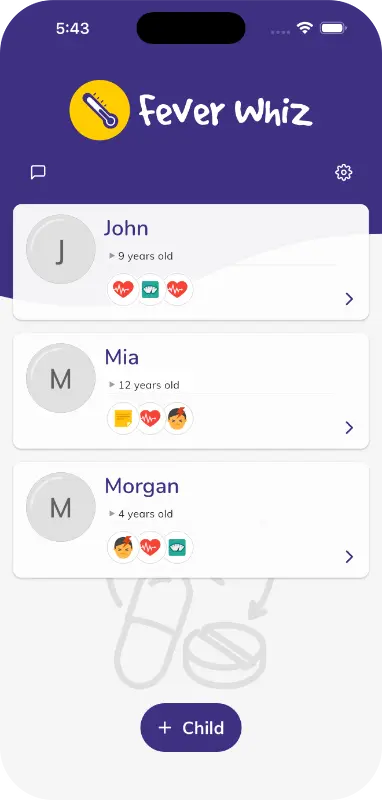
To make tracking easier during these long days, consider using the Fever Whiz app. It helps parents and caregivers log medications, temperatures, and symptoms; set reminders; visualize trends; store medical documents; and share a real-time care timeline with everyone caring for the child, serving as a private record-keeping tool to help you feel more organized when it matters most.