Peanut, a sun conure with a penchant for drama, sits perched beside his food bowl. With surgical precision, he tosses the pellets and safflower seeds over his shoulder, creating a growing pile on the cage floor. He is on a mission to excavate every single sunflower seed hidden at the bottom, ignoring the "healthy stuff" completely. It’s a scene that plays out in living rooms everywhere, and while it might look like a picky bird just being a bird, this behavior is often the first sign of a nutritional imbalance that can lead to serious health issues down the road.
🌱 The Problem with All-Seed Diets
Many owners assume that because birds eat seeds in the wild, a bag of seed mix from the pet store is the perfect diet. Unfortunately, commercial seed mixes are the avian equivalent of a fast-food diet—high in fat and low in essential nutrients.
- Recognize that seeds are incredibly high in fat, which can lead to obesity and liver disease in sedentary pet birds.
- Compare the nutritional value of seeds to pellets, noting that seeds lack essential vitamins like Vitamin A and Calcium.
- Understand that an all-seed diet often results in poor feather quality, dry skin, and a weakened immune system over time.
- Observe your bird "cherry-picking" only their favorite seeds, which guarantees they receive an unbalanced nutritional intake.
🥦 The Ideal Plate: Pellets, Veggies, and Fruit
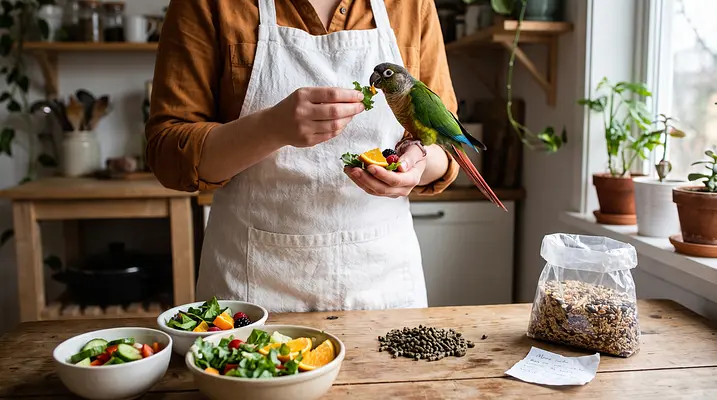
To ensure a long and vibrant life, your bird needs a varied diet that mimics the complexity of their natural intake. The goal is to shift the bulk of their calories from fatty seeds to formulated pellets and fresh produce.
- Aim for a diet consisting of roughly 60-70% high-quality formulated pellets.
- Supplement the pellets with 20-30% fresh vegetables, focusing on leafy greens and crunchy orange veggies.
- Limit fruit intake to about 5-10% of the diet due to high natural sugar content.
- Offer safe nuts like almonds or walnuts only as high-value training treats rather than dietary staples.
🥕 Veggie Victories: Best Options for Your Bird
Vegetables should be the cornerstone of the fresh portion of your bird's diet. They provide essential vitamins and minerals that pellets alone might miss, and the variety keeps mealtime interesting.
- Introduce dark leafy greens like kale, spinach, and romaine lettuce for a boost of Vitamin A and Calcium.
- Offer crunchy vegetables such as carrots, sweet potatoes, and bell peppers to satisfy their natural chewing instincts.
- Chop vegetables into manageable pieces depending on your bird's size to make them easier to handle and eat.
- Wash all produce thoroughly under running water to remove pesticides and dirt before serving.
🍎 Fruit: The Sweet Treats
While fruit is a healthy addition, it should be treated more like candy than a meal. Too much sugar can cause weight gain and digestive issues, even if it is natural sugar.
- Stick to safe fruits like apples (remove the seeds), bananas, berries, and melons.
- Avoid avocados entirely, as they contain persin, a substance that is highly toxic and often fatal to birds.
- Remove fruit pits and seeds from items like apples, pears, and cherries before offering them to your pet.
- Serve fruit in small, bite-sized chunks to prevent your bird from gorging on sugar.
🔄 How to Transition to a New Diet
Switching a bird from seeds to pellets is rarely an overnight success; it requires patience and strategy. Birds are creatures of habit and can be notoriously stubborn when their favorite foods disappear.
- Start the transition by mixing a small amount of pellets into the current seed mix.
- Grind some pellets into a powder and sprinkle it over their favorite seeds to introduce the new flavor.
- Offer pellets in the morning when your bird is hungriest, and save the seeds for later in the day.
- Eat the pellets yourself (or pretend to) in front of your bird, as they are highly social and often want to share what their flock is eating.
- Reduce the seed quantity gradually over several weeks until pellets are the main staple.
⚠️ Foods to Avoid Completely
While exploring new diet options, it is vital to know which kitchen staples are dangerous. Some foods can cause immediate illness or even death.
- Keep avocados, chocolate, and caffeine out of reach at all times, as these are toxic to birds.
- Avoid feeding apple seeds, fruit pits, or onions, which can cause digestive distress or anemia.
- Steer clear of salty, processed human foods like chips or crackers, which can damage a bird's tiny kidneys.
- Check for mold or spoilage in fresh foods daily, as birds are highly sensitive to bacteria and toxins.
📅 Quick Action Plan
- Purchase a high-quality pellet brand appropriate for your bird's species size.
- Chop a mix of leafy greens and crunchy vegetables for tonight's dinner.
- Measure the current seed intake to establish a baseline for reduction.
- Place a separate bowl of pellets in the cage alongside the usual food.
- Monitor your bird’s droppings to ensure they remain healthy during the diet change.
Transitioning your bird to a healthier diet is one of the most loving things you can do for their long-term well-being. It might take weeks or even months of persistence, but the reward is a vibrant, energetic companion with beautiful feathers. Keep the process positive, celebrate the small victories, and remember that every healthy bite counts.
Disclaimer: This blog post provides general information regarding pet bird nutrition and is not a substitute for professional veterinary advice. If you have specific concerns about your bird's health or diet, please consult with an avian veterinarian.
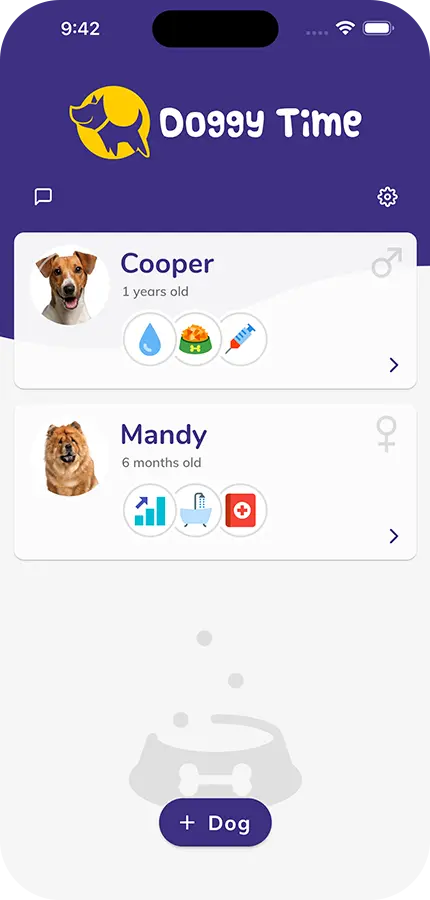
If you are looking for a way to stay on top of your bird's feeding schedule and training progress, consider using the "Doggy Time" app. While the name says dogs, it works perfectly for birds too! You can collaborate with family members to log feeding times, track vegetable intake, set smart alarms for medication, and schedule training sessions to keep your feathered friend happy and healthy.