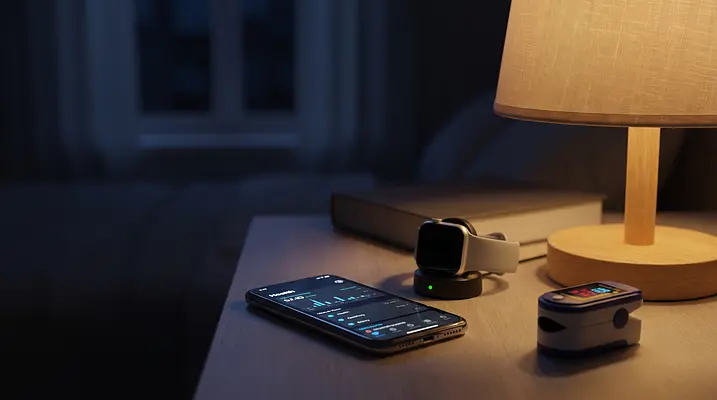
It is 1:00 a.m., the house is silent, and you are staring at the ceiling or perhaps the dim light of a nursery monitor. In the quiet desperation of the night, it is incredibly tempting to reach for your phone and buy that gadget—the smart sock, the fancy thermometer, or the fingertip device—that promises to finally give you a definitive answer. We have all been there, convinced that if we just had a number, a graph, or a blinking green light, we could banish the uncertainty and know exactly what to do. But while technology can be a wonderful tool for logging and organizing, it is vital to understand what these consumer devices actually measure, where their limits lie, and why your pediatrician cares more about your description of your child’s behavior than a single data point.
📱 What Your Gadgets Actually Measure
Consumer health devices are engineering marvels, but they rely on indirect measurements to estimate what is happening inside the body. Understanding the physics behind the screen helps explain why they sometimes give surprising readings.
- Picture a fingertip pulse oximeter shining two beams of light through your child’s nail bed to calculate the color of their blood.
- Know that this device estimates oxygen saturation by comparing how much light is absorbed by red blood cells, but it cannot measure the actual oxygen content in the blood or how well that oxygen is reaching the organs.
- Imagine a smartwatch sensor using green LED lights to detect changes in blood volume under the skin with every heartbeat.
- Understand that this method, called photoplethysmography, counts pulses by looking for expansion and contraction of the vessels, which is distinct from measuring the electrical activity of the heart (an EKG) found in clinical settings.
- Recognize that "smart" thermometers—whether temporal artery scanners or wearable patches—detect heat radiating from the skin or the forehead, which is a proxy for the body’s core temperature.
- Remember that skin temperature is naturally lower than core temperature and can be influenced by room temperature, sweat, or how the child is bundled up.
🏥 Why Consumer Devices Differ from Clinical Equipment
It is easy to assume that a device sold for home use is simply a smaller, more convenient version of the equipment in a hospital. However, consumer gadgets and medical-grade equipment are built to different standards for different purposes.
- Consider that medical devices undergo rigorous validation studies to prove they meet strict accuracy standards set by regulatory bodies, whereas consumer wellness devices are often regulated as general wellness products with lower precision requirements.
- Realize that clinical equipment is designed to be used by trained professionals who know how to position the patient and interpret the result in context, while consumer devices are designed for ease of use by untrained users in variable environments.
- Note that hospitals regularly calibrate their machines to ensure ongoing accuracy, a maintenance step that is rarely possible or practical for home gadgets.
- Accept that a consumer device is often engineered for "trend analysis"—showing you if a value goes up or down—rather than for the pinpoint diagnostic accuracy required to make a medical decision.
- Visualize the difference between a professional chef’s knife and a plastic picnic knife; both can cut food, but only one is designed for the precision and durability of a clinical environment.
📉 The Risk of False Alarms
One of the biggest downsides of having instant access to numbers is the potential for "false positives"—readings that look scary but are technically inaccurate or clinically insignificant. This can lead to unnecessary anxiety and midnight panic.
- Imagine a pulse oximeter reading dropping because a child’s hand is cold or they are moving slightly, which interferes with the light sensor.
- Understand that movement artifact is the most common cause of erratic readings on wearables, often triggering alarms that wake parents but reflect nothing more than a child rolling over in their sleep.
- Recall that a temporal thermometer might read low if the child has been sleeping on a cool pillow, or high if they have been bundled in blankets, leading to a number that doesn't reflect their internal state.
- Observe that normal physiology includes fluctuations; a heart rate that seems "high" on a watch might simply be a normal response to a dream, a growth spurt, or the excitement of waking up.
- Acknowledge that false alarms can lead to unnecessary emergency room visits, exposing the family to stress and the child to hospital germs when no actual illness is present.
😌 The Risk of False Reassurance
Perhaps more dangerous than the false alarm is the "false negative"—when a device gives a reading that looks normal, but the child is actually struggling. A number can never tell the whole story of how a child is feeling.
- Picture a child with a significant respiratory issue who is compensating well; their oxygen saturation might read "normal" on a home device, even as they are working hard to breathe.
- Know that a thermometer might read a normal temperature if taken incorrectly or if the child has been given a fever-reducer, masking a high fever that would otherwise be a warning sign.
- Consider that a wearable might show a heart rate within a "normal" range, but a clinician would notice that the rate is actually too slow for a child who is awake and agitated, or too fast for a child who is sleeping.
- Remember that devices cannot see skin color changes like pallor or mottling, hear the quality of a cough, or feel the texture of skin.
- Realize that relying solely on a green light or a "normal" number might delay seeking necessary medical attention because the device signaled that everything was fine.
👀 Why Clinicians Trust Your Eyes More Than Your Numbers
When you call the pediatrician or visit the emergency room, you might notice they look at your child before they look at your notes or device history. This is because "clinical observation"—how a child looks and acts—is the gold standard of pediatric assessment.
- Understand that a child’s behavior—whether they are playful, alert, making eye contact, or lethargic—is often a more sensitive indicator of illness severity than a single vital sign.
- Recognize that clinicians assess "work of breathing"—how the chest moves and whether the belly is involved—something a pulse oximeter number cannot capture.
- Learn that the "behavioral state" is a vital sign in pediatrics; a child who is running around the room with a fever is usually less concerning than a child with a normal temperature who refuses to move or interact.
- Appreciate that your description of what you see—how they are eating, sleeping, and playing—provides the context that turns a static number into a meaningful clinical picture.
- Trust that your parental instinct, honed by hours of observation, is a powerful diagnostic tool that no gadget can replace.
📝 A Quick Action Plan
- Use gadgets for trends, not diagnoses. View consumer devices as tools for logging general patterns over time rather than definitive diagnostic machines.
- Prioritize behavior over numbers. Give more weight to how your child looks and acts than to the specific number on a screen.
- Keep the instructions handy. Review the user manual to understand the specific limitations and proper placement of each device you own.
- Log symptoms for the doctor. Use a tracker to record temperatures, symptoms, and medication times so you can give the pediatrician a clear timeline.
- Call the professionals when in doubt. Contact your pediatrician if your child’s behavior worries you, regardless of what the device says.
Disclaimer: This post is for educational purposes only and is not medical advice. Always consult your pediatrician or a qualified healthcare professional for any medical questions, symptoms, dosing, or treatment decisions, and seek urgent care for any emergency.
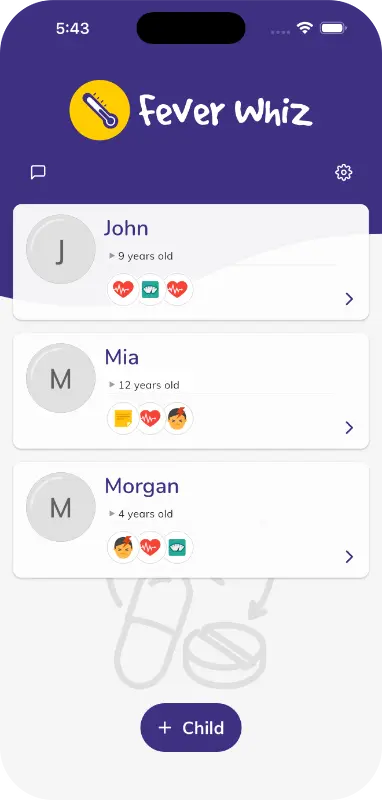
Suggested Tool: Consider using the Fever Whiz app to help manage the chaos of sick days. It helps parents and caregivers log medications, temperatures, and symptoms, set reminders, visualize trends, store medical documents, and share a real-time care timeline with everyone caring for their child. It is a private record-keeping and organization tool—not a medical device—and does not provide medical advice or diagnosis.