"So, is it bacterial?" It is the question that escapes almost every parent’s lips as they reach for their coat, often while the pediatrician is still clicking through the electronic chart. It makes perfect sense why this is the query that rises to the top. We have been culturally conditioned to view antibiotics as the "strong" cure and anything else as a waiting game. Parents want to leave the office with a plan to attack the illness, and for decades, that plan often meant a prescription. But the landscape of pediatric care has shifted, and understanding why that question is so complex—and why the answer is so often "no"—can actually make the next sick visit feel much less like a deadlock and more like a partnership.
🦠 The Two Very Different Enemies
Understanding the distinction between these two types of germs is the first step in understanding why treatment varies so much. Bacteria and viruses could not be more different in how they live, survive, and interact with the human body.
- Picture bacteria as tiny, independent living things that can survive on their own and reproduce just about anywhere. 🦠
- Imagine viruses as much smaller hijackers that cannot survive or reproduce without a host cell to invade.
- Remember that bacteria can often be targeted by antibiotics, which kill the living organism.
- Know that antibiotics have zero effect on viruses, because viruses are not "alive" in the way bacteria are.
- Understand that most common childhood illnesses—colds, croup, most coughs, and the flu—are caused by viruses.
🕵️ The Detective Work Clinicians Perform
When a pediatrician looks at your child, they are doing far more than confirming the presence of a fever; they are gathering clues to build a probability profile. They are weighing the "pre-test probability"—essentially, how likely a bacterial infection is based on the current landscape of illness in the community and your child's specific symptoms.
- Consider how the illness began: bacterial infections often appear more suddenly and intensely, while viral illnesses tend to have a ramp-up period.
- Notice the location: certain spots, like the urinary tract or the middle ear, have different likelihoods of hosting bacteria versus viruses depending on the child's age.
- Recognize that the physical exam provides vital context, such as the appearance of the throat or the sound of the lungs.
- Factor in the duration: a cough that has lingered for three weeks requires different thinking than a cough that started yesterday.
- Acknowledge that the clinician is weighing the risk of missing a bacterial infection against the risk of treating a viral one unnecessarily.
🧪 Why a Test Is Not Always Ordered
It can be frustrating to leave the office without a definitive lab result, but there are sound reasons why tests are not run for every symptom. Testing is a tool, not a guarantee, and sometimes the results can be misleading or simply unnecessary for making the right call.
- Realize that many rapid tests have a "window" of detection and may show negative results if done too early or too late. 🕰️
- Understand that some bacterial tests, like throat cultures, take days to grow, while the clinical decision often needs to be made in the moment.
- Know that finding bacteria does not always mean it is causing the illness; we all have harmless bacteria living on our skin and in our bodies.
- Remember that over-testing can lead to false positives, potentially triggering unnecessary treatment for something that was never a threat.
- Trust that a confident clinical diagnosis based on symptoms alone is often more accurate than a test performed at the wrong time.
📋 What a Test Would and Would Not Settle
Even when a test is ordered, parents are sometimes surprised to find that it doesn't provide a simple "yes or no" answer. Tests are pieces of a puzzle, not the final picture, and interpreting them requires medical expertise.
- Accept that a positive test for a virus confirms the virus is present, but does not rule out a secondary bacterial infection tagging along.
- Grasp that a negative test does not always mean "nothing is wrong," but rather that a specific suspect has been cleared.
- See that some tests measure antibodies (the body's response), which can lag behind the actual infection by several days.
- Recognize that "colonization" means bacteria can be present without causing disease, complicating the interpretation of a positive result.
- Understand that the pediatrician must interpret the test result in the context of how the child actually looks and acts.
✅ Why "It’s Viral" Is a Real Finding
Hearing that your child has a "viral illness" can sometimes feel like being told there is no answer, but that perception could not be further from the truth. A diagnosis of a viral infection is a positive finding—it identifies the culprit and rules out the need for antibiotics, which is a significant medical conclusion.
- View a viral diagnosis as a successful identification of the cause, allowing the care team to focus on supportive care.
- Appreciate that diagnosing a virus protects your child from the side effects and risks of unnecessary antibiotics, such as stomach upset or future resistance.
- Acknowledge that knowing the cause is viral helps predict the expected course of the illness, usually a timeline of gradual improvement.
- Realize that "viral" does not mean "mild"—some viral illnesses can cause high fevers and significant discomfort, even if they don't require antibiotics.
- Trust that ruling out a bacterial infection is an active medical decision that requires skill and observation, not a default setting.
🚨 When Guidance Says to Reach Back Out
While most viral illnesses resolve on their own with time and rest, the body sometimes needs extra help or a second look. Pediatric and public health sources provide clear guidance on what should prompt a family to contact their care team again.
- Note that difficulty breathing, a rash that does not fade when pressed, or extreme unresponsiveness are widely cited reasons to seek urgent care.
- Remember that fevers lasting more than a few days, or fevers that resolve and then return, are standard signals to make contact.
- Recognize that a child who seems significantly worse despite the passage of time warrants a conversation with a pediatrician.
- Understand that specific guidance often depends on the child’s age, with infants under three months often requiring stricter precautions.
Disclaimer: This blog post is for educational purposes only and is not intended as medical advice. Always consult your pediatrician or a qualified healthcare professional for any questions regarding your child’s health, symptoms, or treatment.
Quick Action Plan
- Ask your pediatrician to explain what specific signs should prompt a return visit.
- Keep a simple log of your child’s temperature and symptoms to share with the doctor.
- Focus on how your child looks and acts when deciding whether to worry, not just the number on the thermometer.
- Trust that a "viral" diagnosis is a real answer that helps protect your child from unnecessary medication.
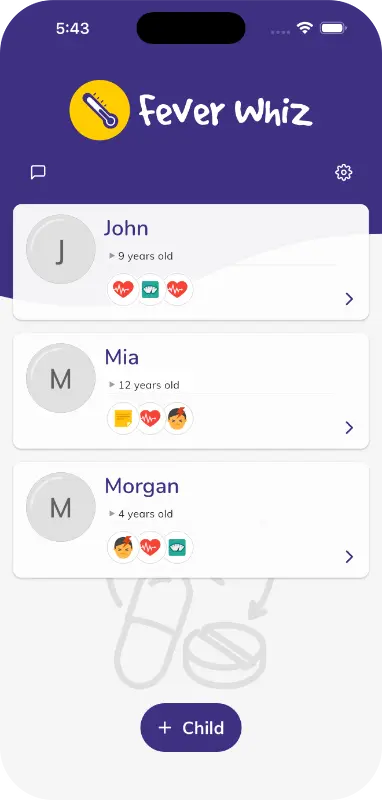
- Use the Fever Whiz app to log medications, temperatures, and symptoms, set reminders, and share a real-time care timeline with everyone caring for your child.