You are standing in the hallway, keys already in your hand, listening to the silence of the house settle around you. It is 10:17 PM, or perhaps a grey Sunday morning, and you are frozen in that familiar moment of indecision. Do you bundle everyone into the car, or do you wait for the office to open? Do you call the after-hours line, or do you drive to the emergency department? The weight of the decision feels heavy, but here is the reassuring truth: the right choice depends far more on the nature of the question you are asking than on the hour on the clock.
Medical facilities are not interchangeable; they are specialized environments designed to answer specific types of questions. Understanding what each setting is actually staffed and equipped to do can turn that hallway panic into a clear, confident plan. Your pediatric practice would always rather you call and ask than guess and worry.
🏠 What Your Pediatric Practice Does Best
Think of your pediatric practice as the "medical home"—the place that holds the complete story of your child’s health. This setting is designed for continuity, preventative care, and managing chronic conditions, and it is staffed by clinicians who know your child’s baseline.
- View this as the best place for ongoing concerns like asthma management, behavioral health questions, or recurring headaches.
- Remember that the practice is equipped for developmental screenings, school physicals, and routine vaccinations.
- Recognise that they have immediate access to your child’s full history, including past illnesses, allergies, and growth charts.
- Understand that many practices set aside "acute" appointments daily for sudden illnesses like ear infections or rashes.
- Know that calling the office—even after hours—often connects you to a triage nurse who can help decide if you need to go elsewhere.
📞 The Role of the Practice Nurse Line
When you call after hours, you are likely speaking to a triage nurse—a registered nurse using established clinical protocols to guide you. Their job is not to diagnose over the phone, but to assess the urgency and point you toward the right resource.
- Picture the nurse line as a sorting tool, helping you decide if a problem can wait for the morning or needs attention now.
- Realise that these nurses follow strict, evidence-based guidelines (often computerized) to ensure consistent advice.
- Expect them to ask detailed questions about breathing, hydration, and responsiveness to gauge the situation.
- Trust that if they advise you to go to the emergency department, it is because the protocols indicate a need for immediate physical examination.
- Value their guidance when they say you can stay home, as they are trained to rule out the most urgent possibilities.
🚑 When to Consider Urgent Care
Urgent care clinics are the bridge between your pediatrician’s office and the emergency department. They are designed for conditions that need attention within 24 hours but are not life-threatening, and they are often staffed by family medicine physicians or emergency providers.
- Consider urgent care for issues like minor lacerations requiring stitches, simple bone fractures, or suspected ear infections on a weekend.
- Note that these clinics typically have X-ray machines and basic lab capabilities for quick diagnostics.
- Understand that they are excellent for sudden, single symptoms that are uncomfortable but not dangerous.
- Remember that urgent care staff may not have pediatric specialty training, so they stabilize children and refer them to hospitals for complex issues.
- Expect that they will forward the visit notes to your pediatrician so your medical record stays complete.
🏥 The General Emergency Department (ED)
A general Emergency Department is designed to handle life-threatening situations for all ages—from heart attacks in adults to severe injuries in children. It is the place for stabilizing critical patients and has access to advanced imaging, surgery, and intensive care.
- Know that general EDs are open 24/7 and are equipped to handle major trauma, significant breathing distress, or changes in consciousness.
- Realise that the staff are experts in emergency medicine but may see pediatric patients less frequently than adult patients.
- Understand that the environment is often loud, bright, and busy, which can be overstimulating for a sick child.
- Recognise that general EDs may not have pediatric-sized equipment in every room, though they do have access to it.
- Identify this as the right setting for true medical emergencies where seconds count, such as severe allergic reactions or significant head injuries.
🧸 The Dedicated Pediatric Emergency Department
A dedicated Pediatric Emergency Department is a specialized wing within a children’s hospital or large medical center. It is staffed exclusively by pediatric emergency specialists and nurses, and the environment is built around the unique physiology and emotional needs of children.
- Imagine an environment where every piece of equipment—from blood pressure cuffs to IV lines—is sized for infants through teenagers.
- Understand that the doctors here have completed fellowships specifically in pediatric emergency medicine.
- Recognise that these departments are best equipped to handle severe pediatric illnesses, such as diabetic ketoacidosis or complex seizures.
- Value the child-life specialists on staff who use distraction and play to reduce the stress of procedures.
- Remember that if your child has a complex medical history, this setting often has instant access to their specialists.
⏰ Why Timing Matters Less Than the Question
It is easy to feel that because it is midnight, the only option is the Emergency Department. In reality, the "right" care is defined by the symptom, not the clock. If a child has a fever but is drinking well and responsive, the question is usually "what is causing this?"—a question best answered by the pediatrician who knows them, even if you have to wait until morning. Conversely, if a child is struggling to breathe, the question is "is their airway safe?"—a question only an ED can answer, regardless of the hour.
- Ask yourself: "Is this a question about my child’s long-term health, or a question about their immediate safety?"
- Reserve the Emergency Department for threats to life, limb, or severe distress.
- Utilise urgent care for "I need this fixed now, but I know it’s not life-threatening."
- Contact the nurse line when you are unsure which bucket the symptom falls into.
- Avoid the trap of driving to the ED simply because the office is closed; the nurse line can often guide you to a safer, calmer solution.
🛡️ What To Do When You Notice Warning Signs
Pediatric and public health sources widely list certain signs as reasons to seek immediate medical attention. When you observe these signs, the clinical guidance is to contact emergency services or proceed to an ED immediately. In these moments, professionals advise that you rely on the training of paramedics and emergency physicians rather than trying to manage the situation at home.
- Observe if your child has severe difficulty breathing, where the skin pulls in between the ribs or the nostrils flare with each breath.
- Notice if their color changes, particularly a blue or grey tint around the lips or nail beds.
- Be aware of significant changes in alertness, such as being unresponsive to voice or touch, or extreme confusion.
- Recognise the guidance regarding seizures, severe dehydration (no wet diapers for 8-12 hours in an infant), or high fevers in very young infants.
- Understand that for these specific signs, the priority is professional, hands-on stabilization.
📝 Quick Action Plan
- Save your pediatric practice’s nurse line number in your phone contacts today.
- Locate the nearest urgent care clinic and pediatric emergency department so you know the drive time.
- Keep a simple notepad by your bed to jot down symptoms before calling the nurse line.
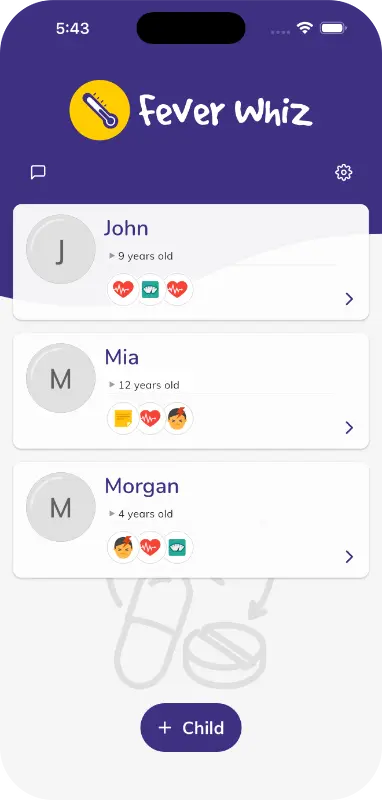
- Download the "Fever Whiz" app to log temperatures, symptoms, and medication times so you have accurate information ready for the nurse or doctor.
- Trust your instincts—if something feels profoundly wrong, call for help.
Disclaimer: This post is for educational purposes only and is not medical advice. Always consult your pediatrician or a qualified healthcare professional for any medical questions, symptoms, dosing, or treatment decisions. Seek urgent care for any emergency or warning signs.
About Fever Whiz: Fever Whiz is a free child medication, fever, and symptom tracker for parents and caregivers. Log every dose, temperature, and symptom; set custom and smart reminders; visualize trends with charts; store important medical documents; keep care notes and a care team; and sync in real time across everyone caring for your child. It is a private record-keeping and organization tool—not a medical device—and it does not provide medical advice or diagnosis.