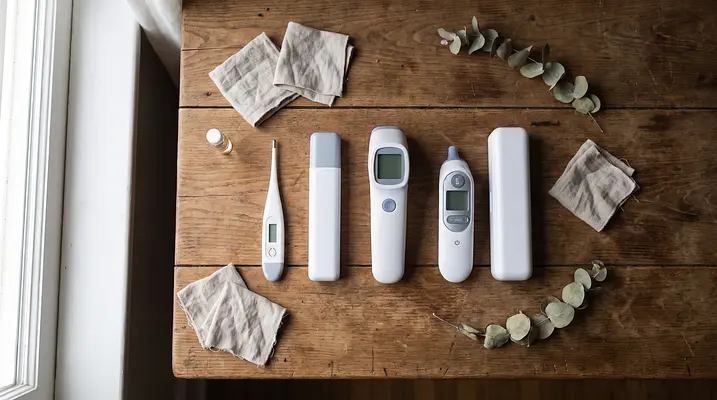
You have been there. Your little one feels warm, so you reach for the thermometer in the nursery drawer. It beeps with a number that makes your stomach flip. Just to be sure, you grab the fancy temporal scanner from the diaper bag to double-check. It beeps a moment later with a number that is almost a full degree lower. Suddenly, you aren’t just worried about the fever; you are frustrated and confused, holding two devices that seem to be describing two different children. Before you toss either one in the trash, take a deep breath. This maddening discrepancy isn’t a sign that your equipment is broken. It is a sign that the body is doing exactly what it is supposed to do, and understanding why those numbers differ is the key to using them wisely.
🌡️ How the Body Sets Its Thermostat
To understand why a forehead reading differs from an ear reading, we first have to look at how the body manages heat. The body is not a single, uniform block; it is a complex system where heat is constantly being generated and lost. The hypothalamus, a small region in the brain, acts as the body's thermostat, working hard to maintain a stable core temperature for vital organs.
- Picture the body as a house where the "core" rooms (like the heart and brain) are kept warm, while the "outer" rooms (like the skin and arms) can fluctuate with the weather outside.
- Understand that "core temperature" is the gold standard in medicine because it reflects the temperature of the blood supplying the heart and brain.
- Recognize that the skin is the body's radiator—it releases heat to cool the body down, meaning surface temperatures are almost always lower than internal ones.
🫀 The Physical Difference Between Sites
Different thermometers measure temperature in different "rooms" of that house. A reading taken under the arm is measuring a different physiological environment than a reading taken in the ear or mouth. This is not a flaw in the device; it is simply a measurement of a different body part.
- Remember that rectal readings are considered the closest approximation to true core temperature in infants and young children because they measure the temperature deep inside the body cavity.
- Know that oral (mouth) readings are reliable for older children but are typically slightly lower than rectal readings because the mouth is cooled by breathing and saliva.
- Understand that axillary (underarm) readings measure skin temperature, which is naturally cooler than the core as the body releases heat through the armpits.
- Consider that tympanic (ear) readings measure the temperature of the eardrum, which shares blood supply with the hypothalamus, making it a good proxy for core temperature—provided the ear canal is straight and clear.
- Note that temporal artery (forehead) scanners measure the temperature of the temporal artery through the skin, combining the convenience of a surface scan with an attempt to read a major blood vessel.
📉 Why Different Sites Are Supposed to Disagree
It is entirely normal for a temporal reading to be lower than a rectal one, or for an underarm reading to lag behind an ear reading. Medical texts and pediatric guidelines widely acknowledge that these sites have different baseline ranges. Expecting them to match perfectly is like expecting the temperature of your living room to match the temperature of your front porch.
- Accept that a rectal temperature is generally higher than an oral temperature, which is in turn higher than an axillary temperature.
- Realize that a temporal artery reading might be lower than a rectal reading because the forehead is exposed to the air and acts as a cooling surface for the brain.
- Acknowledge that manufacturers program devices differently; some adjust the final number to "predict" what the core temperature would be, while others simply display the exact temperature of the skin or ear they just measured.
- See the variation not as an error, but as a reflection of how efficiently your child’s body is moving heat from the core to the surface.
💰 Why Method Matters More Than Price
It is tempting to believe that a more expensive device will solve the confusion by being "more accurate." However, a high-end temporal scanner used incorrectly will always be less useful than a basic digital thermometer used correctly. The method you choose—and your consistency with it—matters far more than the price tag on the box.
- Prioritize choosing a method that fits your child’s age and your ability to use it calmly and consistently over buying the most expensive gadget on the shelf.
- Remember that a struggling, crying child will often have a higher skin temperature due to exertion, potentially skewing temporal or underarm readings.
- Recognize that ear thermometers can give falsely low readings if the tip isn't pointed perfectly at the eardrum, or falsely high readings if the child has been lying on that ear.
- Understand that oral readings are easily thrown off by drinking cold or hot liquids, or by panting, which cools the tongue.
📈 Why Trends Beat Single Numbers Every Time
When you call the pediatrician, a single number is helpful, but a trend is powerful. A single high reading can be startling, but it doesn't tell the story of where the fever has been or where it is going. This is where your role as a data-gatherer becomes invaluable to the clinical team.
- View a single temperature reading as a snapshot, whereas a log of temperatures over time is a movie that tells the full story of the illness.
- Note that clinicians look for the "curve"—how fast a fever rises, how high it peaks, and how it responds to the body's natural cycles—rather than just the peak number.
- Understand that if you switch methods (checking under the arm one hour and the ear the next), you are comparing apples to oranges, which makes the trend hard to read.
- Realize that a consistent log helps a doctor see if a fever is resolving, staying steady, or spiking at specific times of day, which can be important diagnostic information.
📝 How to Create a Useful Log
To give your pediatrician the most useful information, pick one method and stick with it for the duration of the illness. This eliminates the variables between devices and allows the natural progression of the fever to show itself clearly.
- Choose the method that you can perform most easily and comfortably on your child—whether that is rectal for an infant, oral for a cooperative preschooler, or temporal for a squirmy toddler.
- Record the time, the temperature, and the method used for every check, ensuring that the data is consistent.
- Avoid the temptation to "double-check" with a second device; this often creates more confusion than clarity.
- Share your log with the pediatrician, as this objective data is often more helpful than a parent’s anxious recollection of "high numbers" from memory.
🚦 When to Reach Out to Your Pediatrician
While tracking trends is helpful, there are specific situations where the guidance is to make contact immediately. Pediatric and public health sources widely list certain signs as reasons to call a professional, regardless of what the thermometer says. If you see these signs, the specific number on the screen becomes less important than the overall picture of the child.
- Observe the child’s behavior; if they are lethargic, difficult to wake, or not responding normally, this is a signal to contact a healthcare provider.
- Look for signs of dehydration, such as a dry mouth, lack of tears when crying, or no wet diapers for an extended period.
- Note the presence of a rash that does not fade when pressed, or any difficulty breathing, as these are widely cited as reasons to seek urgent care.
- Trust your instincts; if your child looks or acts very ill to you, pediatricians consistently advise that you should call for guidance rather than waiting to see if the numbers change.
Quick Action Plan
- Pick one thermometer type and use it consistently for the duration of this illness.
- Create a simple log with three columns: Time, Temperature, and Method used.
- Note the child's behavior and symptoms alongside the temperature to create a fuller picture.
- Share your log with your pediatrician or nurse during any call or visit.
- Trust your instincts and contact your care team if your child’s behavior worries you, regardless of the number on the screen.
Disclaimer: This post is for educational purposes only and is not medical advice. Always consult your pediatrician or a qualified healthcare professional for any medical questions, symptoms, or treatment decisions, and seek urgent care for any emergency.
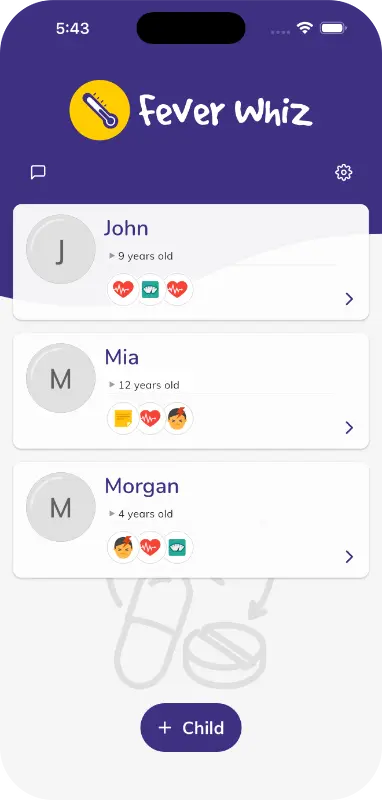
To make tracking easier, consider using the *Fever Whiz** app. It helps parents and caregivers log medications, temperatures, and symptoms; set reminders; visualize trends with charts; store important medical documents; and share a real-time care timeline with everyone caring for their child. It is a private record-keeping tool—not a medical device—and does not provide medical advice.*