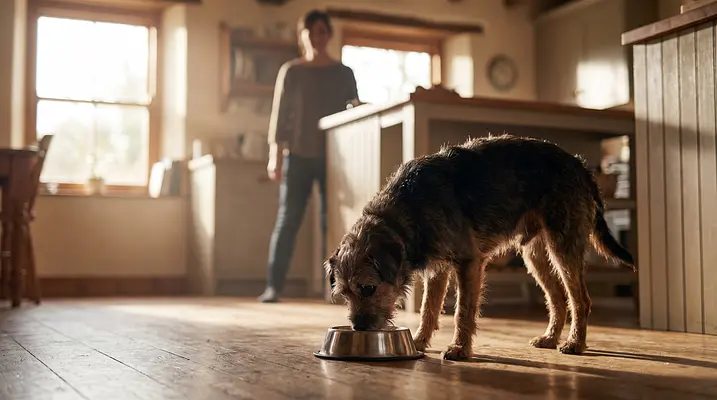
You’re walking across the kitchen, maybe just to top off the water bowl, when you hear it—a low, rumbling growl. You freeze, eyes locking onto your dog, who is now stiff and staring hard at you over the rim of their food dish. In that heartbeat of tension, the kitchen feels incredibly small, and the realization hits: your best friend is warning you to back away from their dinner.
It is a startling moment for any pet parent, often triggering a mix of fear, confusion, and maybe even a little hurt. But take a deep breath. Resource guarding is a natural behavior rooted in survival instincts, not a sign of a "bad" dog. With patience and the right approach, you can navigate this challenge safely.
🧠 Why Dogs Guard Resources
Understanding the "why" behind the behavior is the first step toward fixing it. Dogs aren't being spiteful or trying to dominate the household; they are simply trying to hold onto something they value highly because they are afraid it will be taken away.
- View the behavior through the lens of survival, where securing resources means staying alive.
- Recognize that anxiety, not aggression, is usually the root cause of the guarding instinct.
- Identify the specific triggers, which can range from food and toys to sleeping spots or even a favorite person.
- Acknowledge that some dogs are genetically predisposed to being more possessive than others.
- Realize that past experiences, such as starvation or competition in a shelter environment, can exacerbate the behavior.
🛑 What Not To Do
When we feel threatened or embarrassed by our dog's behavior, our instinct might be to correct it immediately. However, punitive measures often backfire spectacularly when dealing with guarding, potentially escalating a warning growl into a bite.
- Avoid punishing the growl, as this silences the warning signal without addressing the underlying fear.
- Refrain from forcibly removing the item or bowl, which confirms the dog's fear that you are a threat to their resources.
- Stop "alpha rolling" or physically dominating the dog, which damages trust and increases anxiety.
- Do not reach into the food bowl while the dog is eating to "test" them, as this creates unnecessary conflict.
- Resist the urge to scold or shout, which raises the dog's arousal level and makes the situation more dangerous.
🥣 Working Through Food Bowl Guarding
The food bowl is the most common battleground for resource guarding. The goal here is to change your dog's emotional response from "The human is coming to take my food" to "The human approaching means more good things are coming."
- Start by dropping high-value treats into the bowl from a safe distance while the dog is eating.
- Approach the bowl only as close as the dog can handle without stiffening or growling, then toss the treat.
- Gradually decrease the distance over multiple sessions until you can stand right next to the bowl.
- Pick up the bowl occasionally, add a delicious topper like chicken or cheese, and immediately give it back.
- Teach a solid "leave it" cue during non-meal times to build impulse control for future management.
🧸 Managing Toy and Object Guarding
Toys require a slightly different approach than food because the value is in the play or the chewing action. We want to teach the dog that trading up is a winning strategy, not a loss.
- Practice trading games by offering a high-value treat in exchange for the low-value toy.
- Present the treat near the dog's nose to lure them away from the object rather than prying their mouth open.
- Return the toy immediately after they eat the treat so they learn that giving up the item doesn't mean losing it forever.
- Use two identical toys during fetch to practice dropping one for the other, reinforcing the "drop it" cue.
- Keep highly prized "guardable" items put away when guests or children are visiting to prevent accidents.
🛋️ Handling Space Guarding
Some dogs guard specific locations like the couch, bed, or a crate. This often stems from a desire to control their immediate environment and rest without interruption.
- Make the guarded space a positive place by tossing treats onto it when you walk by.
- Teach an "off" cue by luring the dog off the furniture with a treat and rewarding them once their feet hit the floor.
- Invite the dog onto the couch only when invited, rather than allowing free access, to establish polite boundaries.
- Provide a comfortable alternative resting spot, such as a dog bed on the floor, where they can retreat.
- Avoid forcing the dog off the furniture by grabbing their collar, which can trigger a defensive reaction.
📝 Quick Action Plan
Ready to start making changes? Here is a simple plan to implement right away.
- Identify exactly what your dog guards and how intense their reaction is.
- Stop all punishment or forceful removal of items immediately to rebuild trust.
- Stock up on high-value treats that are better than the item being guarded.
- Practice "trading up" with low-value items before moving to high-value ones.
- Manage the environment by removing high-risk items when you cannot train.
Conclusion
Changing resource guarding behavior is a journey, not an overnight fix. It requires consistency, patience, and a deep well of empathy for a dog who is simply trying to feel safe. Celebrate the small wins—a relaxed ear position, a loose body, or a willingness to share—and remember that you are building a relationship based on trust rather than fear. With time, that growl in the kitchen can be replaced by a happy wag, knowing that your presence signals good things to come.
Disclaimer: This blog post provides general training advice and is not a substitute for professional behavioral consultation. If your dog’s resource guarding involves snapping, biting, or intense aggression, please consult a certified veterinary behaviorist or a qualified force-free trainer immediately.
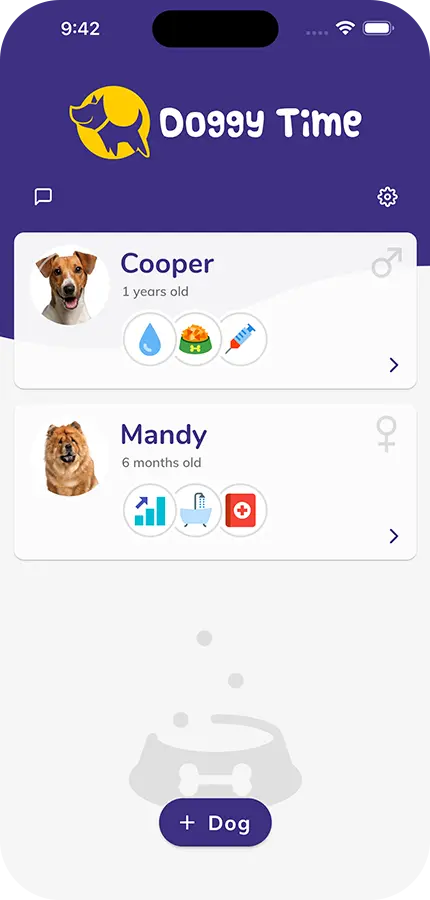
To help you stay on track with your training progress, consider using the Doggy Time app. It allows you to log training activities, set smart reminders for sessions, and collaborate with family members to ensure everyone is following the same plan for your pet's success.