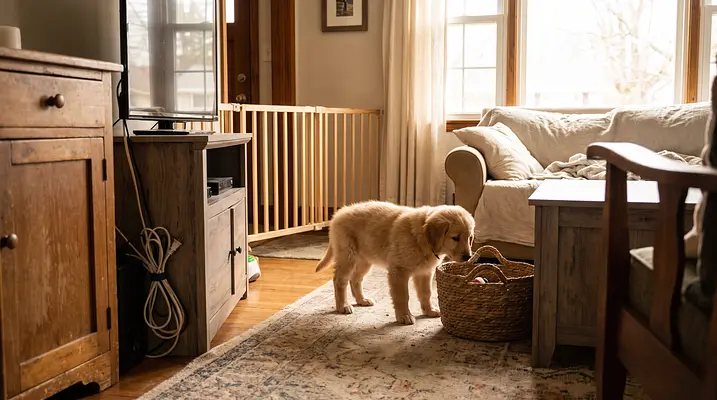
It usually takes stepping on a frayed phone charger or spotting the distinctive teeth marks on a dining room baseboard to realize that preparation would have been far easier than the frantic repair. That sudden lurch of panic serves as a stark lesson in timing: securing your home is a task best completed before that wagging tail ever crosses the threshold. By addressing these potential hazards in advance, you can swap the stress of constant vigilance for the peace of mind that comes with a safe, happy household.
🐾 What to Do Before the Puppy Arrives
Preparation starts long before you pick up your new companion. Taking a few proactive steps ensures you aren't scrambling to puppy-proof while simultaneously trying to manage a curious pup. Secure the environment first so you can focus entirely on bonding when the big day comes.
- Get down on your hands and knees to view the world from a puppy’s eye level.
- Remove any tempting items that sit within reach on low tables or chairs.
- Purchase a well-fitting collar, ID tags, and a comfortable harness ahead of time.
- Set up a designated "safe zone" or crate where the puppy can retreat for naps.
🍽️ Kitchen Safety
The kitchen is often the heart of the home, but for a puppy, it is a minefield of dropped scraps and dangerous chemicals. This room requires strict discipline regarding food storage and cleaning supplies to prevent accidental poisoning or gastrointestinal blockages.
- Store all cleaning supplies, including dishwasher pods and sprays, in high cabinets or locked cupboards.
- Keep human food well out of reach, as items like chocolate, grapes, and onions are toxic to dogs.
- Use child-proof latches on lower cabinets to prevent curious noses from prying doors open.
- Sweep the floor daily to remove crumbs or small items that could become choking hazards.
- Block access to the area behind the refrigerator or stove where puppies can easily get stuck.
🛋️ Living Room Hazards
The living room is where the family gathers, making it high-traffic territory for a new pet. It is also full of electrical cords, heavy furniture, and small decorative objects that can look like toys to a teething puppy.
- Bundle electrical cords and hide them behind furniture or use cord concealers to prevent chewing.
- Move houseplants out of reach, verifying that none are toxic to dogs (such as Pothos or Sago Palm).
- Secure heavy furniture like bookshelves or TVs to the wall to prevent tipping if jumped upon.
- Pick up small items like remote controls, coins, and children's toys that could be swallowed.
- Check under the sofa and chairs regularly for lost items like coins or hair ties 🧩.
🛏️ Bedroom Precautions
Bedrooms can be surprisingly dangerous due to the sheer volume of small, swallowable items we keep on nightstands and floors. Puppies are experts at finding that one missing sock or a dropped medication, so diligence here is key.
- Keep all medications in a medicine cabinet or high shelf, never on a nightstand.
- Store shoes and socks inside a closed closet to prevent destructive chewing and blockages.
- Ensure laundry hampers have secure lids so puppies cannot pull out underwear or socks.
- Block access under the bed if it is low enough for a puppy to get stuck or hide.
- Keep jewelry and hair accessories in a jewelry box to avoid ingestion risks.
🚿 Bathroom Risks
Bathrooms present a unique set of hazards involving water, chemicals, and medications. It is often best to keep this door closed at all times, but if your puppy has access, specific safeguards are necessary.
- Keep the toilet lid down to prevent the puppy from drinking treated water or falling in.
- Store all toiletries, razors, and cotton balls in high cabinets or drawers.
- Ensure trash cans have secure lids or are stored inside a cabinet to block access to used hygiene products.
- Pick up towels or robes hanging low enough for a puppy to pull down and shred.
- Never leave medications or supplements on the counter where a jumping puppy might reach them 💊.
🚗 Garage and Yard Hazards
Outdoor areas and storage spaces contain some of the most lethal toxins a puppy can encounter. From antifreeze to sharp tools, these areas require a thorough sweep to ensure they are truly pet-safe.
- Store all automotive fluids, pesticides, and fertilizers on high shelves in sealed containers.
- Check the yard for toxic plants like azaleas, lilies, or mushrooms before letting the puppy explore.
- Inspect fences for loose boards or gaps that a small dog could squeeze through.
- Keep all sharp tools, nails, and screws off the floor and organized on pegboards or shelves.
- Provide plenty of shade and fresh water in the yard to prevent overheating during play 🌳.
🚧 Baby Gates and Containment Strategy
You cannot have your eyes on the puppy every second of the day, which is why a solid containment strategy is essential. Using gates and crates effectively helps manage your puppy’s freedom and prevents accidents when you are busy or away.
- Install sturdy baby gates at the top and bottom of stairs to prevent dangerous falls.
- Use gates to block off rooms that haven't been fully puppy-proofed yet.
- Create a central "puppy zone" where the dog can play safely without constant supervision.
- Choose a crate that is just large enough for the puppy to stand, turn, and lie down comfortably.
While puppy-proofing significantly reduces risks, accidents can still happen. It is crucial to know the signs of distress and have your veterinarian’s number saved. Please note: This blog post is for informational purposes only and does not constitute professional veterinary advice. If you suspect your puppy has ingested something toxic or is injured, contact your vet or an emergency animal hospital immediately.
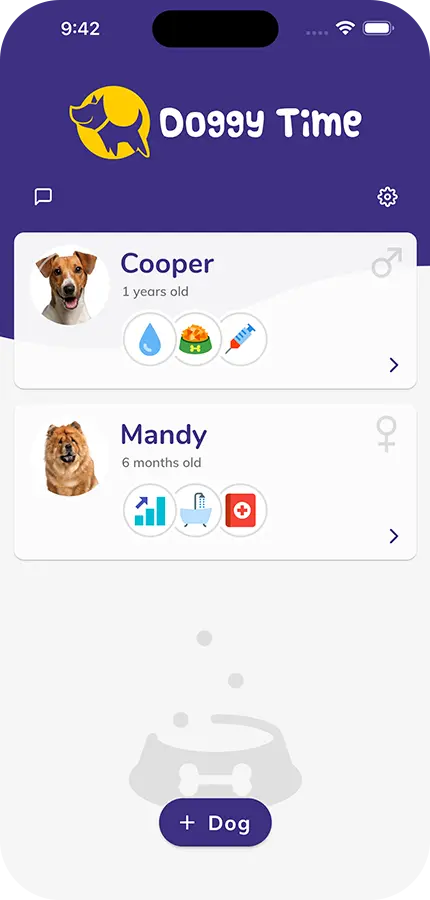
Creating a safe home is the first step in a long, happy life with your dog. Once the hazards are removed and the gates are up, you can focus on the fun parts of pet ownership—training, playing, and watching your puppy grow. To help you stay on top of potty training, feeding schedules, and vet appointments, consider using the Doggy Time app. It helps you collaborate with family members to log activities, set smart alarms for medication, and track your puppy's progress, ensuring everyone is on the same page. Enjoy the journey with your new best friend!
✅ Quick Action Plan
- Walk through every room on your hands and knees to spot hidden dangers.
- Purchase and install baby gates for stairs and restricted areas.
- Move all medications, cleaning supplies, and toxins to high shelves or locked cabinets.
- Bundle and hide all exposed electrical cords behind furniture or in concealers.
- Download a tracking app like Doggy Time to coordinate care schedules with your family.