It starts innocently enough. You notice a symptom, pull out your phone, and type in a few keywords. Three minutes later, you are nine tabs deep into a labyrinth of conflicting advice, terrifying anecdotes, and worst-case scenarios. What began as a simple query about a routine childhood illness has somehow morphed into a conviction that you are missing a critical warning sign. If you have ever felt your heart rate climb with every scroll, you are far from alone. The internet is a powerful tool, but without a map, it is easy to get lost in the noise. Let’s take a deep breath, step back, and look at how to find the signal in the static.
🔍 Why Search Results Skew Toward the Terrifying
Search engines are designed to show us what we are most likely to click, not necessarily what is most likely to be true. When we are worried, our brains are hardwired to seek out threats, and search algorithms are excellent at feeding that anxiety. This often creates a skewed picture of reality where rare, frightening conditions appear far more prominent than common, mild ones.
- Remember that search engines prioritize engagement, often surfacing dramatic stories over boring medical facts.
- Understand that algorithms learn from your clicks; clicking on a scary link teaches the system to show you more of them.
- Recognize that "worst-case scenario" content is often optimized with keywords specifically designed to capture worried parents.
- Picture the internet as a magnifying glass for the rare, making the unlikely seem imminent and everyday issues feel like emergencies.
📑 How to Spot a Primary Source
Not all health articles are created equal. Some are written by medical professionals or researchers, while others are simply rewritten summaries designed to capture search traffic. Knowing who actually wrote the information—and where they got it—is the first step in filtering out the noise.
- Look for the original author and their credentials, such as an MD, RN, or PhD, rather than just the website name.
- Scroll to the bottom of the article for a "References" or "Sources" section that links directly to studies or official guidelines.
- Identify if the text cites professional bodies like the American Academy of Pediatrics (AAP) or the Centers for Disease Control andCDC.
- Distinguish between a "primary source" (the original study or guideline) and an "aggregator" (a site that summarizes others' work without adding new data).
🧠 Why Anecdotes Feel So Convincing
It is easy to dismiss a dry statistic, but impossible to forget a detailed story from a parent in a forum who "went through the exact same thing." Our brains are wired to learn from narratives, but in medicine, a story is just one data point—not a trend. This is often why forum threads feel more actionable than they actually are.
- Recognize that the human brain prioritizes vivid, emotional stories over abstract numbers or probabilities.
- Understand that online forums suffer from "selection bias"—people post about problems, not about the millions of uneventful recoveries.
- Remember that a child's specific medical history makes their experience unique, meaning a stranger's outcome rarely predicts your child's outcome.
- View anecdotes as conversation starters for your pediatrician, not as diagnostic tools for yourself.
🏥 What a Professional Citation Actually Signals
Seeing a citation to a major medical organization can feel reassuring, but it helps to understand what that stamp of approval actually means. It is not an endorsement of the specific article you are reading; rather, it is a signpost pointing toward the consensus of the medical community.
- Picture a professional citation as a library reference—it points you toward the source material, but the article itself is just someone's summary.
- Know that major bodies like the AAP or World Health Organization publish consensus guidelines based on large-scale reviews of evidence.
- Distinguish between a site citing the AAP and the AAP actually publishing the content itself.
- Use the citation links to read the original guidance, which is often written in straightforward language for the public.
💰 How to Recognize Content Built to Sell
Many helpful health resources are free, but some websites exist primarily to funnel readers toward a product or service. This doesn't necessarily mean the information is wrong, but it does introduce a conflict of interest that is important to spot.
- Look for prominent calls to action like "Buy Now," "Download our app," or "Sign up for our course" interspersed with medical advice.
- Check if the article recommends a specific brand-name product repeatedly without mentioning generic alternatives.
- Notice if the tone feels urgent or fear-based, often implying that a problem requires a specific purchase to be solved.
- Scroll past the content to see if the website is owned by a company that sells health products or supplements.
🩺 When to Hand the Question Over
Health literacy isn't about becoming a doctor; it's about knowing how to be an expert partner to your child's medical team. There comes a point in every search where the best move is to stop scrolling and start a conversation with a professional who knows your child.
- Accept that general online information cannot account for your child’s unique medical history and needs.
- Respect the boundary between gathering background knowledge and making a clinical decision.
- Frame your research as a list of questions for your pediatrician rather than a set of answers.
- Trust that your pediatrician wants to hear your observations and can help interpret what you’ve found online.
Navigating health information online is a skill, and like any skill, it gets easier with practice. By learning to spot the difference between primary sources and reworded aggregations, and by understanding why stories often feel more convincing than they should, you can protect your peace of mind. You are already doing a wonderful job by seeking out the information your family needs.
Disclaimer: This post is for educational purposes only and is not medical advice. Always consult your pediatrician or a qualified healthcare professional for any medical questions, symptoms, or treatment decisions.
✨ Quick Action Plan
- Pause before you click on a result if the title sounds overly alarming or dramatic.
- Scroll to the bottom of an article to check for references and author credentials before trusting the advice.
- Close the tab if you see more ads or product links than medical citations.
- Write down one or two specific questions to ask your pediatrician instead of searching for the answer yourself.
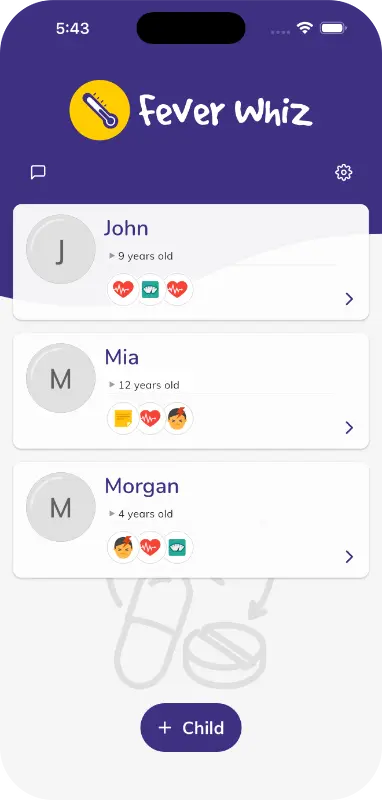
- Use the Fever Whiz app to log temperatures, symptoms, and medications, so you have clear records to share with your care team.