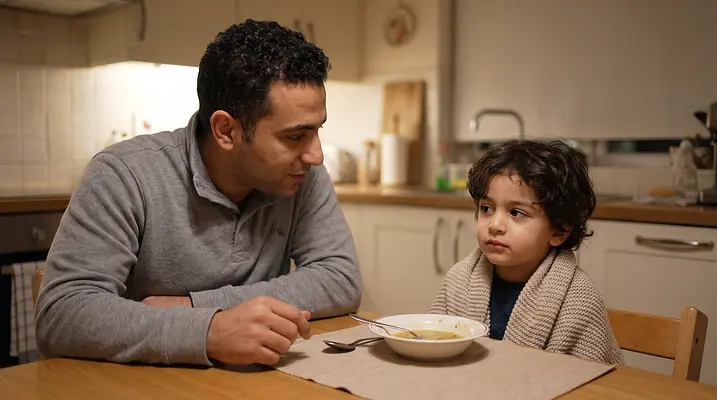
The plate sits on the table, the food cooling from warm to lukewarm to room temperature. You’ve tried the airplane spoon, the favorite character plate, the bargaining, and the pleading, but the result is the same: a tight-lipped refusal. It triggers a deep, ancient alarm bell in the parental brain, a primal instinct whispering that a child who will not eat must surely be in real trouble. We are wired to nurture by feeding, and when that offering is rejected, it feels less like a skipped meal and more like a failure of care. But before the panic sets in, take a breath. That loss of appetite is not only normal; it is a deliberate, intelligent strategy your child’s body is using to get better.
🛡️ Appetite Loss as a Defense Strategy
It helps to reframe how we view hunger during sickness. That refusal to eat isn't a sign of a body failing; it is a sign of a body working exactly as designed.
- Recognize that appetite suppression is a well-documented, consistent part of the immune response across the animal kingdom.
- Picture the body shifting its energy budget away from digestion and toward the immune system to fight off an infection.
- Understand that digesting food requires a significant amount of blood flow and energy, which the body prefers to allocate to producing white blood cells and antibodies.
- Remember that biological systems often "deprioritize" non-essential tasks—like processing a big meal—in favor of essential survival tasks like breathing and fighting pathogens.
⚙️ Why Digestion Takes a Backseat
When the immune system detects a threat, it initiates a complex chain of chemical signals. These signals tell the brain to temporarily shut down the urge to eat so the body can focus on the immediate threat.
- Imagine the body redirecting blood flow from the stomach and intestines to the muscles and immune system.
- Know that inflammatory chemicals released during an infection act directly on the parts of the brain that control hunger.
- Consider that eating requires energy to chew, swallow, and process food—energy the body is currently spending on raising a fever or creating mucus.
- Observe that this mechanism protects the body from wasting resources on digestion when all hands are needed on deck for recovery.
💧 Why Clinicians Ask About Fluids, Not Food
If you have ever called a pediatric advice line, you have likely noticed a pattern. The nurse or doctor almost always asks, "Is the child drinking?" and rarely asks, "Did they finish their dinner?" There is a very good reason for this distinction.
- Realize that while a human can go surprisingly long periods without solid food, fluid balance is critical and must be maintained much more closely.
- Hear the reassurance in a clinician’s voice when they learn a child is urinating normally, as this is a primary marker of hydration status.
- Trust the standard pediatric guidance that "food is for later," while fluids are the immediate priority during an acute illness.
- Note that clinicians focus on "wet diapers" or bathroom trips because they are looking for signs of dehydration, which is the actual medical concern, rather than the skipped meals themselves.
⏳ How Long Reduced Appetite Usually Lasts
It can feel like the picky eating phase is dragging on forever, especially when you are wiping a nose for the fifth day in a row. However, there is a typical timeline for these things.
- Expect a reduced appetite to last for the duration of the fever and usually for two to three days after the fever breaks.
- Remember that it is completely normal for a child to eat very little for nearly a week during a standard viral illness.
- Visualize appetite returning slowly, often in waves, rather than snapping back to normal the moment the child looks better.
- Look for a gradual increase in interest in food over the recovery period rather than a sudden return to full meals.
🚨 When to Seek Professional Guidance
While a loss of appetite is usually harmless, it is a symptom like any other. It exists in context, and sometimes that context requires a professional opinion.
- Note that pediatric and public health sources widely list signs of dehydration—such as a dry mouth, lack of tears when crying, or no urination for eight hours—as reasons to contact a provider.
- Understand that if a child refuses all fluids, not just food, the situation changes from "wait and see" to "seek advice."
- Acknowledge that significant weight loss or a refusal to eat that extends well beyond the illness itself warrants a conversation with a pediatrician.
- Respect that if a child appears listless, difficult to rouse, or unusually weak, this is distinct from simple appetite loss and requires immediate professional evaluation.
🍲 The Road Back to the Table
Recovery is a process, and the appetite will return when the body is ready. It can be hard to watch a child subsist on crackers and broth, but patience is often the best tool in a parent’s belt. The body is an incredible machine, designed to prioritize survival and healing over the social niceties of mealtime. Trusting that process, while keeping a watchful eye on hydration, allows you to step back from the anxiety of the cold plate and focus on the more important task: comforting your little one while their body does the heavy lifting.
Disclaimer: This post is for educational purposes only and does not constitute medical advice. Always consult your pediatrician or a qualified healthcare professional for any questions regarding your child’s health, symptoms, or treatment.
Quick Action Plan
- Focus on offering small sips of fluid frequently rather than pushing full meals.
- Trust that your child’s body is intentionally deprioritizing digestion to fight the infection.
- Monitor for wet diapers or bathroom visits to ensure hydration is being maintained.
- Wait two to three days after the fever breaks before expecting a full appetite to return.
- Contact your pediatrician if your child shows signs of dehydration or refuses all fluids.
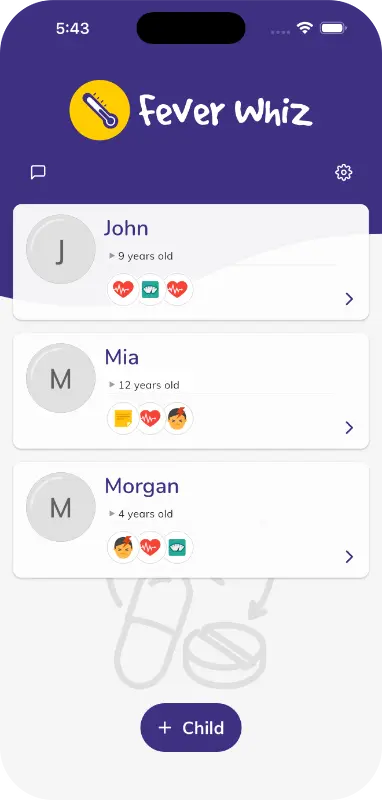
If you are looking for a way to keep track of temperatures, fluid intake, and symptom progression without relying on memory, consider using the Fever Whiz app. It helps parents and caregivers log medications, temperatures, and symptoms, set reminders, visualize trends, store medical documents, and share a real-time care timeline with everyone caring for their child. It is a private record-keeping and organization tool designed to make the sick days a little easier to manage.