You sit in the exam room, balancing a fussy toddler on your knee, surrounded by the crinkle of the paper table cover. It has been a long week of sleepless nights, endless nose-wiping, and a cough that rattles the walls. You came here hoping for a solution—something to make it stop, something to make your child feel better. But when the pediatrician finishes the exam, they smile gently, say "it’s a virus," and send you home with instructions for fluids and rest. Walking out empty-handed feels deflating, even a little dismissive. It’s easy to feel like you didn't get "real" care, or that the doctor didn't see how hard this week has been. But that prescription pad staying in the drawer wasn't an oversight—it was a careful, protective decision.
🔬 Understanding the Enemy: Bacteria vs. Viruses
To understand why a doctor doesn't prescribe antibiotics for a cold, we first have to look at the tiny invaders causing the illness. While bacteria and viruses can both make us feel miserable, they are biologically completely different.
- Picture bacteria as independent, living single-celled organisms that can survive on their own.
- Imagine viruses as much smaller packets of genetic material that need a host body to survive.
- Visualize the difference in scale, with viruses being significantly smaller than bacteria even under a microscope.
- Recognize that a common cold is almost always caused by a virus, most frequently the rhinovirus.
🎯 What Antibiotics Actually Target
Antibiotics are essentially "smart bombs" designed to attack specific structures found in bacteria. They were discovered and refined to kill living bacterial cells, but they are powerless against non-living viral particles.
- Understand that antibiotics target specific machinery found only in bacteria, such as rigid cell walls.
- Picture an antibiotic attacking a bacterium’s ability to build its protective outer wall, causing it to burst.
- Remember that antibiotics may also block the bacteria’s ability to make proteins or reproduce.
- Realize that because viruses lack these specific structures, the antibiotic has nothing to lock onto or attack.
- Consider that giving an antibiotic for a virus is like trying to fix a flat tire by changing the oil—the tool simply doesn't match the problem.
🧬 Why Viruses Are Invisible to Antibiotics
Viruses are essentially hijackers. They slip inside the body’s own cells and use the cell's machinery to copy themselves. Because they lack the physical parts that antibiotics attack, the medicine simply passes them by.
- Know that viruses do not have cell walls; they have a protein coat that antibiotics cannot penetrate.
- Imagine a virus hiding inside your child’s own cells, making it inaccessible to antibiotics circulating in the blood.
- Observe that the "machinery" a virus uses is actually the body's own cellular equipment, which antibiotics are designed to leave alone.
- Accept that antibiotics cannot kill a virus because there is no living metabolic process for the drug to disrupt.
🛡️ The Risk of Antibiotic Resistance
When antibiotics are used unnecessarily, bacteria learn how to survive them. This is not just a problem for the individual child, but for the entire community.
- Recognize that bacteria are highly adaptable and can evolve rapidly to survive antibiotic exposure.
- Picture bacteria "learning" to change their cell walls or pump the medicine out before it works.
- Understand that every course of antibiotics exerts pressure on bacteria, encouraging the strongest ones to survive.
- Realize that resistant bacteria can spread from person to person, creating infections that are harder—or sometimes impossible—to treat.
- Know that public health experts consider antibiotic resistance one of the biggest global health threats we face today.
🏥 The Pediatrician’s Active Clinical Decision
It can feel like the doctor is brushing off your concerns when they don't write a prescription, but the opposite is often true. Withholding antibiotics is an active, thoughtful choice that prioritizes your child’s safety and future health.
- Appreciate that the pediatrician is protecting your child from unnecessary side effects, such as stomach upset or allergic reactions.
- Trust that the doctor is preserving the effectiveness of antibiotics for when your child truly needs them for a bacterial infection like strep throat or a urinary tract infection.
- Understand that avoiding antibiotics now prevents future "superbug" infections that could be dangerous to your family and community.
- Recognize that diagnosing a viral infection like a cold often requires more clinical skill than simply writing a prescription.
- Remember that the doctor is following evidence-based guidelines that strictly advise against antibiotics for the common cold.
📈 When to Reconnect with Your Pediatrician
Viral illnesses like the common cold usually run their course without complication, but sometimes a second infection moves in. Pediatricians teach families to watch for signs that the situation has changed.
- Note that pediatric and public health sources widely list persistent high fevers as a reason to make contact without delay.
- Observe if symptoms seem to improve but then suddenly take a turn for the worse.
- Watch for signs of dehydration, such as a dry mouth or lack of tears, which guidelines list as reasons to seek care.
- Listen for difficulty breathing, which pediatric sources emphasize as a symptom requiring immediate professional assessment.
- Understand that if you are ever worried, contacting the pediatrician’s office for guidance is the right step.
Leaving the doctor’s office without a prescription can feel like a letdown, especially when you are exhausted and desperate for a fix. However, that empty-handed walk to the car is actually a sign of good, evidence-based care. Your pediatrician is making a decision that protects your child from side effects, preserves life-saving medicines for the future, and respects the natural course of a viral illness. It isn't a brush-off; it’s a sign that they are looking at the big picture of your child’s health.
Quick Action Plan
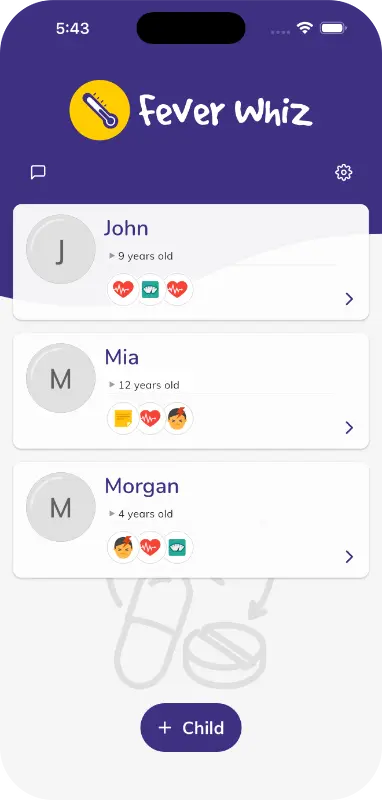
- Download the Fever Whiz app to log temperatures and symptoms accurately.
- Use the app to set reminders for fluid intake and rest periods.
- Share the real-time care timeline with a partner or caregiver to coordinate support.
- Keep a record of the pediatrician’s instructions in the app’s document storage.
- Monitor the trend of symptoms using the visual charts to see if things are improving.
Disclaimer: This post is for educational purposes only and is not medical advice. Always consult your pediatrician or a qualified healthcare professional for any medical questions, symptoms, or treatment decisions.
Fever Whiz is a free child medication, fever, and symptom tracker for parents and caregivers. Log every dose, temperature, and symptom; set custom and smart reminders; visualize trends with charts; store important medical documents; keep care notes and a care team; and sync in real time across everyone caring for your child. It is a private record-keeping and organization tool—not a medical device—and it does not provide medical advice or diagnosis.