“Let’s try watchful waiting.” The first time a doctor suggests this, the words can land with a dull thud. You have likely spent hours worrying, timing a fever, or comforting a miserable child, and you walked into that exam room looking for a concrete answer—a prescription, a diagnosis, a clear path forward. Instead, you are handed what feels like nothing. It is deflating and even a little frightening to be sent home without "fixing" the problem immediately.
However, that feeling of emptiness is a misunderstanding of what the phrase actually means. In modern pediatrics, watchful waiting is rarely about doing nothing. It is a deliberate, named clinical strategy used when the body is better equipped to handle a situation than medication, or when the diagnosis is not yet clear enough to warrant intervention. It is an active choice, not an oversight, and understanding why clinicians use it can turn that feeling of deflation into confidence.
📜 Where the Strategy Comes From
Watchful waiting did not emerge because doctors are too busy to treat children; it arose from decades of evidence and a shifting understanding of how illnesses evolve. In the past, the default was often to treat symptoms aggressively “just in case,” but medical science has refined that approach based on what actually helps children recover.
- Picture the strategy as a solution to the problem of “diagnostic uncertainty,” where early symptoms often look identical for both minor and serious conditions.
- Remember that evidence-based guidelines often list “observation” or “waiting” as a preferred first step for many common childhood illnesses.
- Recognize that the strategy helps avoid unnecessary exposure to medications that might carry side effects or risks that outweigh the potential benefits.
- Understand that for many viral infections, which make up the vast majority of childhood sicknesses, medications simply do not change the course of the illness.
- Know that pediatricians use this strategy to avoid the “therapeutic creep” of treating things that would have gotten better on their own.
🛡️ Why Holding Off Is Often the Safer Choice
It can feel risky to leave a sick child untreated, but in many scenarios, science shows that intervening immediately can actually be the riskier option. The body has sophisticated immune defenses, and sometimes medical interventions can interfere with those natural processes or cause harm that outweighs the benefit.
- Consider that the body’s inflammatory response—including fever—is a primary mechanism for fighting off infection.
- Realize that broad-spectrum treatments, when used unnecessarily, can contribute to issues like resistance or disruption of the body’s natural microbiome.
- Note that many conditions, such as certain ear infections, have published clinical guidelines showing that a significant percentage of children improve on their own within a few days without specific treatment.
- Acknowledge that avoiding unneeded tests or procedures spares the child the stress and discomfort of interventions that wouldn't ultimately change the outcome.
- Trust that your pediatrician is weighing the potential harms of treatment against the potential harms of waiting, and finding that waiting is the safer bet.
🔍 What “Watching” Actually Looks Like
If a doctor suggests this approach, they are not asking you to simply stare at your child or worry in a vacuum. They are asking you to become an active observer, gathering data that will determine the next step. Clinicians expect you to be looking for specific trends rather than fixating on a single snapshot in time.
- Focus on the child’s overall energy level and behavior, noting if they are playful when the fever is down versus listless even when comfortable.
- Observe hydration status by noticing if they are producing wet diapers or using the bathroom with typical frequency.
- Watch for the natural rhythm of symptoms, such as whether a fever spikes at night but resolves in the morning.
- Listen for breathing patterns that seem labored or unusual, which would be distinct from the sound of a stuffy nose.
- Look for the appearance of new symptoms that were not present at the initial visit, such as a rash developing or pain moving to a specific location.
🚩 Signs That Would Change the Plan
The most anxiety-inducing part of watchful waiting is the fear that you will miss something important. Pediatricians rely on parents to act as the safety net, flagging specific changes that signal the need to switch from “waiting” to “acting.” While this article cannot list every possible warning sign, widely published health guidance points to specific categories of changes that warrant a call back.
- Recognize that a return visit or call is widely recommended if a fever persists beyond a certain number of days, as defined by standard pediatric guidelines.
- Understand that a sudden worsening after a period of improvement—sometimes called a “second sickening”—is a common reason to re-evaluate the original diagnosis.
- Note that signs of dehydration, such as a dry mouth or lack of tears, are almost always listed as reasons to seek care.
- Remember that public health sources widely list difficulty breathing or a change in skin color (such as turning blue or pale) as reasons to contact emergency services immediately.
- Realize that parental instinct is a powerful tool; if the child simply “doesn’t look right” to you, that observation is valuable data that clinicians want to hear about.
🗣️ How to Ask for Clarity Before You Leave
To make watchful waiting feel manageable, you need to leave the doctor’s office with a concrete contract, not a vague suggestion. You can ask specific questions to define exactly what the doctor expects to happen and what would trigger a change in the plan.
- Ask the doctor to define the specific time window they have in mind—for example, “Should I call back in 48 hours if nothing changes?”
- Request a clear list of “red flags” that would invalidate the waiting plan and necessitate an immediate call or visit.
- Inquire about what the doctor expects the illness trajectory to look like—should the fever be gone by day three, or is a cough expected to linger for two weeks?
- Clarify what “comfort measures” the doctor recommends to help the child ride out the illness, ensuring you understand how to support them without medical treatment.
- Confirm the best way to reach the office or after-hours line if the situation changes during the evening or weekend.
📝 A Quick Action Plan
- Ask your pediatrician to define the specific timeframe for the watchful waiting period before you leave the office.
- Request a written list of specific symptoms that would trigger a call back or a return visit.
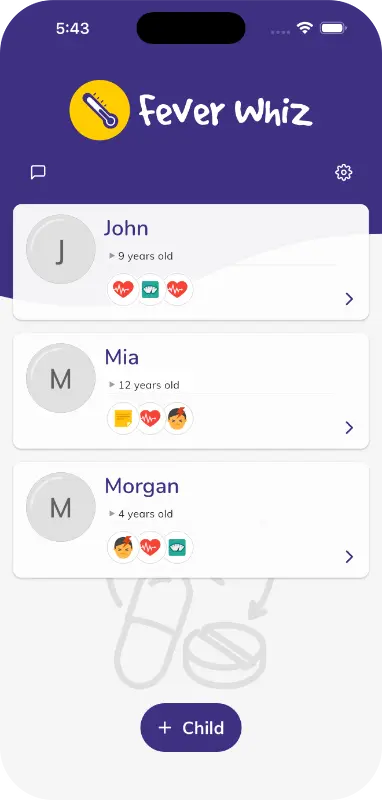
- Use a tracking tool like Fever Whiz to log temperatures, symptoms, and medication doses so you have a clear timeline to share with the doctor.
- Plan to check in with your pediatrician if the illness does not follow the expected trajectory described during the visit.
- Trust your instincts and contact your care provider if your child’s condition worsens or if something simply feels “off.”
Disclaimer: This article is for educational purposes only and is not intended as medical advice. Always consult your pediatrician or a qualified healthcare professional regarding any medical questions, symptoms, or treatment decisions, and seek urgent care for any emergencies.
About Fever Whiz: Fever Whiz is a free child medication, fever, and symptom tracker for parents and caregivers. Log every dose, temperature, and symptom; set custom and smart reminders; visualize trends with charts; store important medical documents; keep care notes and a care team; and sync in real time across everyone caring for your child. It is a private record-keeping and organization tool—not a medical device—and does not provide medical advice or diagnosis.