We have all been there, sitting on the crinkly paper of an exam table while a clinician rattles off a diagnosis. You hear a word like "bronchiolitis" or "croup," and you nod your head politely, your mind racing to keep up. You might leave the office with a pamphlet and a prescription, but still feel a little foggy on what is actually happening inside your child's body. It is perfectly normal to smile and nod, but understanding the language of illness can transform that fog into clarity, helping you feel more grounded when caring for your little one.
🦠 The Difference Between a Virus and a Bacteria
Before diving into specific illnesses, it helps to understand the "who" behind the sickness. These terms describe the microscopic organism causing the trouble, not the symptoms themselves.
- Picture bacteria as tiny, living organisms that can survive on their own and often respond to specific medications designed to kill them.
- Understand that viruses are much smaller than bacteria and need a host body to survive, making them the cause of most common respiratory infections.
- Know that antibiotics are designed to target bacteria, which is why clinicians often explain they aren't useful for the viral colds children catch most often.
🌬️ Mapping the Airway: From Nose to Lungs
Many respiratory names are simply geography lessons—they tell you exactly where in the breathing tract the inflammation is happening. Think of the airway as an upside-down tree, starting with the trunk and branching out.
- Visualize the "upper airway" as the nose, throat, and voice box, which is where the common cold and croup tend to stay.
- Picture the "lower airway" as the branching tubes deep inside the chest, including the bronchi and the lungs themselves.
- Recognize that terms ending in "-itis" simply mean inflammation, so "laryngitis" is inflammation of the larynx (voice box) and "bronchitis" is inflammation of the bronchi.
📢 Why Croup Makes That Barking Sound
If you have ever heard a seal barking in your living room at 2 a.m., you are familiar with croup. The distinct sound is frightening, but it is simply a result of where the swelling is located.
- Imagine the larynx (voice box) and trachea (windpipe) as a narrow tube that air passes through.
- Picture that tube becoming swollen and tight due to a viral infection, narrowing the space for air to move.
- Understand that when a child coughs or breathes in forcefully, air rushes through that tight, swollen space, creating the high-pitched whistle or the classic "bark."
- Remember that this sound is distinct because it comes from the upper part of the airway, where the shape of the throat creates that specific noise.
👶 Why RSV Is Talked About So Much for Infants
Respiratory Syncytial Virus (RSV) sounds intimidating, partly because it is discussed so heavily during winter months. While it affects people of all ages, the conversation centers on infants for specific anatomical reasons.
- Consider that RSV is a very common virus that most children encounter by age two, often appearing like a standard cold in older kids and adults.
- Visualize an infant's airways as incredibly tiny—the size of a drinking straw compared to an adult's garden hose.
- Understand that when RSV causes inflammation and mucus production, it blocks a much larger percentage of an infant's airway space than an adult's.
- Recognize that this is why pediatric sources emphasize monitoring breathing in young infants with RSV, as their small size makes them more susceptible to breathing difficulties.
🦓 Distinguishing Influenza from "The Flu"
In casual conversation, people use "the flu" to describe everything from a stomach bug to a bad cold. In medical terms, however, influenza is a specific and distinct viral illness.
- Define influenza as a specific respiratory virus caused by influenza types A or B, which tends to come on suddenly.
- Remember that "stomach flu" is a misnomer; gastrointestinal illnesses are usually caused by different viruses (like norovirus) and do not involve the respiratory system.
- Note that influenza typically includes high fevers, body aches, and fatigue, distinct from the gradual onset of a common cold.
- Differentiate between a "cold" (usually centered in the nose and throat) and influenza (which affects the whole body and lungs more aggressively).
📋 A Plain-Language Glossary of Common Terms
When you are reading a discharge paper or listening to a nurse, these definitions can help you keep the terms straight.
- The Common Cold: Define this as a viral infection of the upper airway (nose and throat) that causes runny nose, congestion, and cough.
- Bronchiolitis: Understand this as inflammation of the small breathing tubes (bronchioles) deep in the lungs, most often caused by RSV in infants.
- Pneumonia: Picture this as an infection deeper in the lung tissue itself, where the air sacs may fill with fluid.
- Sinusitis: Recognize this as inflammation of the sinus cavities, often following a cold that lingers longer than expected.
🚨 When to Seek Professional Guidance
Parents often wonder when a routine illness crosses the line into something that needs immediate attention. While this article cannot diagnose, widely published pediatric guidance lists specific signs that warrant a call to your child's provider.
- Observe the skin between the ribs or above the collarbone; if it looks like it is pulling in or "tugging" with each breath, this is widely cited as a sign of breathing difficulty.
- Notice if the lips or face appear blue or gray, which is universally listed as a reason to contact emergency services immediately.
- Listen for persistent, high-pitched wheezing or a sound like air struggling to get in, rather than just a congested cough.
- Watch for signs of dehydration, such as a lack of urine output for eight hours or a dry mouth with no tears when crying.
Disclaimer: This post is for educational purposes only and does not constitute medical advice, diagnosis, or treatment. Always consult your pediatrician or a qualified healthcare professional for any questions regarding your child’s health, symptoms, or treatment plan. If you suspect a medical emergency, contact emergency services immediately.
✅ Quick Action Plan
- Bookmark this glossary so you can reference it during your next pediatric visit.
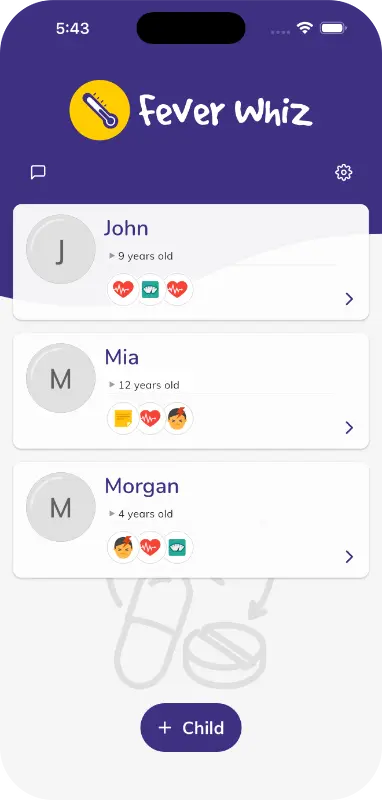
- Download the Fever Whiz app to log temperatures, symptoms, and medications in real time.
- Use the app to set reminders for fluid intake or to note when symptoms change.
- Share your Fever Whiz care timeline with your pediatrician so they can see exactly how the illness has progressed.
- Keep this guide handy to remind yourself that understanding the words is the first step to feeling confident in your care.