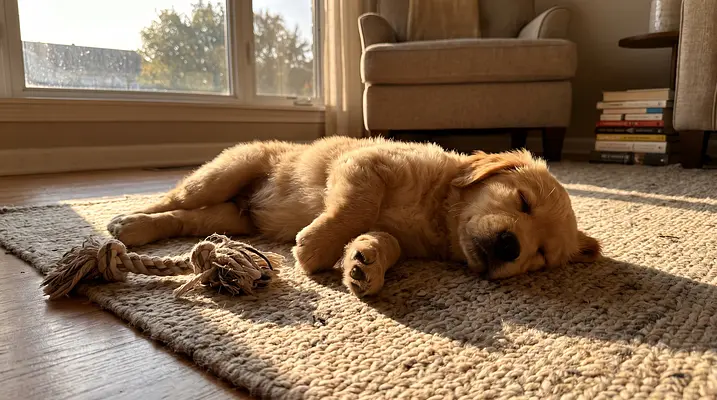
If you are watching your new puppy sleep for the sixteenth hour today, you might be feeling a rising sense of panic. It is a common worry among new pet parents to assume that a lethargic puppy must be ill, especially when they seem to spend more time napping than they do playing. However, before you rush to the veterinarian, take a deep breath—chances are high that your puppy is exactly where they need to be, and that excessive sleeping is actually a sign of a healthy, growing dog.
💤 How Much Sleep Does a Puppy Actually Need?
While adult dogs are content with 12 to 14 hours of sleep, puppies require significantly more downtime to support their rapid development. Think of it less like a lazy Sunday and more like the intense rest required for a human infant or a teenager going through a growth spurt.
- Expect your newest family member to sleep between 18 and 20 hours a day.
- Plan for this high volume of sleep to continue until the puppy is roughly 12 to 16 weeks old.
- Observe a gradual decrease in sleep needs as they approach adulthood, eventually settling into the 12 to 14-hour range.
🧠 Why Naps Are Critical for Growth and Behavior
Sleep is not just about rest for a puppy; it is the active processing time where their brain develops and their body repairs itself. When a puppy sleeps, their central nervous system is hard at work organizing neural pathways, and their muscles are releasing essential growth hormones. Without this downtime, you aren't just dealing with a tired dog; you are dealing with a dog that cannot learn, cannot grow, and cannot regulate their emotions.
- Support the release of growth hormones that build strong muscles and bones during deep sleep cycles.
- Allow the puppy’s brain to process new experiences and training commands, effectively "saving" what they learned that day.
- Prevent behavioral issues like biting, barking, and hyperactivity that stem directly from an overstimulated, exhausted brain.
- Recognize that a awake puppy is expending massive energy, making sleep the only way to recharge their battery.
😤 Signs Your Puppy Is Overtired (Not Naughty)
One of the biggest mistakes new owners make is confusing an overtired puppy with a naughty one. When a puppy suddenly starts zooming around the room, nipping at your ankles, or barking at nothing, our instinct is often to try to train them or play with them to "get the energy out." In reality, this is usually the puppy equivalent of a toddler throwing a tantrum because they missed their nap.
- Watch for the "zoomies"—frantic, uncontrolled bursts of running that often end in a crash.
- Look for "land shark" behavior, where gentle mouthing turns into hard, relentless biting or snapping.
- Notice a loss of focus, where the puppy ignores known commands or fails to respond to their name.
- Check for physical cues like red eyes, droopy eyelids, or a sudden loss of interest in toys or treats.
- Resist the urge to play when you see these signs and immediately initiate a nap instead.
🕒 Building a Nap-Friendly Daily Rhythm
Creating a consistent schedule is the single best thing you can do for your puppy’s development and your own sanity. Because puppies don't self-regulate well—they will play until they drop—you have to act as the sleep police, enforcing rest before the overtired behaviors begin. A predictable routine helps your puppy feel safe and ensures they get the sleep they physically require.
- Follow the "1 hour up, 2 hours down" rule for young puppies to prevent overstimulation.
- Put your puppy in their crate or pen for naps even if they seem awake and happy; quiet time counts as rest.
- Keep the nap environment dark and quiet, using a white noise machine to mask household sounds.
- Stick to consistent wake-up and bedtime hours to help regulate their internal clock.
- Take your puppy outside for a potty break immediately after every nap to reinforce house training.
- Feed meals at the same times daily to create predictable digestion and energy patterns.
📝 Your Quick Action Plan
You can start improving your puppy's sleep schedule today with a few simple adjustments to your routine. By prioritizing rest, you will likely see a dramatic improvement in their behavior and your own peace of mind.
- Calculate how many hours your puppy is currently sleeping to establish a baseline.
- Set a timer for 60 minutes of awake time starting now.
- Place your puppy in their designated sleep area when the timer goes off, regardless of their activity level.
- Close the blinds or curtains to signal that it is time to sleep.
- Log their nap times for three days to identify patterns and gaps in their rest.
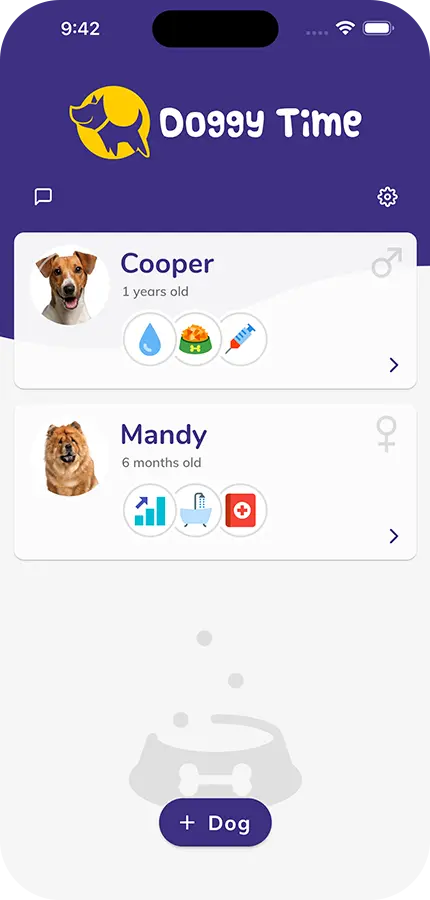
Keeping track of all these nap times, potty breaks, and feeding schedules can feel overwhelming, especially when you are sleep-deprived yourself. The Doggy Time app is an excellent resource for this, as it allows you to collaborate with family members to log activities, set smart alarms for naps, and create a care schedule that ensures your puppy stays on track. It works for all pets, making it easier to manage your puppy's daily rhythm and health logs in one place.
Disclaimer: This blog post is for informational purposes only and does not constitute veterinary advice. If your puppy appears lethargic (unwilling to wake for food or play), is refusing to eat, or exhibits other symptoms like vomiting or diarrhea, please consult your veterinarian immediately.