It is 3 a.m., and the house is perfectly quiet except for the sound of your child breathing. You reach out to check on them, and your hand freezes. Their forehead is radiating heat, yet when you pull the blanket back to cool them down, you see their small body shivering violently. They reach for the covers, curling into a tight ball, seeking warmth despite the fact that they feel like a little furnace to the touch.
It is a confusing, contradictory moment that can spike anxiety in even the most seasoned parent. How can a body feel so hot on the outside while feeling so cold on the inside? The answer lies in a fascinating, coordinated effort by the brain to protect your child. Understanding the mechanics of a fever can transform that 3 a.m. worry into a moment of awe for what the human body is capable of.
🧠 How the Body Sets Its Thermostat
To understand why your child is shivering, we first have to look at the hypothalamus, a tiny but mighty command center deep in the brain.
- Picture the hypothalamus as the body’s internal thermostat. It constantly monitors the body’s temperature and works to keep it steady, usually around 98.6°F (37°C).
- Recognize that a fever is a deliberate adjustment, not an accident. When the immune system detects an invader like a virus or bacteria, it sends chemical signals (called pyrogens) to the hypothalamus.
- Imagine turning the dial on your home thermostat up. The hypothalamus receives these signals and literally raises the body’s "set point," telling the body that 101°F or 103°F is the new normal temperature it needs to maintain.
❄️ Why Chills and Shivering Come First
This is the part that often confuses parents. If a child has a fever, why are they freezing?
- Think about the moment the thermostat setting changes. When the hypothalamus suddenly raises the set point from 98.6°F to, say, 102°F, the body’s current temperature is suddenly "too low" compared to the new target.
- Visualize the body trying to catch up. The brain sends urgent signals that the body is hypothermic (too cold), triggering shivering—a rapid muscle contraction designed to generate internal heat.
- Observe the child’s natural response. They may curl up, pull on blankets, and look pale as blood vessels constrict to conserve heat, all in an effort to raise their temperature to meet that new set point as fast as possible.
🔥 The Peak and the Purpose
Once the body reaches that new set point, the shivering stops. The child feels hot to the touch because they have successfully reached the temperature their brain demanded.
- Understand that a fever is a sign of the immune system working, not the illness itself. The raised temperature is a tool the body uses to create an environment where many bacteria and viruses struggle to thrive.
- Know that heat speeds up the immune system. White blood cells move faster and work more efficiently at higher temperatures, actively hunting down the infection.
- Remember that the fever is a symptom of the battle. It is evidence that the body has recognized a threat and is mounting a defense, rather than being the damage caused by the sickness.
🌡️ Why the Skin Flushes as the Fever Breaks
Eventually, the immune system begins to win the battle, or a medication helps lower the set point. The hypothalamus decides it is time to cool down.
- Picture the thermostat being turned back down. Suddenly, the body is "too hot" relative to the new, lower target temperature.
- Visualize the body’s cooling system kicking in. Blood vessels near the skin dilate (open up) to let heat escape, causing the skin to look red or flushed and feel warm.
- Expect sweating to follow. The body releases moisture onto the skin to create an evaporative cooling effect, bringing the temperature back down to the normal baseline.
🤔 When to Contact Your Pediatrician
While fevers are often a sign of a healthy immune system doing its job, there are specific circumstances where professional guidance is essential.
- Note that age matters significantly. Pediatric and public health sources widely list any fever in a newborn or infant under three months as a reason to contact a healthcare provider immediately.
- Consider the duration of the fever. Guidelines often suggest contacting a doctor if a fever lasts more than three days, even if the child seems otherwise okay.
- Look at the overall behavior. If a child is difficult to wake, extremely lethargic, or has specific symptoms like a stiff neck or a rash that doesn't fade when pressed, these are widely cited reasons to seek medical attention.
- Trust your instincts. If something feels "off" or different than previous illnesses, pediatricians universally encourage parents to reach out for advice rather than waiting.
📝 A Note on Record-Keeping
In the middle of a feverish night, it is easy to lose track of time. You might forget exactly when the last temperature check happened or how high the reading was four hours ago.
- Realize that pediatricians often rely on trends. A single high number is often less informative than a pattern of temperatures over time.
- Understand the value of a clear log. Writing down temperatures, times, and symptoms can help you communicate clearly with your doctor and feel more in control of the situation.
Disclaimer: This article is for educational purposes only and is not medical advice. Always consult your pediatrician or a qualified healthcare professional for any medical questions, symptoms, or treatment decisions.
Quick Action Plan
- Visualize the fever as the hypothalamus turning up the thermostat to fight an infection.
- Interpret shivering as the body trying to reach that new, higher temperature goal.
- Recognize flushing and sweating as the body’s natural cooling system turning on when the fever breaks.
- Remember that fever is a sign of the immune system working, not the illness itself.
- Keep a simple log of temperatures and times to share with your pediatrician if needed.
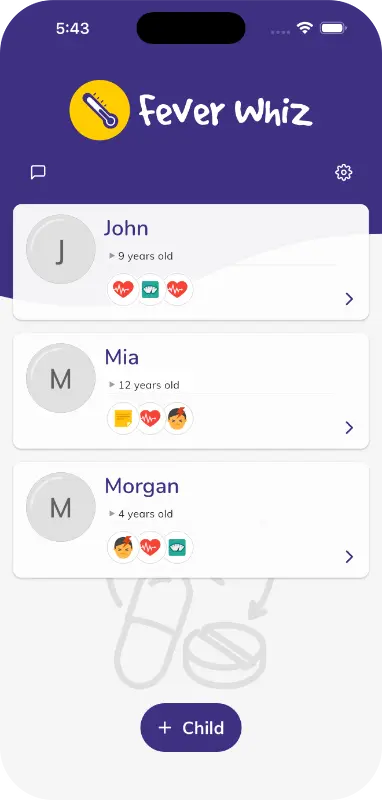
If you want to make tracking easier, consider using the Fever Whiz app. It helps parents and caregivers log medications, temperatures, and symptoms; set reminders; visualize trends with charts; store medical documents; and share a real-time care timeline with everyone caring for the child. It is a private record-keeping tool designed to give you peace of mind and clear information when you need it most.