These ideas reach us in the softest ways—handed down confidently, and with real love, by the people who raised us. A grandparent presses the back of a hand to a forehead and declares a fever "not too high," implying that a higher one would be cause for panic. A well-meaning friend insists that the baby must be teething because of the warmth radiating from their cheeks. We absorb these beliefs not from medical textbooks, but from the collective wisdom of the dinner table and the nursery, passed down through generations of caring for sick children. It is natural to cling to these rules; they offer a sense of control when our little ones feel unwell. However, when we look at the clinical evidence, many of these widely held beliefs about fever turn out to be misunderstandings of how the body actually works. Unpacking them helps us feel more grounded and better equipped to partner with our pediatricians.
🌡️ The Height of the Fever Predicts Seriousness
One of the most persistent anxieties for parents is the number on the thermometer. There is a widespread belief that a specific number—often 103°F or 104°F—marks the boundary between a minor illness and a medical emergency. This fear stems from the intuitive idea that a higher temperature must mean a more severe infection, but pediatric evidence paints a more nuanced picture. The height of a fever is generally a reflection of the body’s aggressive response to an infection, rather than a direct measurement of how dangerous that infection is.
- Consider that a child can run a very high fever from a simple viral infection that resolves on its own.
- Remember that a child can have a serious bacterial infection with only a mild fever, or sometimes no fever at all.
- Understand that clinicians look at the child’s behavior—how they are interacting, drinking, and breathing—more than the specific number on the thermometer when assessing severity.
- Recognize that the definition of a fever is generally accepted as a temperature of 100.4°F (38°C) or higher, a reference point used by pediatric and public health sources.
- Know that public health guidance lists specific circumstances—such as fevers in infants under three months—as reasons families are told to make contact without delay, regardless of how "high" the fever seems.
🦷 Teething Causes Significant Fevers
When a baby runs a temperature, the first question many parents hear is, "Are they teething?" This connection is so deeply ingrained in parenting culture that it is often accepted as fact, leading caregivers to attribute warmth, diarrhea, and fussiness to erupting teeth. Historical medical texts were once filled with warnings about the dangers of teething, sometimes even blaming it for infant mortality in eras where sanitation and infection control were poorly understood. Modern evidence, however, suggests that while teething can cause some discomfort, it is rarely the culprit for a significant rise in body temperature.
- Picture the gum tissue opening to let a tooth through; this is a local process, not a full-body immune event.
- Learn that studies show teething may cause a very slight rise in temperature, but it does not typically cause a clinical fever (100.4°F or higher).
- Observe that babies are constantly exploring the world with their mouths, increasing their exposure to viruses and bacteria at the exact age they are teething.
- Realize that attributing a fever to teething can sometimes delay seeking necessary medical attention for an actual infection.
- Discuss any fever in an infant with a pediatrician, rather than assuming it is related to a tooth.
📉 A Fever Must Always Be Brought Down
There is a common impulse to treat a fever aggressively, believing that it must be lowered to a "normal" number for the child to be safe or comfortable. This drive often comes from the historical fear that a high body temperature itself causes damage to the brain or body. While extremely high body temperatures (hyperthermia) are dangerous, a fever is a regulated biological response, not a runaway accident. The evidence suggests that the goal of comfort measures should be to help the child feel better, rather than hitting a specific target number on the thermometer.
- Imagine the fever as the body’s internal defense system, creating an environment where many germs struggle to survive.
- Understand that the body has a built-in "thermostat" in the brain (the hypothalamus) that prevents a fever from climbing indefinitely in most cases.
- Focus on how the child looks and feels—if they are resting comfortably and drinking fluids, the number on the thermometer is less significant.
- Note that pediatric guidance emphasizes that the purpose of any intervention is to relieve discomfort, not simply to normalize the temperature.
- Consult a healthcare professional for guidance on managing a child's discomfort, rather than aiming for a specific temperature reduction.
🍲 Starve a Fever
The old adage "starve a fever, feed a cold" has persisted for centuries, rooted in a time when doctors believed that digestion diverted energy away from the body’s ability to fight illness. Historically, some medical practitioners thought that eating during a fever would generate excess heat and burden the system. Today, medical science understands that fighting an infection requires significant energy, making proper hydration and nutrition more important than ever.
- Think of a fever as an energy-intensive process; the body is working hard and burning fuel.
- Prioritize fluids, as dehydration is a significant risk when a child is unwell and losing moisture through breathing and sweat.
- Offer light, easily digestible foods if the child is hungry, rather than restricting intake.
- Accept that a child’s appetite often naturally decreases during illness, but forcing them to eat or strictly withholding food are both outdated practices.
- Remember that hydration is the primary nutritional concern during a fever.
🚦 When to Seek Professional Guidance
While most fevers are part of the body's normal response to minor infections, there are specific situations where the evidence dictates a prompt conversation with a medical professional. Pediatric and public health sources provide clear lists of "red flag" scenarios that warrant immediate contact. These guidelines exist because certain ages and symptoms require clinical evaluation to rule out serious conditions.
- Note that pediatric sources widely list any fever in an infant under three months of age as a reason to contact a doctor or seek care immediately.
- Understand that a fever lasting more than a few days, or one that disappears and then returns, is often listed as a reason to seek evaluation.
- Recognize that signs like difficulty breathing, a rash that doesn't fade when pressed, or extreme lethargy are universally cited as reasons to contact emergency services or a pediatrician.
- Trust that if a child looks or acts very ill, or if something simply feels "wrong" to the parent, professional guidance is the appropriate next step.
Navigating a sick child can be stressful, and it is easy to feel like we need to follow a strict set of rules to keep them safe. By understanding where these common myths come from and what the evidence actually says, we can replace fear with knowledge. We can focus on what truly matters: comforting our children, keeping them hydrated, and knowing when to partner with our healthcare providers. This approach doesn't replace the advice of a pediatrician, but it does help us walk into that appointment with clearer heads and calmer hearts.
Disclaimer: This post is for educational purposes only and is not medical advice. Always consult your pediatrician or a qualified healthcare professional for any medical questions, symptoms, dosing, or treatment decisions, and seek urgent care for any emergency.
⚡ Quick Action Plan
- Focus on how your child looks and acts rather than the specific height of the fever number.
- Offer fluids regularly to keep your child hydrated throughout the illness.
- Consult your pediatrician before assuming a fever is caused by teething.
- Contact a professional immediately if an infant under three months has a fever.
- Trust your instincts and seek help if your child appears very ill or lethargic.
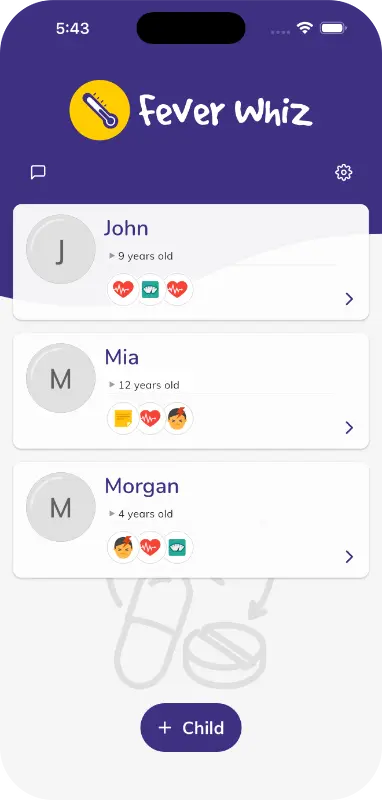
To help you stay organized during stressful sick days, consider using the Fever Whiz app. It helps parents and caregivers log medications, temperatures, and symptoms; set reminders; visualize trends; store medical documents; and share a real-time care timeline with everyone caring for the child. Fever Whiz is a free, private record-keeping tool—not a medical device—and does not provide medical advice.