A parent is almost always the first person to notice when something is off with their child, often hours before anyone in a clinic could have. You are the expert on your child’s baseline—their usual energy level, the color in their cheeks, and their typical patterns—and that intimate knowledge makes you a crucial partner in spotting early signs of dehydration. While clinicians rely on medical training to interpret symptoms, you rely on observation, and knowing what to look for empowers you to communicate effectively with your pediatrician. Understanding the mechanics of dehydration and the specific signs clinicians look for can help you articulate what you are seeing and why it matters.
💧 What Dehydration Really Means
Dehydration occurs when the body loses more fluid than it takes in, disrupting the delicate balance of water and minerals needed for cells to function. Think of it like a cooling system in a car; when the fluid levels drop too low, the system can no longer regulate temperature or perform essential tasks efficiently. In children, whose bodies have a higher percentage of water than adults and faster metabolisms, this balance can tip more quickly than it does in adults.
- Picture the body as a system of tanks and pipes where water constantly moves in and out of cells.
- Understand that fluids carry electrolytes—minerals like sodium and potassium—that power muscle and nerve function.
- Recognize that illness, heat, or simply not drinking enough can cause fluid loss through sweat, breath, urine, or digestive upset.
- Remember that when fluid volume drops, the body prioritizes vital organs like the heart and brain, pulling water away from less critical systems.
🩺 Why Clinicians Look for Specific Signs
When a clinician assesses a child for dehydration, they are looking for physical evidence that the body’s fluid reserves are running low. These signs are the body’s way of conserving resources and signaling that the "cooling system" is under stress. Each sign corresponds to a specific physiological shift, and seeing them together helps the medical team gauge the severity of the situation.
- Observe that urine output is one of the most reliable indicators of how well the kidneys are filtering and retaining water.
- Note that a decrease in tears occurs when the body conserves fluid for internal organs rather than using it for tear production.
- Look for dryness in the lips and mouth because saliva production slows down as the body reduces non-essential functions.
- Recognize that changes in alertness, such as irritability or lethargy, happen when blood volume drops and reduces oxygen flow to the brain.
- Understand that skin elasticity changes because the skin loses its underlying fluid cushion, making it appear less plump or resilient.
📉 Understanding Urine Output and Wet Diapers
Urine output is often considered the single most useful number a caregiver can bring to a medical appointment. It offers a concrete, measurable data point that tells a doctor exactly how well the body is hydrating its tissues over time. When fluid intake drops, the kidneys work hard to concentrate urine and hold onto water, resulting in less output.
- Know that a well-hydrated body produces clear or pale yellow urine, indicating excess water is being flushed out.
- Expect that as dehydration sets in, urine becomes darker yellow or amber because the kidneys are concentrating waste to save water.
- Count the number of wet diapers or bathroom trips over a 24-hour period to provide a clear picture for your pediatrician.
- Note that for infants, a drop in the usual number of wet diapers is a primary signal that fluid balance is shifting.
- Remember that older children may simply stop using the bathroom, signaling that their intake is insufficient to produce output.
👀 Noting Changes in Tears, Lips, and Mouth
The mucous membranes—the moist tissues lining the mouth and eyes—are often the first places where fluid loss becomes visible. These areas are normally bathed in fluids, but when the body needs to conserve water for critical functions like circulation, it reduces moisture here. Parents often notice these changes intuitively while feeding or comforting their child.
- Watch for a lack of tears when a child is crying, which suggests the body is rationing fluids.
- Observe that the inside of the mouth or the tongue may look dry or coated, rather than pink and moist.
- Notice that lips may become cracked, dry, or pale, losing their usual smoothness.
- Recognize that saliva might become thick or sticky, making swallowing or speaking uncomfortable.
🧠 Observing Alertness and Energy Levels
The brain is highly sensitive to changes in blood volume and hydration status. When dehydration progresses, it affects a child's behavior and level of consciousness. These changes can be subtle at first—a slightly fussier toddler or a quieter-than-usual preschooler—but they provide important clues about what is happening internally.
- Look for unusual irritability or fussiness that is difficult to soothe.
- Notice if a child seems unusually tired, drowsy, or difficult to rouse during normal waking hours.
- Observe that a child’s eyes may appear sunken or lack their usual brightness and focus.
- Recognize that in infants, the soft spot (fontanelle) on top of the head may appear sunken when fluid volume is low.
🤲 Why Your Observations Matter to Pediatricians
Pediatricians actively want to hear from parents early rather than late because early intervention is often simpler and more effective. A phone call or visit at the first sign of decreased urine output or dry mucous membranes allows the clinical team to guide you before the situation becomes more complex. Your observations are data points that no doctor can replicate in a short office visit; they provide the context of "what is normal for this child."
- Trust that pediatricians view a parent’s instinct as a vital clinical tool.
- Understand that describing a specific change—like "no wet diapers in eight hours"—helps the doctor triage the urgency.
- Realize that waiting too long can make rehydration more difficult and may require more invasive medical interventions.
- Value your role as the eyes and ears of the care team, providing the timeline that clinicians need to make the best decisions.
🚦 The "Hard Prohibitions" and When to Seek Help
There are clear situations where professional guidance is essential, and this is where the partnership between parent and pediatrician becomes critical. While this article explains the signs, it does not replace the assessment of a qualified healthcare provider. If you observe warning signs that worry you, pediatric and public health sources widely list these among the reasons families are told to make contact without delay.
- Contact your pediatrician or seek urgent care if you notice signs of moderate to severe dehydration, such as significant lethargy or sunken eyes.
- Rely on the professionals on the phone to guide you on whether to manage at home or come in for evaluation.
- Understand that for infants under three months, public health guidance often suggests contacting a provider for any signs of illness or feeding changes.
- Remember that you should never be afraid to call; pediatricians prefer a false alarm to a delayed presentation of a treatable condition.
📝 Quick Action Plan
- Track the number of wet diapers or bathroom trips your child has in a typical day to establish a baseline.
- Keep a simple written log of fluid intake and output to bring to medical appointments.
- Note changes in behavior, tears, or moisture in the mouth during routine care like feeding or play.
- Share your observations with your pediatrician early, trusting that your input is a valuable part of the diagnostic process.
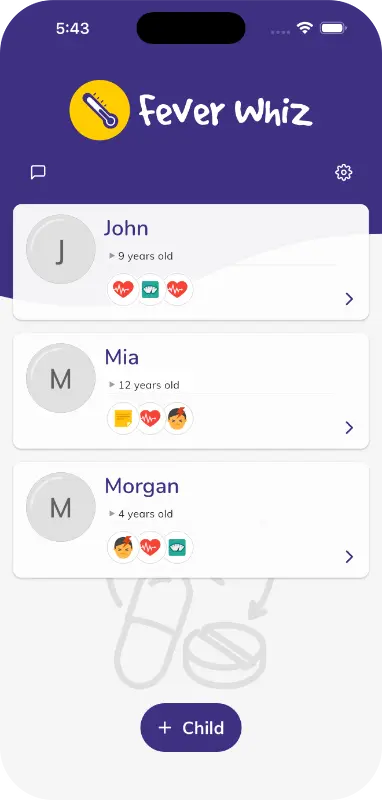
- Use tools like the Fever Whiz app to log symptoms, temperatures, and medication times, creating a shareable timeline for your care team.
Disclaimer: This post is for educational purposes only and is not medical advice. Always consult your pediatrician or a qualified healthcare professional for any medical questions, symptoms, or treatment decisions, and seek urgent care for any emergency or warning signs.
Suggested Tool: Consider using the Fever Whiz app to help manage your child’s health records. It is a free child medication, fever, and symptom tracker for parents and caregivers. Log every dose, temperature, and symptom; set custom and smart reminders; visualize trends with charts; store important medical documents; keep care notes and a care team; and sync in real time across everyone caring for your child. It is a private record-keeping and organization tool—not a medical device—and does not provide medical advice or diagnosis.